What if we want to be 'BROKEN' (part 2)
A simple label or actual thing?
Mar 11, 2026 · 5 min read
DISCLAIMER:
This piece is not written with anyone or anything in mind. The last thing I want is to upset someone.
These are merely my observations.
To reduce bias, I even discussed this idea with several of my teachers, most of whom have backgrounds in psychology. Their perspectives are blended within the post.
Please note, when I bring up terms like anxiety, depression, or ADHD, I am not referring to those who are clinically diagnosed. My reflections are more about how these terms are sometimes used casually online.
That said, the topics explored here may feel sensitive to some. Please read with care, and if you need a break, don’t hesitate to step away.
I’ll be presenting this as more of a debate. So, I hope you’ll read it with an open mind. :)
If you haven’t read the previous parts, make sure to check those out too!
Previously:
I touched up on the idea that what if people want to be “broken” but in an accepting way rather than a self-sabotaging one. I brought up trauma bonding being the new norm and our how society revolves around acceptance and validation, which brought me to share my own experience along with a ritual practiced by the Yakuza.
There was also the idea that medical terms are being misused, to the point many don’t understand the implications of such terms (including myself). I also had a question regarding the openness of such issues with a response which was later shared.
Now, that you’re all caught up, let’s continue!
When it comes to viewing more emotional content on the internet, the algorithm comes into play.
The more you participate in particular issues, the more your feed gets modified, even sometimes incorporating lighter posts on the same issue because that’s what you’ve been engaging with. This is largely visible on sites like Facebook and Instagram.
But then you have the question of why you’d find emotional content on sites like Substack?
And maybe it’s because these sites were built to create a sense of connection of any kind, not just aimless scrolling.
On the surface, discussing feelings in public can look like neediness. But the reality is, individuals are being asked to discuss their emotions for a purpose which facilitates empathy, assistance, and bonding
But then…we have to understand that there is a thin line between encouragement and overuse and sometimes I feel that it has been long blurred.
Which brings me to another question: what if in the process of encouragement people have started to overuse the community?
The direct definition of overuse is; to use something too much and too often, to the point it can become harmful, ineffective or cause damage.
Which allows me to connect to the point I made in my previous regarding the terms being misused. It is done to the point, the seriousness of such things have been unintentionally reduced.
The once safe space is being overused along with the terminologies that come with it.
Many people online label themselves as life coaches and give advice, when in fact these kinds of things need a proper licensed therapist or psychologist, hence, becoming misleading.
These days, information is now over available to people to the point that many think that by looking up on Google or Instagram, you can diagnose yourself. If that was the case, what would be the point for all the therapists?
This kind of thing raises another question; what if people think that having mental illnesses is cool?
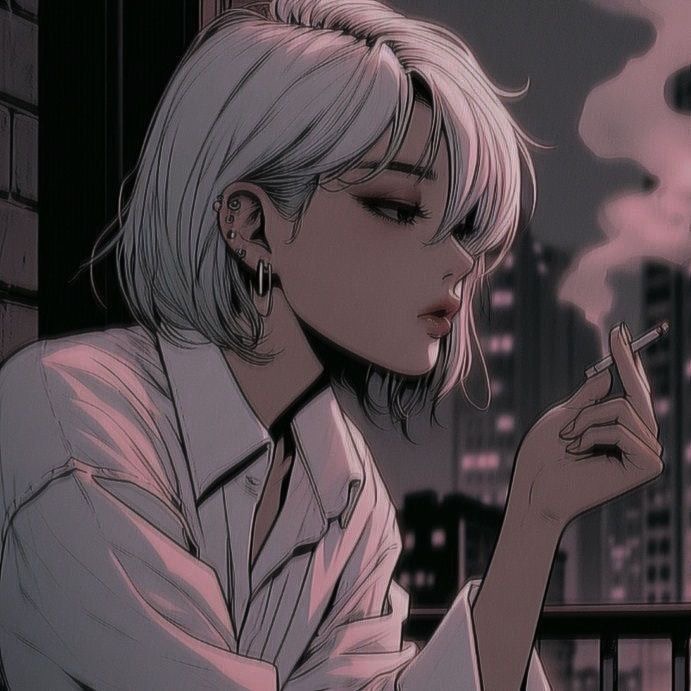
Let’s take cigarettes as an example. Cigarettes have no benefit to you and all they do is harm to your body. And now, there are vapes, which are even worse. But despite everything, society has managed to make them look “cool.” That’s what I mean when I say that mental illnesses have been portrayed in a similar way; maybe not “cool” but maybe an aesthetic or a label being romanticised.
It’s the same with mental illnesses. The idea of having something wrong with you which also has a fancy looking label, does tend to make you look cool.
Think about it?
You read someone’s bio or get to know that they have something, like;
Hi! My name is Aymen and I have ADHD.
It does somewhat give off a different feeling, than;
Hi! My name is Aymen and I like the colour blue.
That was the point my teacher brought up on Thursday after class. She mentioned how many are after personas rather than understanding the effects a particular action may have. She further pointed out that yes, you can get privileges in some aspects but then again it all depends on how you see it.
Just when I thought things started making sense, a new point was brought up; the glorification of trauma has been happening from the time of the painters.
And even today, many use such themes in order for their work to do well, a common example being authors such as Franz Kafka and Haruki Murakami. Their work is mainly surrounded by those themes.
And to top it all off, your memory can also manipulate you. There is a term called vicarious trauma which ultimately means second hand trauma - the particular incident doesn’t necessarily have to happen to you but because of what you saw or heard, you get traumatised to the point that your brain thinks it happened to you. A false memory, if you may.
Just the way trauma shapes you, your experience, hobbies, preferences have a hand in it too. The more our society evolves, we will inevitably evolve with it.
Humans are complex and the more you try to explain and understand it, the more confused you get. And everything comes down to asking the right questions, understanding personas and the masks we put up along with knowing that sometimes you have to take a step back and look at the bigger picture.
Trust me when I say this, I spent way too long trying to understand this and part of me is still confused.
I am no life coach. I can’t tell you what’s right and wrong. I am just a psychology student who recently started her junior year. And sometimes I have the tendency to question things which don’t make much sense.
In the end, all I can say is that there is a thin line between right and wrong, and it’s all a matter of perspective. But then again, that is truly what life really is…simply grey.
And we're done!!!
I seriously want to know your thoughts on this!
Part 1: