Take Your Pain Away
B-side

Apr 6, 2026
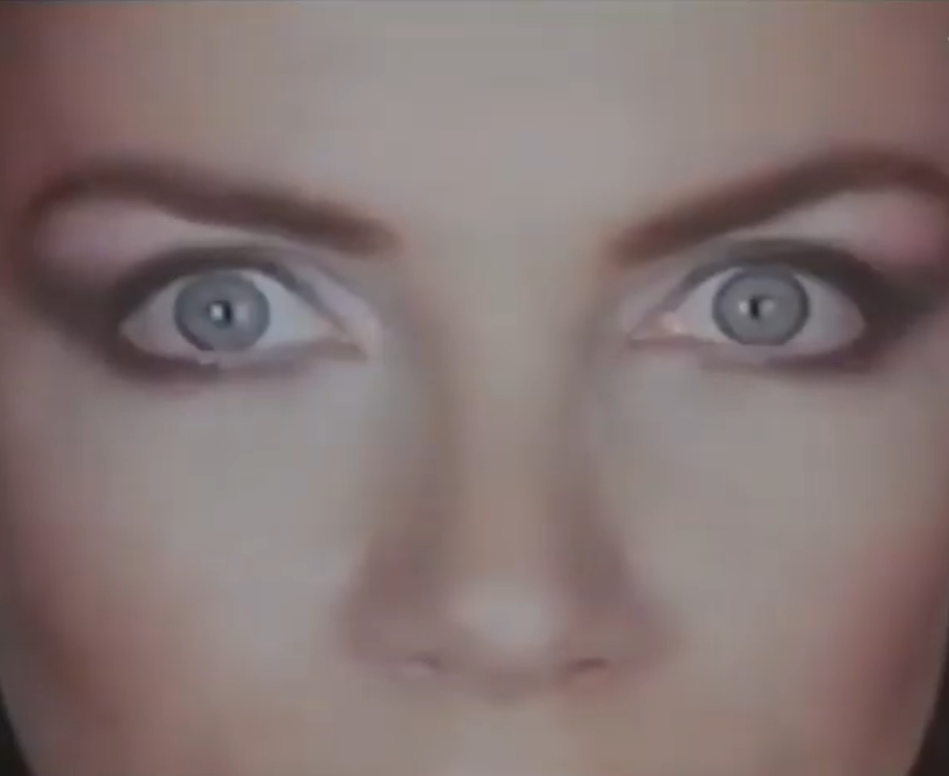
For Iris, uniquely natural preservation of dead bodies was an obsession that began early in her life. This interest began with taxidermy and historical mummification practices, but these man-made displays were soon replaced, and by young adulthood, only natural disasters and strange happenstances would suffice.
Iris’s adult home was decorated with animals caught in horrible, frigid un-life. The vast majority of these trophies were of smaller mammals, fish, and insects. These tiny representations of her true passion were trapped in amber, plastic, or other forms of natural and unnatural preservatives.
Her real infatuation was, admittedly, even to herself, unattainable. Iris wanted to ease the burden suffered by all the broken and petrified souls around the world. She wanted to take the pain away from all the trapped dead.
There was not much about Iris that would lead one to believe she was so death-obsessed. She presented herself as fundamentally uninteresting to the outside world. At her job and within some of her large social circles, few people could see the depth of her desires. Occasionally, an unfocused and eerie glance would linger a bit too long on someone’s bone structure. Occasionally, she would make an errant remark about a dead flower or a particularly beautiful piece of roadkill. These mild, morbid aberrations would have caused a careful observer to pause, but few people observed her closely enough to draw any genuine conclusions. Fortunately for Iris, only someone predisposed to disliking her would have ever taken the time to monitor her with the fervor required to discover her deep-rooted morbidity. After years of learning the rules of engagement, Iris made sure she was so uninteresting and publicly unopinionated that no one would dislike her quickly enough to try to get to know what she was really like.
She had removed the entangled -I- from herself so completely that she was free to pursue her desires without public scrutiny.
It was Pompeii and the Northern European bog bodies that really ignited her more social aberrant behaviors. This being said, Iris was always enamored with bones, skulls, and teeth. As a youth, she would draw very strange pictures, focusing the bulk of her attention on a near-medical specificity.
On several occasions, her parents would be called in to a teacher’s meeting, and after one particularly grotesque drawing session, she was sent to a talk therapist a few times. This is when she learned to mask. Ultimately, after her successful ruse, it was decided that she was attention-seeking. Iris wasn’t seeking attention, but neither was she a necrophile or violent towards others. She was concerned mainly with dead bodies as a representation of the aesthetic beauty that life offered and the pain that went hand in hand with that beauty. The facial contortions and throes of pain that were visible in some of those preserved bodies didn’t frighten or shock Iris; they instead filled her with a desire to ease the discomfort of horrible deaths. She wished more than anything to take the pain away from these corpses. This proclivity was not rooted in logical thought, nor did it come from some saintly desire to heal. This concept was based on a disordered fear, a need to control others, a need to control their pain even after death. Iris was aware that this was a mental affliction and a pathology. Life was difficult enough; she was not interested in doing any work to cure herself of some vague mental illness construct. She enjoyed her unique mindset and viewed herself as special or chosen. This social disorder gave her a sense of purpose that she felt was lacking in those outwardly considered her peers.
Iris started performing precise mutilation rituals in her teens. She would focus on a photographic image for hours without breaks. She would glare at these partial decompositions and try not to blink. She would allow her actively straining eyes to fill in the missing bits with perceptual completion and hallucinations. In her mind, she would envision an unwinding. She would visualize herself physically unwinding the pain like gauze or yarn. She was trying to ease the troubled souls of the visions before her—outside of time and space.
To increase her telepathic empathy with the dead bodies, she would contort her face to mirror the horror of what she saw. Given the decayed and twisted state of some of these deaths, it was difficult to get the correct expression. She always felt that she had too many teeth and too much flesh. The idea of pulling her own teeth out didn’t dawn on her until she was in her 20’s, and although she set her mind to it and gave it a full-fisted effort, extracting a healthy tooth with pliers proved too painful and expensive. She now had a removable bridge for her two front teeth, but this bridge only served to remind her of her spiritual weakness and physical sensitivity. She stopped short of permanently damaging most of her skin, but at several points, she attempted to starve herself down to a skeletal state. The decision to stop short of disfigurement was made because she felt these incongruities would draw too much attention. Another limitation was the coloration and bone damage of these bodies. These material issues mounted, and she felt she had hit a wall with her sympathetic mimicry. Eventually, she left the optics of the whole thing behind. She dismissed it as surface vanity.
Iris began focusing on a more internally somatic empathy.
She concluded that what really pulled her in about the pain exhibited in the preserved dead bodies was not their facial expressions or the glossy desiccated skin; what really pulled her in was the way the bodies were positioned or contorted.
Following this discovery about herself, she suffered from long bouts of manic insomnia. She would prowl around her small apartment, imagining what it would be like to hold her body in those agonizing poses for thousands of years. She wished more than anything that she could help alleviate the muscle strain and cramping that those souls must be enduring. She thought by sheer willpower she could somehow take their pain away. She began by researching the phantom limb phenomenon. Spurred on by her research, she invested in mirror therapy boxes. She created intricate setups that allowed her to replicate some of the more extreme poses while keeping her vision focused on specific images. She knew that this sort of metaphysical proxy healing was far-fetched, and she was keenly aware of her madness, but this did not stop her from making these attempts. Once the phantom limb experiments had run their hopeless course, she would pivot again and take up more extreme ascetic body practices.
Iris would whisper, “Oh—don’t you know I’d find a cure and take your pain away” toward the bleak squinchings that prolonged her nights. She would contort her body into nearly impossible poses and hold herself stiff, trembling, and exhausted for hours at a time. Through these agonies, she wished to carry a burden that she could never share. Her arms forked and bent. Her ankles locked in a cross beneath her. Her neck hoisted impossibly upwards by tendons. She would hold these positions until she collapsed on the glossy, white-painted hardwood beneath her. Hypnopompic anxiety dreams would excruciate her as she lay in the fetal position, weeping for the broken hearts that gagged forever in the past.
Years elapsed in this manner, and each night another failure would clamp itself onto her.
All the postures and poses could be practiced and maintained if approached gradually and done with care, but Iris had wanton disregard for her own well-being. Instead of increasing muscle strength and flexibility, she was slowly tearing ligaments and wearing away the final shreds of endurance. Her body was breaking, but her spirit would redouble its resolve. She would push herself beyond each night, and each morning began the exhausting façade of normalcy anew. None were close enough to her to notice the damage and destruction. Iris’s body atrophied and eroded. Following one further ritual, she would suffer a final collapse.
Find comfort in these words I send in this cold world. So, give up your worries, they’ll only do you harm. There is no need to be concerned.
It was her right palm that slipped first. The sweat that dripped from her straining brow lubricated the floor beneath her, and her shakiness gave way. Previously, her reflexes could have caught her, but she was weak beyond saving herself. Iris’s neck was too craned, and the crashing weight of her body was too heavy for her vertebrae. The snap was loud enough to echo, and a slight puff-like exhalation followed the crack of broken bones. Unmercifully, her death was not instantaneous. Her paralyzed broken body pressed down on her lungs and slowly suffocated her. Iris, despite her predicament, kept her mind on the goal she had always had.
One of her final thoughts was her selfless mantra, “Take your pain away…”
It was the claxon of her alarm clock that aroused suspicion. It had been going off for a few days straight, and noise complaints eventually brought the police to her apartment. They found Iris piled up on herself. Knee over wrist, a rib above her neck, a hip over her right elbow, and left foot lodged into her jaw. The death was ruled an accidental suicide. Wellness culture was blamed. There was some concern over the macabre menagerie in her home, but people all over the world are known to make strange artistic choices with home decor; the local authorities were unequipped to draw the dots together. The office where she worked had a moment of silence for her following a quick lunch break.
At her funeral, the embodied -I- that Iris never was entered the pantheon of unliving sculpture in the minds of all those who saw her beautifully embalmed corpse.
Comments (1)
Disturbing and memorable writing. Confident voice and the Psychological/Body horror ratio is balanced nicely. My only critique would be that the in story world lives or dies almost entirely on Iris. Luckily she carries it. Thanks for the read.