River Road

Mar 2, 2026 · 9 min read
The house where I grew up was foreclosed on ten years ago. At one point, I had some affinity for the home, but memories of living there are clouded with resentment. When the bank took the house, I didn’t mourn it. I felt bad for my parents, but they dug their own graves. They couldn’t take care of it anymore, and it was rotten inside and out. Additionally, preaching rugged independence and stoicism only to seek pity when you suffer is a reprehensible trait. When I returned to that location, it wasn’t to see what was left; I returned so that I could walk down to the Merrimack River one final time.
Directly across the street from my old maroon front door, Tall garlic mustard was matted to the ground by searching footsteps. This trampled area marked the entrance to the deer-run reservation area. There were other clearly marked entrances, but I never used those. I don’t remember there being so much garlic mustard, but I never paid attention to that invasive flora. All I focused on was the escape offered by a forest that existed beyond my door.
I was hoping, as I stumbled over those ground wires and entered the trail, that I would be whisked away by memories—lost innocence— the bliss of ignorance. But the first thing I recalled was the smell of the river. The Merrimack had not been a clean body since the Pennacook and the Pawtucket. It didn’t possess the post-colonial romanticism that was force-fed to me throughout adolescence.
When I think of the river, I think of fishing with discarded beer bottles, cruel teenagers smoking weed by the tire swing, and scooping up dead lamprey in a paper chicken bucket. I can smell those thoughts coming from that polluted water. Remembered odors twist the knife more cruelly than any other sense memory.
My knees shook with weakness as I stepped over a gnarled root.
The path to the river was well-trodden and marked with orange or white paint. These splotches adorned so many of the trees that it struck me as gratuitous; I always wondered about the need for trail markers on these paths. Even at five or six, I felt like no one with half a brain could get lost down here. If you follow the steps of everyone who came before you, you will eventually end up somewhere.
The idea of being lost in this reservation reminded me of my friend Dan. One time, when we were by the river, Dan pointed his dad’s hunting bow at me. He told me he could kill me, and no one would ever know.
I thought he was capable of murder.
I force those thoughts from my head…Dan is dead now. I don’t know how he died, but Officer Ryan wrote some nice words about Dan on his memorial webpage. He signed his message: Officer Ryan—but I still call him Frank. I remember the three of us getting high by that rancid river.
On dreary days like this, the only sign the river still flows is the trash and debris floating and sloshing along the shoreline. There aren’t as many bugs as there used to be, and I don’t see any other wildlife either. I’m not sure I ever saw animals down here, other than the occasional sunfish or carp.
The carp grow big in the Merrimack. They gorge themselves on the filth that rests down deep. Carp aren’t picky. They rest in the cool shade and eat. People used to eat them, but I would never eat anything that came from those waters. Mills had polluted it, and eating fish from this river would make you sick.
I walked to the footbridge just before the water filtration plant, and as I approached, my steps became more measured. An intense dread seized my body. I haven’t forgotten about the bridge, but it wasn’t my destination either.
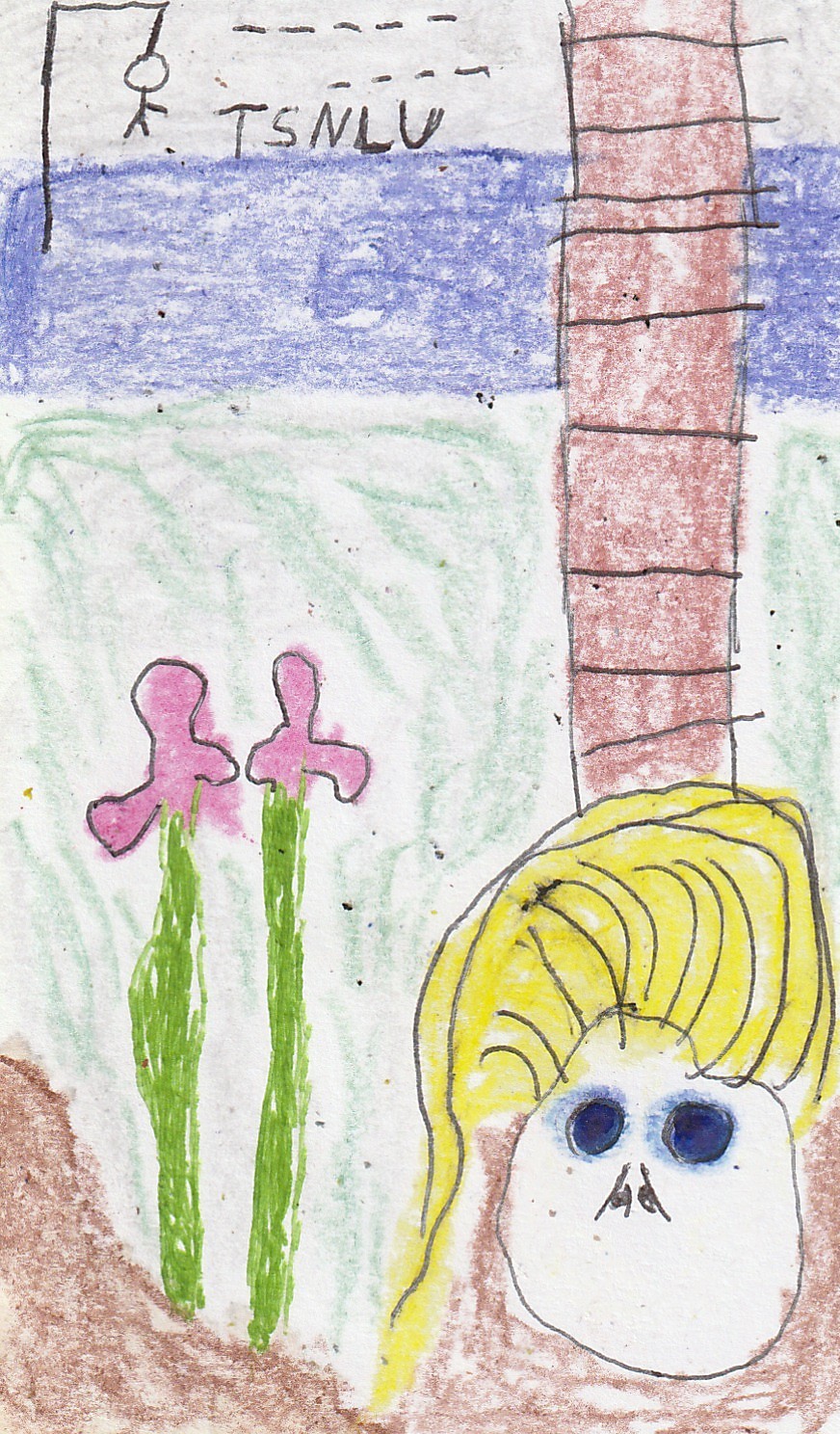
That footbridge was where I found an old man hanging from a tree when I was eight years old.
I found the man dangling there. I remember being afraid that someone would see me. I had to wear an eyepatch because of my lazy eye. I was ashamed of my affliction, and the presence of other people reminded me of that shame. Despite the patch that covered my good eye, I was still able to see the body through the shadowy blur.
I thought someone was climbing a tree or putting up another rope swing. I hid for some time, waiting for the body to move, but when it didn’t, I slowly moved forward for a closer inspection. As I crept closer, I convinced myself it was Halloween decorations or a prank.
When I saw that it was a real body, I took off sprinting. I still remember the zip-zip sound of my corduroy pants as I navigated along those trails. I was so in shape then. I didn’t even struggle for breath, and my little joints were so pliable.
I never slipped on the mud or stopped to ease my panic. I just ran until I met my dad. He was pushing that old lawnmower. He believed me right away and told me to go inside. I’ll always credit him for that, but he would have been blind not to notice how frantic and earnestly my tiny body presented itself. Before long, cops and paramedics were littering those winding trails. It surprised me that no one asked me any questions. Even then, I didn’t trust the police, but I would have spilled my guts if anyone wanted to know.
It was the talk of school the next day, but I wasn’t a hero or cool; I was bullied about it. I do remember the music teacher pulled me aside to check that I was ok, but she seemed disingenuous, and in hindsight, she was probably looking for gossip. I never really trusted adult concern—in my mind, concern always carries ulterior motives.
Now, decades later, I stand on that same bridge. I don’t think I ever even got the dead man’s name. I often wonder if I am the only one left who still thinks about him. This footbridge hasn’t changed. It’s only about 8 feet long, and I’m not sure why it is necessary. It runs over just a little dip in the dirt. They probably could have just filled the trench in, and by now, all the mud would be just as packed down as the rest of the trail.
Beyond the bridge, the canopy and underbrush are thick, and the trees appear foreboding and dark. They unnaturally grasp one another. Today, the branches craned towards their counterparts with loneliness and despair that I had never been permitted to see before. I had hoped to continue to the water treatment plant and take in any new graffiti that this current generation had added, but I could not get my body or mind to cooperate with this desire.
When I was in my thirties, I remembered being released from an overnight detox. It was a cold, overcast morning, and I stood on the corner of a street in a town.
I had no money and no place to go, and I joked to myself at that time, “Everyone has a first day of being homeless,” but I was terrified. The fear I was feeling while standing on the bridge was like that terror. It was a crushing dread of hopelessness; it compressed the spine and forced the neck down. My eyes welled up, and I swallowed hard; I clenched my fists as a scream of despair frothed to my lips, but I choked it back with the knowledge about the futility of such an action.
As I was forcing myself back to composure, I heard leaves rustling. I gazed toward the far side of the bridge. There was a movement, an emergence of several small beings.
The beings were slight, but squat, and comprised almost entirely of bone-white mossy fur. They had neither mouths nor ears, but what they lacked in those features, they made up for with large, deep-set blue eyes. A thin ridge of long blonde strands ran from the tip of their knotted foreheads down to the base of their bent spines. Their hands and feet were reticulated and disproportionately large. Each of their digits was adorned with a curved grey claw.
The beings set about their tasks with such certitude that I first thought my presence was unnoticed. I soon realized I was incorrect as I noticed that all six of them were attempting to make direct eye contact with me. They all stared unrelentingly, refusing to break their gaze even as they bent and stooped to gather twigs and sticks. They were so selective and fastidious about their collecting, and the fact that they acted so carefully whilst maintaining eye contact filled me with unnatural terror.
My disorientation didn’t prevent me from noticing that one in the back was being careful not to tread on a lady slipper.
Nothing about the scene was overtly menacing, but I stood transfixed by that deadly combination of confusion and horror. I had not felt so perplexed since the cynicism of adulthood had shaken joy from my imagination. My brain often finds ways to fill in cognitive gaps and create narratives that encourage my preconceived notions, but what played out before me fell outside my mind’s capacity. I lost my grasp on reality in those moments of indecision. My ears filled with a static hum, and my skin flushed.
Almost in slow motion, they would bend down to carefully select a stick, and with those crater-like blue eyes fixed firmly on mine, they would flutter their claws towards themselves, beckoning me to join them. Unblinking and without a hint of animalistic trepidation, they invited me to cross the bridge.
The fat on my midsection tugged me downward with its rising and falling. The flapping of my belly was in perfect synchronicity with the rapid pounding of my heart. I sprint away from that bridge. I plodded ahead, up slight and muddy hills. The dry joints in my knees and ankles pleaded for me to stop, but I didn’t. The gnarled roots of dead trees chomp at the stress cracks in my feet. A vein on my temple swelled like a balloon and throbbed with molten heat.
Before long, I was panting and coughing on the road that faced my old, rotten home. I never needed to run as nothing had pursued me. My flight was born more of churlish denial than of actual fear. I could have just as easily walked away from those bizarre things. They had not insisted upon me.
They meekly invited me in.
This sojourn has left me more depleted than I had anticipated, and my posture seemed to click over one more degree towards defeat as I slunk back to my car.
I sat in the driver’s seat. There was no retreat into the comforting arms of hallucination.
I was certain that none of the events had been imagined. I was still panting and sweating. My mind fluttered toward nostalgia.
I brushed these thoughts away with a mirthless laugh.
My eyes went toward the passenger seat floor and picked out every empty pack of cigarettes and plastic bottle. I noticed how greasy the windows were and how much pollen had accumulated on the windshield wipers. The expired rejection sticker was now two years old, and I figured if Officer Ryan pulled me over, he would search me for old time's sake.
I wondered if he still thought about Dan.
I was covered in pins and needles, and the neuropathy I had earned was making my pinky numb.
It dawned on me that through my actions today, I had failed another test.
My flight had reaffirmed a pattern of poor choices.
The veneer of endured normalcy had been peeled back, and I had been given a glimpse into another realm. But instead of embracing that escapism, I reacted with the venomous spit I had learned from this world. I had fled back to the nothingness my existence had crafted.
I will sit in this car
By this house
near this reservation
built on rotten land.
I wish I could offer an ending. Some sort of Yeats fantasy about the gentry and an ironic imprisonment in an endless sprawling celebration. Yeats is a fantasy, and this is post-industrial America. The gentry cannot fathom our ridiculousness, and the most ironic torture they offer is just their presence. The truth is, I cannot flee to some magic woods.
The truth is, the only ending I can offer is the repeating choice to get up again.
There’s no ending. Just a choice. To get up again. And again. Until I don’t.
Endings in this world are quiet. They are decay without dignity.