Map of Herbarium
Navigating my serialized novel and some fun tidbits about it
Apr 6, 2026
Welcome to my introduction to Herbarium!
What is Herbarium?
Herbarium is an introspective speculative novel that explores themes of virtual reality, memory, identity, and forgiveness.
A garden of memories. None of them real.
It’s written in 30 parts or 17 chapters (the chapter number is deliberate, and the reason will be revealed in the final line of the book), which will be posted every Monday.
Part of this serial was posted originally on Substack, but I'm now moving it on Wrizzit.
What is it about?
When Celia wakes up in a basement with no memory and no hearing, her world is already unraveling. But nothing prepares her for the truth: the last twelve years of her life were a simulation, created by her father.
Haunted by the life she lost and the person she once was, Celia begins documenting her memories and clinging to relationships that may never have existed. As past and present intertwine, Celia must confront the choices that defined her, both real and imagined.
In the life she tries to build for herself in reality, a chance discovery leads her on a treasure hunt that becomes something more: a path toward healing, connection, and purpose. But as she pieces together the fragments of her life, one question remains: if a life feels real, does it matter that it wasn’t?
Herbarium explores the way a young woman learns to live with multiple losses: the career she had worked for decades, her hearing—an integral part of who she was, and the personal connections she had squandered in time. As she grows as a person, she also learns to forgive, both herself and those around her, and to preserve even the painful parts of her life instead of trying to forget them.
Where do I start?
First chapter is already out. Read here.
Notes and inspiration:
I wrote Herbarium when I was a Masters student studying Robotics. Due to the nature of my background, I am passionate about the effect technology has on people, especially ones suffering from disabilities, and I believe Herbarium reflects this.
The chapters are named after flowers common in Eastern Europe, where I am from, and in many cases the secondary title reflects either a well-known meaning behind the plant or one of its characteristics. The title, Herbarium, reflects the theme of preservation that is a central part of the novel.
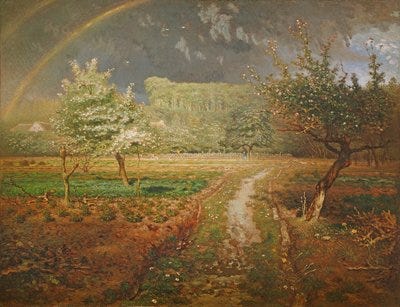
Herbarium was also partly inspired by the painting below, Spring at Barbizon by Millet. Millet worked around the village of Barbizon, together with other artists that liked to paint en plain air and focus on landscapes. I also noticed a wonderful focus on light used in a deliberate, mythological way. Actually, the sublime light of the scene is what draws the eye in this painting. To me, it reflects those moments of pure silence just before a storm will pelt down the garden we’re in. A stillness we rarely encounter nowadays.
Millet is a special case when it comes to the Barbizon movement also from the perspective of including figures in his paintings, seemingly pastoral but hiding social commentary. With Herbarium, I tried to achieve something similar: a social commentary hidden within what initially looks like a book about pretty flowers being preserved.
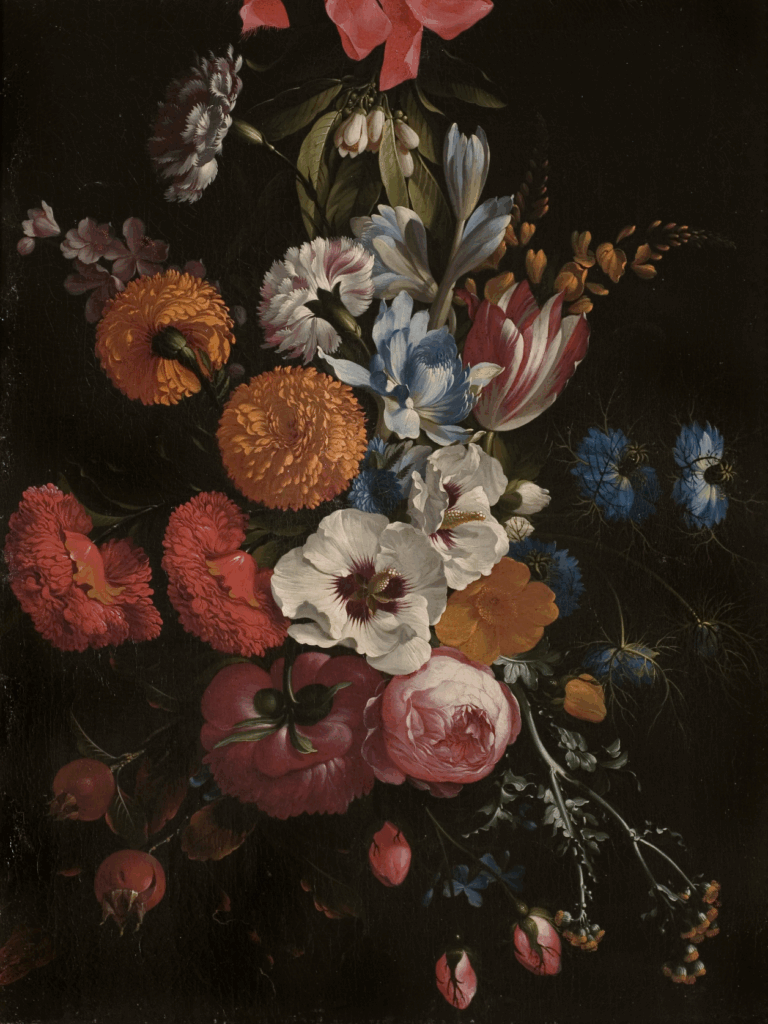
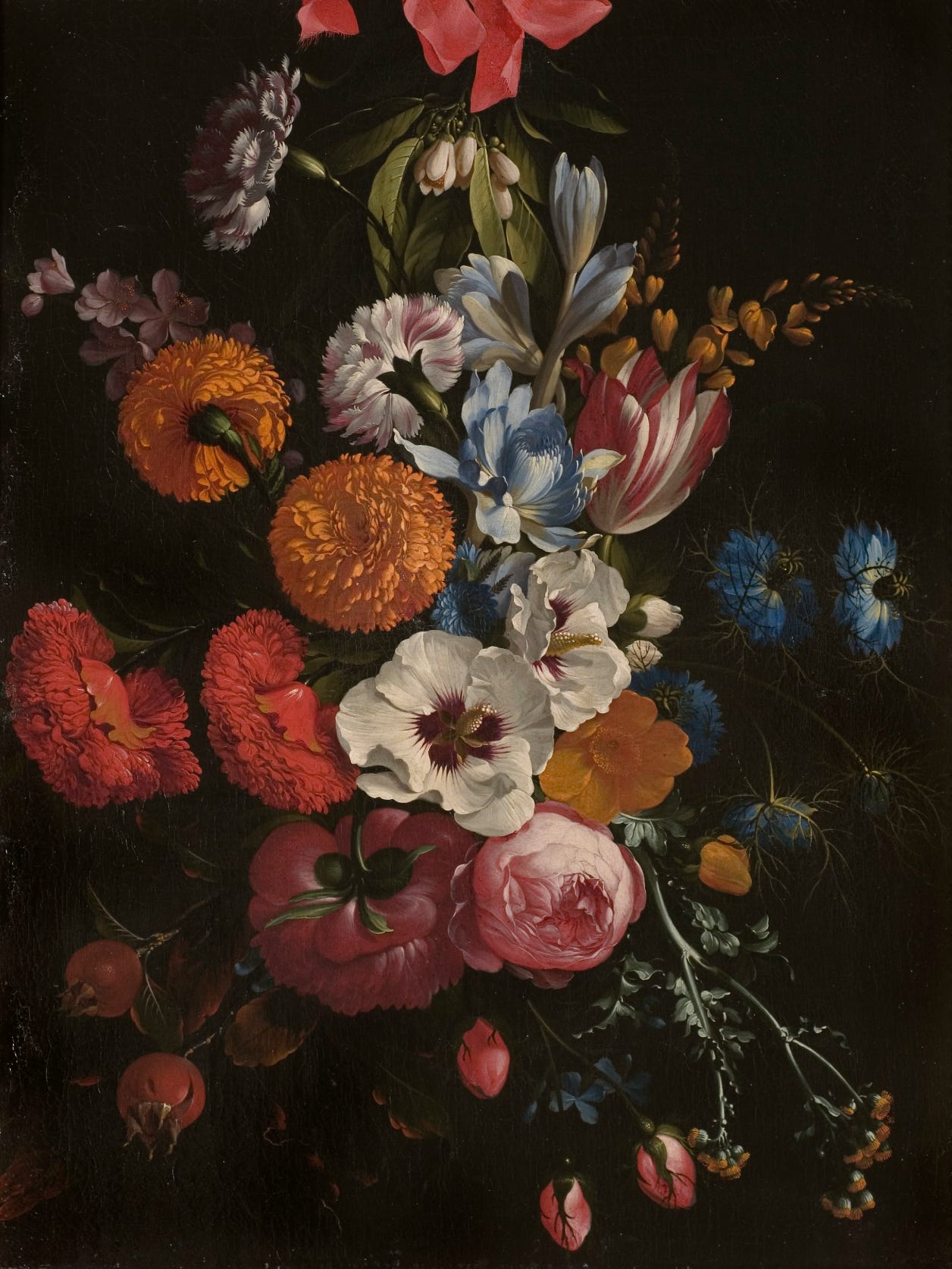
Another source of inspiration are memento mori and vanitas paintings, which incorporate symbols of death and reminiscent of the fragility of life (often skulls, clocks, flowers, fruit), and, for the latter, also symbols of vanity (hence the name): musical instruments, wine and books. Herbarium incorporates most of these common elements, because it is meant to be the literary response to this movement.
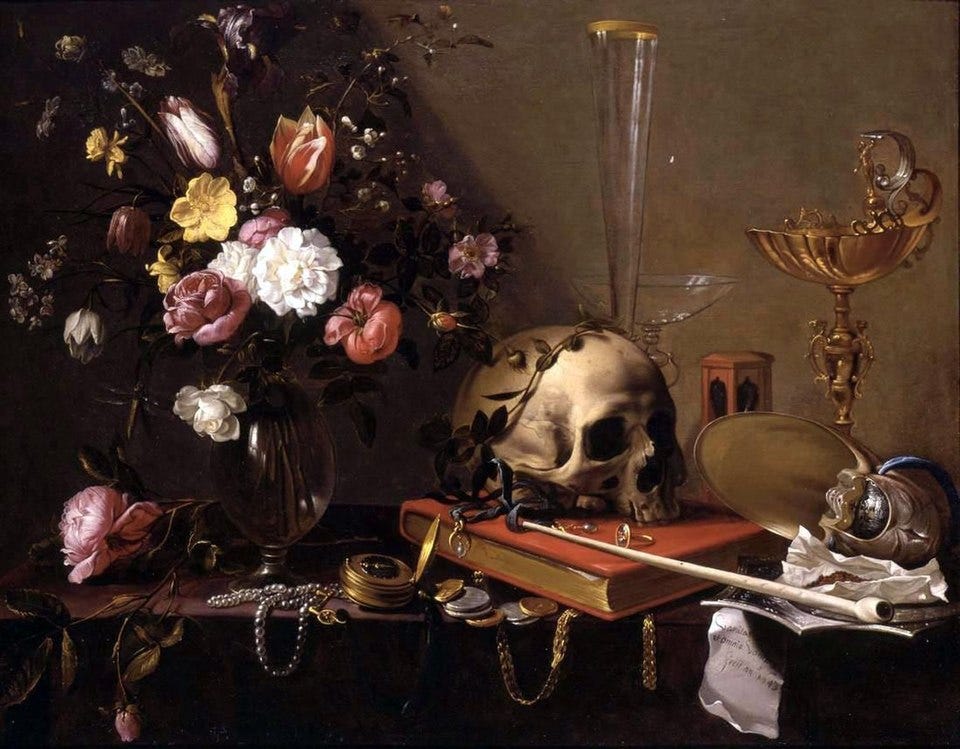
Herbarium poses the question of what one would do it they were suddenly given more life than they expected? Of course, we are all meant to die. We cannot take anything with us when we go. But what if a previous life of ours was accesible to us through memories, where we could preserve the lessons we learned and grow further? And what if life’s vanities (music, writing) are more than just ways of spend time, but rather integral parts of who we are as people? Of course, the vanitas movement was popular in the 17th century so I am a little late with the response. But while we now know that arts and pleasures are what makes life worth living rather than mere frivolities, do we really have the ability to slow down and enjoy them, when we’re pulled in every direction by the hectic waves of life?
Thank you for reading so far! Hopefully you enjoy the ride.
Comments (2)
The story sounds really interesting, and I love this peek behind the proverbial curtain!