En Caul
my mother made sure I thought superstition was hogwash

Mar 4, 2026 · 6 min read
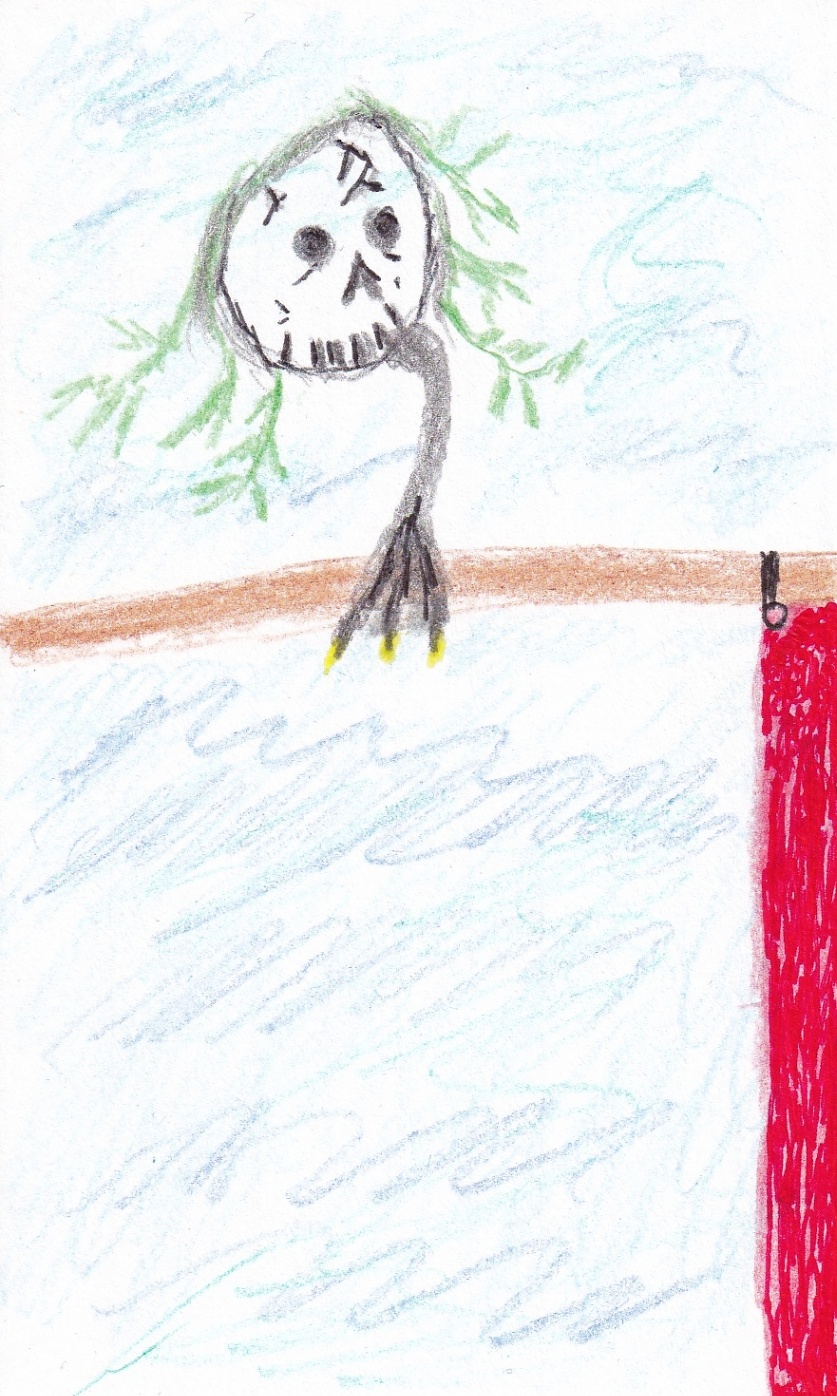
It was my beloved aunt who first held me. She plucked me right out. She used to say, “I peeled you like an onion.” I was born in caul. That means I still had the baby sack around me when I came out of my mother.
There are many superstitions surrounding this type of event. It’s a pretty rare occurrence, and back where I’m from, no one had ever heard of anything like it before. My aunt told me it meant I couldn’t drown, but my mother made sure I thought that was hogwash. I think she thought I would be sticking my head in the well or jumping in the river if I believed otherwise. I never really tested this superstition, though. I am no fool. What would a test for that even look like? Besides all that, we were basically landlocked. There were no big bodies of water. I actually never even saw an ocean...until today.
To my embarrassment, I never saw anything like this until today.
Last week, I was recruited, let’s call it.
I was forced to serve the empire on a boat. I had never been on a boat before either. It is a unique experience, that’s for sure. The salty air is funny, I mean, the smell of it. They call it low tide, but to me it smells like rotten fish. I guess tides have something to do with the moon; at least that is what Almas said. Almas was kinder than the rest, but that was not saying much. He showed me the ropes. He told me to button my lip and do only as I am told. I had no problem with that. I only wanted this whole thing to be over with. The empire and its desires have nothing to do with me, and this Grand King they talked about—I’ve never seen as much as the hair on his chin.
I figured that if I offered no resistance, I could get home faster.
There was a large man in a larger uniform at the front of the boat. Almas calls that part of the boat the bow. The large man was covered in tassels, medals, and blue wool. He spoke in a loud, gruff voice about god and the empire. I don’t know which of the gods he was referring to. I assume the god of the sea, since we are on a boat, or maybe the god of the wind. I couldn’t quite make out what any of his words had to do with me.
Since I was rushed into this position, I was never really told exactly what I am expected to do.
I suppose I was needed as a soldier, and I was meant to kill people. I wondered how I was going to do that on a boat. Almas said we sort of shoot cannons at each other and try to get close enough to stab people. He told me it gets hectic, and I should do my best not to die.
I agreed.
Not knowing the correct place to stand and surrounded by unruly strangers, I was caught up in a mob of hands, elbows, and feet. They pushed me in one direction and kicked me in another. There were ropes and hooks. There was steel and wood. I was handed a long pole with a hook on the end. It looked like a shepherd’s crook, but longer. I was told to use it when we get close. The impotent sense of fatality gripped me in this moment. The statement wasn’t if we get close, but when we get close. I felt my knees tremble, and my teeth click. Almas gave me a nod, as if he had seen me go pale. He was trying to assure me, but not of survival; he was trying to assure me that I didn’t have the choice to falter. He was correct. I had nowhere to run.
Above us—above the mast soared a large bird. It had a sharp pink face, long black wings, and a thick white breast. It was resting on the wind currents that swirled and sampled the coast. The bird rose slowly with one gust and glided downward with another. In the past, I had witnessed birds on the hunt, and this bird was not shy about its hunt. Before this specific moment, I was never aware of the more seafaring birds, and although I am sure I had seen some on my way to this boat, they did not register in this majestic way. I was not transfixed, but awed. I could no longer hear the men around me or the ocean. I stopped noticing my own selfish fear or unease. I watched as if through my own private viewing portal. For a glorious moment, this bird was all that existed in the world. While cocooned in this fleeting awe, a single word entered my thoughts: albatross. I know I had heard it before, but for the life of me, I didn’t know where. I wondered from what depth I conjured this word. The realisation hit me that this word was not, in fact, a thought, but something I was hearing. The other men on the boat had noticed the bird and were saying Albatross over and over.
I regained more of my senses, and I looked over towards Almas just in time to see him clumsily make the sign of the cross over his chest. He gazed toward the man in the large uniform. This man removed his broad hat and looked upwards. I saw his Adam's apple plunge below the neckline of his too-large coat and quickly return to rest at a higher spot than before—just underneath his chin.
The albatross made several more of its rounds overhead as the crew and the slaves on board watched in mute expectancy. I felt cowed by an overwhelming sense of perceived importance. The man in the big uniform finally stuttered free from his silence. Again, a lot of what expelled forth from his mouth went over my head. He yelled something like “This is no portent!” The response to this utterance was jeers of consternation and a muffled harangue.
The albatross had ferried, on its black wings, an opening. It brought with it a blemishing stain to some previously impeccable reputation.
It brought with it—a way out.
The crowd waited; coiled to strike.
The man in the big uniform knew his perilous position; he found that his fortunes were entangled with the will of a natural beast. He measured his next action, but this indecision created a void.
Following its next seeking loop, the albatross calmly filled that void.
The bird descended.
Black, webbed, three-toed feet padded softly near the bow of the boat. They curled around the large pole that supported a brightly colored flag. I could hear the wood and steel of the boat gasp. The pole snapped, as if made of delicate crystal. The flag wriggled its way down into the choppy seawater. The albatross sprang away with a mocking squawk. The flag folded into the darkness below. The boat exhaled with a boom of erupting consternation.
All order and regimentation vanished. The men-at-arms and the slaves alike leapt overboard en masse; the man in the large suit withdrew his scimitar and sliced in the direction of those he could reach.
Almas had vanished.
I was swept up in the mob for a second time that day. Before I knew it, I was sinking.
My eyes opened. The salt in the water stung. It was dark and blurry. The flag danced neon above as the beams of sunlight held its dying glory. I fell faster than it did. I made vain attempts at swinging my arms and kicking my feet, but a calmness overtook me. My body, against my volition, decided it wanted to sink. I let panic subside, and I was reminded of my breath. I crossed my legs beneath me, and I pulled them up until they reached the base of my trunk. My lungs ached as they lunged for breath. My arms clutched firmly to my chest. I craned upwards in that moment, and I decided to wait. I wanted to know if what my aunt had said was true. I wanted to test the limits of this superstition. I didn’t know if I would have another chance.
It is serene.
I am unsure of the answer.
Only time will tell.
I feel calm. I am optimistic.
These brief moments represent the most comforting part of my day. I am not even counting seconds.
I am letting go.
Comments (4)

The way my dishwasher in the background went silent for "Before I knew it, I was sinking." And then started back up at "swinging my arms and kicking my feet."
This was so well-written, I was just immediatly put into the story and the ending was so perfect, it all came around full circle
