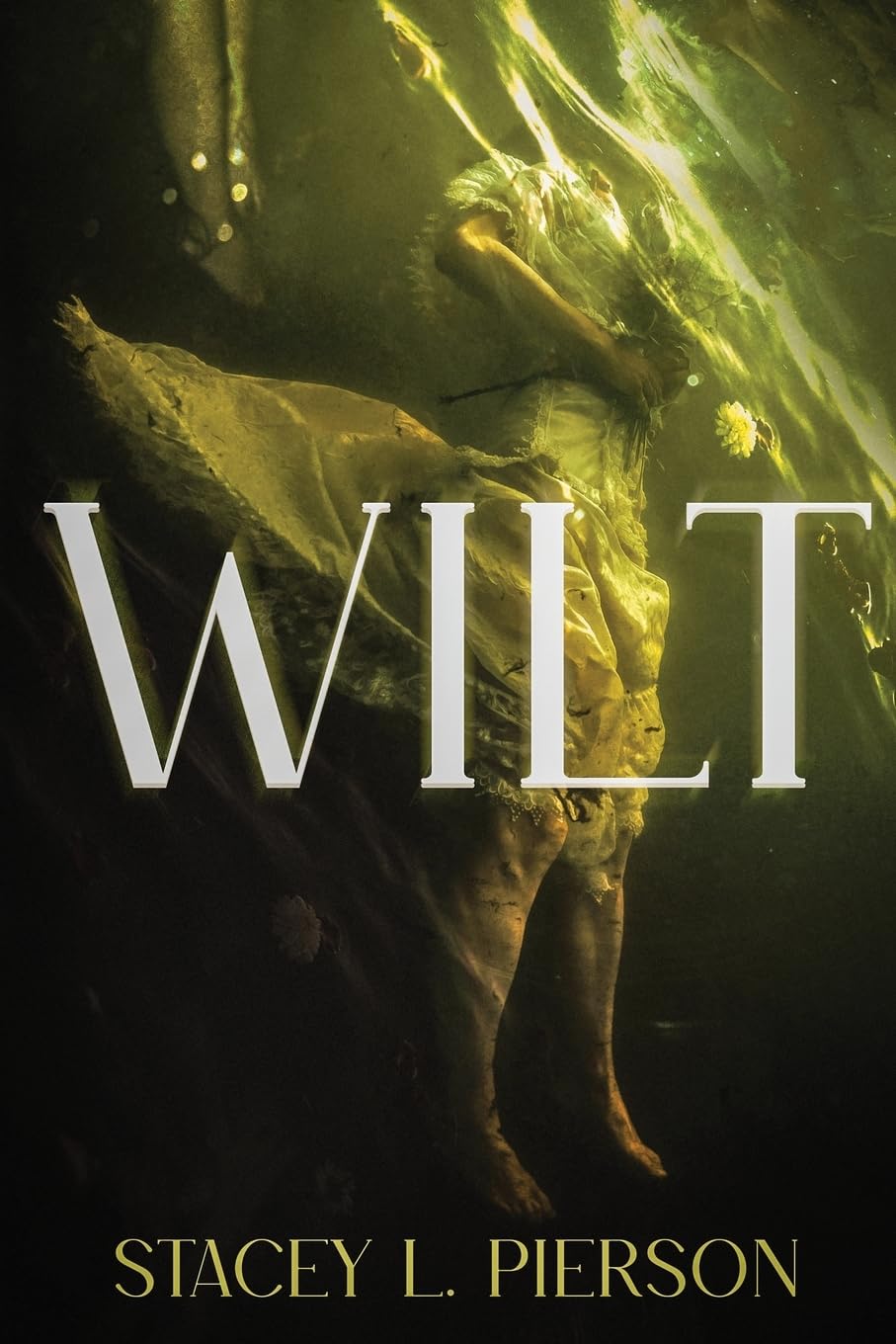
Wilt (an ARC review)
Honestly, this was one of the hardest reviews I've ever written..

Mar 4, 2026 · 4 min read
bookshelves: horror, psychological, thriller, arc-read, ebook
Rating: 3/5 stars
Imagine, if you will, a tautly written horror novel, set in a large city with mystique and charm, that revolves around a serial killer whose resemblance is closer to Norman Bates than Freddy Krueger. And imagine a novel with sufficient nuance and context, with a healthy dose of commentary about the brokenness of the world. Lastly, imagine the psychological insights that said novel might provide, thus further elevating its small cast of colorful characters and setting.
Going into Wilt relatively blind, those are some of the things I was expecting. That is not, however, what the author delivered. Instead, Stacey L. Pierson (author of The Breathing House 2025,) took the reader and dropped them in the midst of a very harrowing situation, unapologetically and with little explanation. I love when an author can do that, and I was flabbergasted by the tenacity of such a shocking revelation. I had to know more, to get a better sense of the main character and why he made the choices he did. To be fair, Pierson did answer a lot of those questions, but I—perhaps selfishly—wanted more. It wasn’t only the lack of development. There was a disconnect between her incredibly engrossing story, and the words she used to tell it.
When you agree to read an author’s ARC, you expect precision, clarity, professionalism. The story should have a natural flow and grace. It should be refined and polished. What you don't expect are awkward word choices, confusion, and misplaced words. There was also an inconsistency between complex, decent prose, and an overly simplistic sentence structure. That didn’t work for me. There’s obviously nothing wrong with simplicity—that’s just how some author’s write. But the manuscript needs some love.
“I broke my rules for you.”
Thematically, Pierson attempted to really tap into certain psychological aspects, and I think this was her strong suite. The themes weren’t explicitly explained, and that's how it should be. In them, I felt transported into the mind of Miles Pike, wherein many revelations were revealed through triggered memories. Some of those were a little repetitive, but I can’t imagine Wilt without them. To some degree, I found myself putting myself into Pike’s shoes, and my response was three-fold: cheering him on when things were going well, pitying him for the awful things he was subjected to, and angry at him for different reasons. Ultimately, the author raised questions about the nature of psychosis, mental health, nature vs nurture, and free will. Should we, as a society, be obligated to communicate our concerns when/if we recognize pathological behavior in others, even if they’re strangers? Especially if they’re strangers? Where does that sense of responsibility end?
Overall, the intense revelations and suspense kept me interested. I never knew what Miles would do next or conjure up in his head, and I had to know where it was going. Along the way, Pierson delivered a few twists that I never saw coming. Those upped the ante in major ways. Despite those strengths, I wanted more than surface level action. I wanted to know these characters and, most importantly, to care about them.
“The morning after a storm was Miles’s favorite. He could still smell the rain in the air and felt like his sins had been washed away.”
I would've had more fun with Wilt if the setting had been more pronounced. With such an iconic city as New Orleans, I wanted to hear the accents, to see the glitz and glamour of Mardi Gras, and to feel its mysticism and magic. There was none of that. It felt like it could’ve been any city in smalltown America.
The ending was fitting for Miles, given his past experiences. That final sentence reminded me of the culmination of Stephen King’s Pet Sematary, in that I can't see Pierson’s book ending any other way. In hindsight, it spoke volumes about his conditioning, and the sense of futility. There was something beautifully sad in that, and I appreciate the subtleties she implemented. The denouement was also earned, which gave credence to the melancholy and low-key frustration.
“One thing about planting a garden is patience. You can’t throw them in and expect them to do all the work. You have to love them. Talk to them. Spend time with them. After all, a flower is a living thing,” Mom said.
“Like the flowers in Alice in Wonderland?” Miles asked. She laughed, “Exactly.”
In closing, I didn't hate the book. My constructive criticisms might give the opposite impression (understandably so,) but I didn't love it, either. I would have liked it a lot more if the prose was clean and crisp. That alone would have elevated my enjoyment. If the characters were more developed, I might have given it five stars. I don’t doubt that at all, actually. To add more nuance, the author could have developed New Orleans into a character all its own. I’m not bashing the author. Really, I'm not. If you know me, that's the last thing I'd do to anyone. Stacey's a dear online friend of mine. We chat frequently about the craft and reading. In fact, we’ve talked about beta reading for each other and, in general, we cheer one another on. It’s for those personal reasons that writing this review was so hard….agonizingly so. I hate that it’s come to this, but I stand by my opinions.
Thank you, again, for this opportunity, Stacey. It was fun. I appreciate you.
Comments (2)
Honest review, with a look at what works and what doesn't, and even admitting when things could be a matter of personal preference. I love when reviewers do this because it helps me decide if I want to take the chance instead of just insisting that I turn away.