When the Koi Came Creeping

Feb 27, 2026 · 2 min read
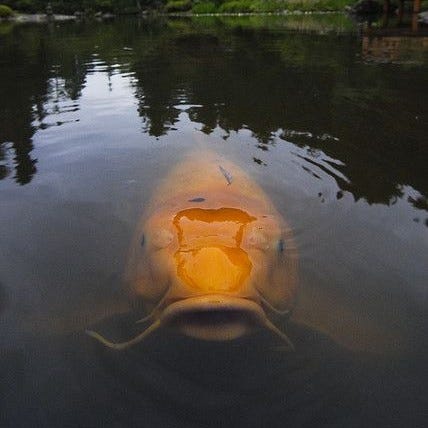
It all started when the koi began to walk.
At first, it was cute. A koi wriggled out onto the stones to snap up a beetle. People laughed, filmed it, posted clips with captions like “Nature finds a way… to be adorable!” The internet christened them land-fishies and everyone clapped and rushed to the pet stores to get their own.
Koi, as it turns out, grow to fit their enclosure. And when the world itself became their enclosure… well.
They started with beetles. Then frogs. Then squirrels. “Circle of life,” people said, as they patted their pet koi on the head and fed them a slice of bread. Then the koi ate the cat. Followed soon by the dog. By the time the headlines caught up, “Scientists say walking koi, latest fashionable pet trend possibly bad idea,” it was already too late.
Children disappeared around ponds. The homeless could no longer be found around rivers. Then came the lakeside communities. Schools of koi crept onto land like living jewels, shimmering and ravenous. They learned to hunt in packs, surrounding houses, cutting off escape. People spoke of their colors glowing faintly in the dark, their jeweled scales shimmering like terrible stained glass in the sun.
And they grew. And grew. Until we weren’t at the top of the food chain anymore. You could hear them slapping down the highway at night. The sound of their wide, wet mouths opening and closing became the drumbeat of the new age.
We tried everything. Nets, harpoons, even tartar sauce. But no use. They were too many, too hungry, too majestically orange. Water was their nursery, but air became their kingdom. They marched across highways, scaled walls, squeezed through windows.
Once upon a time, koi symbolized patience, prosperity, long life. We fed them crumbs of bread. We marveled at their colors. They were so beautiful, so calming, and we took such good care of them.
In the end, we raised our replacements.
Comments (1)
