What is a good world build?
Let’s chat about my current flavour de jour, progressive fantasy and its sister/daughter, LitRPG
Here, a good world build for me, falls into 3 categories – standard, non-standard and wonky AF.
Standard is your Eurocentric everyday ye auld medieval adventurer’s fantasy favourite. Standard world builds (WBs) also include the various degrees of a scholastic setting, the ever ‘cosy’ craftiness and even the world has gone to pots, dungeons apocalyptic bits.
Mainly, a standard WB is an instantly recognisable framework to host the story. Within the first few pages, the reader is acquainted with the world because it’s standard fare. At least, a western reader would be for western fantasy. Though, it should be noted that manhwa/ manga and anime also dabble with this type of WB.
So, the main characteristic of a standard build is simply to set the scene as the story takes prominence. But not all standard WBs are the same. For example, the beauty of a standard build can be in taking a tried-and-true story format and having fun with it. I’ll take flying staircases and symphonic monsters alongside the requisite dosage of fantasy, thank you.
However, standard WBs can also come across as lazy arse worldbuilding or the other side of the spectrum, ‘detailed much’ worldbuilding. The first annoys me, especially where there’s nothing new with the story and it feels like trotted out triteness. The latter however frustrates me. From using names that your brain can barely remember much less your tongue pronounce, to overly elaborated magic or device systems that frankly need their own wiki entry. Now, I’ve been informed that there are brains attached to folk in this world, that love this kind of vibe. They thrive on the details, pour over every little aspect of it like some jigsaw puzzle champion. Therefore, my spectrum of worldbuilding isn’t from good to bad. It’s from adore to avoid and oh boy, do I avoid the land of much detail. There is only so much scanning over (eyes glazing, heart dying) that I can take. There’s a part of me that still wants to argue that the mechanics of your magic system does not a story make.
Nonetheless, a standard build can be sparkling with nuance, subverting expectation, pushing boundaries or it can be just beautifully expressed bare basics, but it still shouldn’t be looking to do much more than hold the story. Which by the way means the story ought to be doing the heavy lifting. This is my gripe with magic systems WBs where it feels like I’m picking up the story in between chapters of how the magic works.
Now, standard doesn’t equal easy. This kind of world building needs serious consideration otherwise your world risks inconsistency and therefore incoherency. To be fair, this is true of all world builds, standard or not. However, where you mess up a standard build, there is nowhere for your story to hide.
I think it’s fair to say that the best mate of a good WB is pacing. Best mate, wing person, basically the person who says, ‘steady on guys, let’s not run across ye rickety bridge, how about step at a time so that it doesn’t offer us to the raging river below’.
Even if you have your world build planned right down to the worms in the ground, it’s not fun having all or even half of it in your face as a reader starting a novel.
By the way, this works for characters also. Yeah, you have a cast. They are an amazing cast, with wonderful backstories, but guess what, same thing, we don’t need to meet them all at once or find out said backstories right at the start, maybe… just saying, not even for a while.
It’s not that I have a vendetta against detail. For instance, sci-fi and detail are often a happy cohabiting couple. I mean you have to figure out a way to explain the thingmajigs and their thingmajiging. I’m in the middle of a mecha world series and I’ll admit my eyes glaze over the descriptions of the armour and how shiny it is and what wicked things it can do. But I get their place in the story and the fact that there are readers who get all jiggy with the thingies. I particularly appreciated the fact that despite the first of these descriptions showing up early in the first chapter, it was nicely situated within the story of the MC… and we didn’t get more descriptions for a couple of chapters till the story was sitting comfortably.
The thing is that a world build shouldn’t be yelling in your face, ‘me, me, me’ while you’re trying to get into the story.
I do however, fancy an excursus (not sure if this is the right description). You know, the bit above the story, giving you world build but in conversations, histories, even case files. I think it’s a great way to get more detail in without breaking the flow of the story.
So, a good standard WB should:
First, not get in the way of the story. You would think this makes sense but sometimes honestly…
Second, interact your fantasy with some dosage of reality. Basically, your fantastic worldbuilding needs a recognisable hook that I can hang my coat on as I walk into the space you’ve created.
I don’t want to wade into a story, wondering where the hell I am, where is up, what is left and trying to figure out if that weirdly shaped thing is actually a chair or a monster waiting to chomp you down arse first. Of course, if it looks like a chair but is actually a monster, fair dos.
Still, if you’re going to travel to the far ends of the spectrum of worldbuilding, where even the White Rabbit would be questioning their sanity, do it slowly, do it with chest out, but please do it slowly. Your WB should accompany the story like an accessibility device, think the tap, tap, tap of a cane, feeding back information about the terrain to the user.
Third, good fantasy writing is best when realistic outcomes are part of the story. Apparently, this is called being internally coherent within the world you’ve built. I prefer to think of it as choosing not to fantasise life challenges or even worse, trauma. It doesn't have to get to ‘grimdark’ to include realistic outcomes.
In the end, a world build doesn’t need to be fancy. It doesn’t need to be the newest kid on the block. It doesn’t even need to do amazing things. It just needs to deliver your story and not get in its way.
Cheers, see you at the ye old tavern.
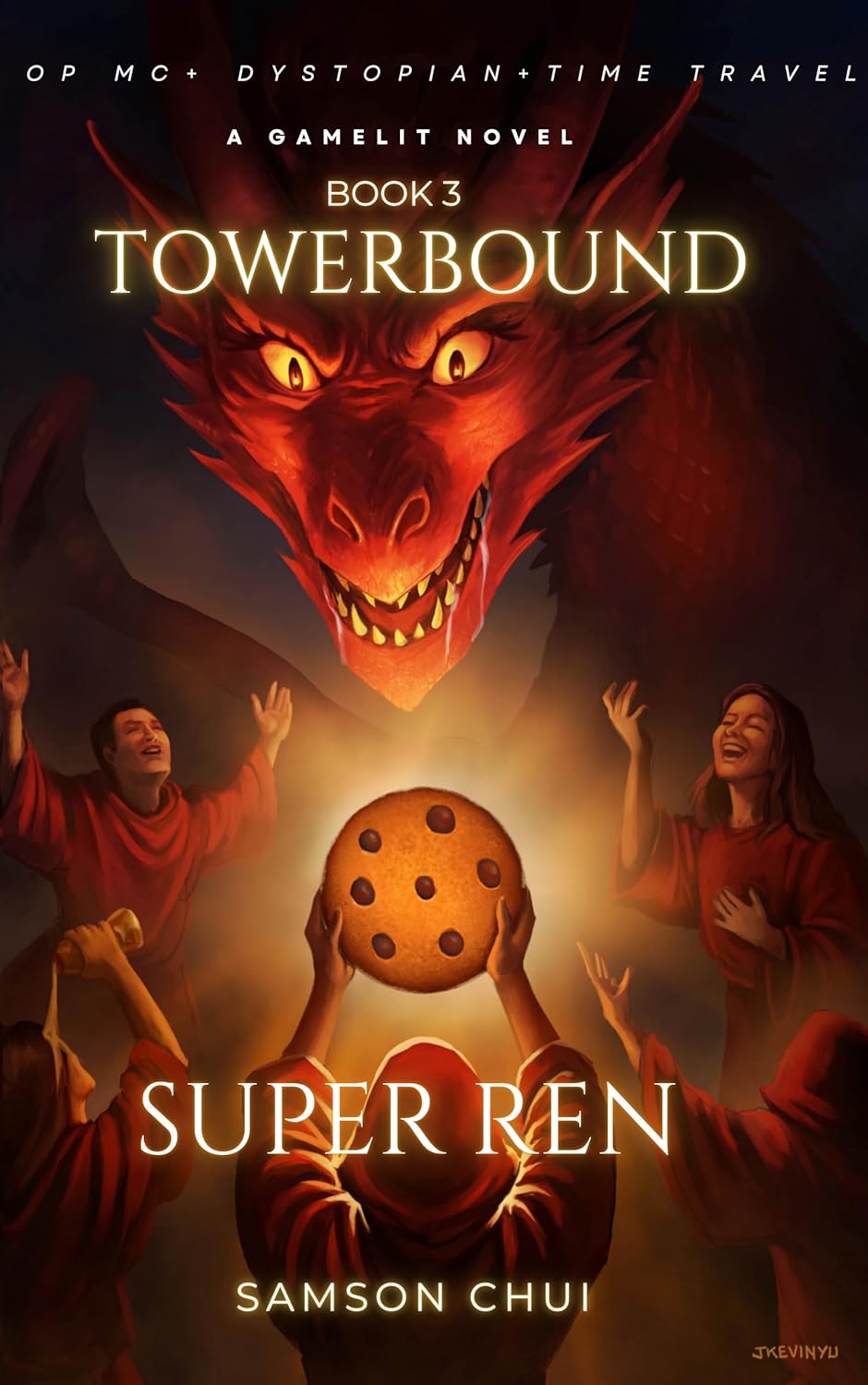
Image is from Samson Chui's excellent LitRPG Towerbound series.
This is a shortened version of a 2 part article published February 2026 on Substack