Things I Don't Understand About Life
Just a sampling for your Sunday

Mar 8, 2026 · 8 min read
Consensus is a rare and valuable commodity these days. Whenever possible, it’s best to establish it early in any group endeavor, which this is, though admittedly I’m doing most of the heavy lifting. Early consensus gets everyone on the same page going forward, seemingly the preferred travel direction for most humans. Its pursuit is why so many of you—I haven’t had a real job in 30 years—have had to endure mind-numbing team-building activities like milk carton boat races, human knots, and Two Truths and a Lie. And toward this holy grail of unanimity I hereby offer a statement I believe we can all agree on: Life in this world features many, many things that are very, very difficult to understand. I can even find one in the previous sentence, namely the difference between “which” and “that”. I went back and forth a few times before settling on one, not because I thought it was correct but because I got bored with the process. In any case, I’m not talking about things almost no one understands, like AI or how a radio works, but rather more pedestrian phenomena that leave you with a mild to severe level of personal discomfort and confusion, forcing you to either spend time you don’t have figuring things out or live with the ego-smashing reality that you just don’t get it.
And now that I have brought us all into near-perfect harmony of thought, I’m going to smash the melody to smithereens, not, as it appears, by maniacally mixing metaphors, but by soiling the undies of some of our most sacred cows. So now, with apologies to anyone who’s yum is herein yucked, here are a few things that throughout my life have, to quote the late great Jimmy Buffett’s version of the late great Lord Richard Buckley’s epic God’s Own Drunk, “plumb evaded me”:
The appeal of awards shows: In a world teeming with self-congratulation, these endless odysseys of idol worship/navel gazing stand out as almost admirable in the purity of their collective narcissism. (Speaking of narcissism, I think we can all agree that was one hell of a sentence.) If you believed everything you heard at these saccharine circle jerks, you’d believe every single human involved in the entertainment industry was incredibly talented, hard-working, selfless, and a dozen other adjectives of adulation. Here’s all you need to know about these speeches’ sincerity: In a 2018 analysis of 1,396 archived Oscar acceptances, Harvey Weinstein was the second-most thanked person—behind only Steven Spielberg, and ahead of God.
Besides being boring, unfunny, and visually seizure-inducing, the shows often blow up my affection for actors I’ve loved for their roles in movies I’ve equally loved. Like most humans, actors are better when they’re scripted, especially by Hollywood’s finest scribes. Left to their own literary devices, they often shrink to being better looking but less interesting than people you normally hang out with. And, like politicians and professional athletes, most movie stars have so many people telling them their shit doesn’t stink so often they quite naturally begin to believe it. And that’s not a good look for anyone, no matter who they’re wearing.
Why some people don’t want sidewalks. When we moved into this lovely, wooded neighborhood nearly a quarter century ago, our kids were, at all times, both little and flight risks. Because I don’t pay nearly enough attention, I hadn’t noticed that the neighborhood was devoid of sidewalks, the absence of which made strolling the streets with our waterbug-like young-uns decidedly less relaxing than it should have been, largely because we are tucked between three busy roads, and in addition to the hyper-local motoring miscreants, drivers often cut through our streets at unsafe speeds to shorten their commutes. In a fit of simple-mindedness, I assumed the lightbulb of sidewalks simply hadn’t popped above any of my neighbors’ heads, so I took to the island of calm and reasonableness that is our local list serve to deliver the good news of sidewalks to what I was certain would be nothing but universal, forehead-slapping acclaim. Instead, according to the most emphatic respondents, it seemed sidewalks fell just below genital warts on their desirability spectrum.
Look, I like trees as much as the next person, unless, apparently, the next person is many of my neighbors, and I realize that some trees would have to fall for sidewalks to rise. But what I don’t get is why all the other concrete and asphalt—roads, driveways, walkways, statuary, etc.—does not poison our hood’s oh-so-cherished “park-like setting”, but somehow a five-foot wide ribbon of concrete to keep cars and pedestrians separate is its kryptonite. In my darker moments I think perhaps some people here think that if we had sidewalks it would be more inviting for people who don’t live in the neighborhood to walk in the neighborhood, which I believe makes them NIMFYs because, absent sidewalks but present traffic, peoples’ front yards are the only safe place to be.
Why, at most formal occasions, all the men are dressed virtually identically, and yet if two women show up wearing the same dress it’s a disaster. In both the human and animal kingdoms, more often than not it’s the male of the species that does the wooing, and nature does much of the work by making the non-human males the more visually spectacular gender. For the most part we do exactly the opposite, and while I invite you to draw your own conclusion as to why this has been, here’s hoping that one of the tendrils of the increasing fluidity of gender is that people can wear whatever they want wherever they want. I, for one, would vote for any candidate who proposed legislation banning buttoning the top button of anything.
Why as kids we’d all throttle our best friend for the last morsel of anything, and as adults we avoid that same last piece like it’s nuclear waste. This item’s companion confusion is the inexplicable yet persistent popularity of tapas restaurants, as in addition to adding more plates with last bites no one will take, they also introduce the unwelcome nostalgia of geometry and algebra to the dining out experience. Yes, sharing is caring, and it’s a law of nature that other peoples’ food is almost always better than yours, but small plate eating blurs the lines of possession, and figuring out who deserves the last shrimp shouldn’t be a test of both morality and mathematics. What we should do is have a designated finisher at each meal, a title given maybe to whoever finds the first menu typo or grammatical error.
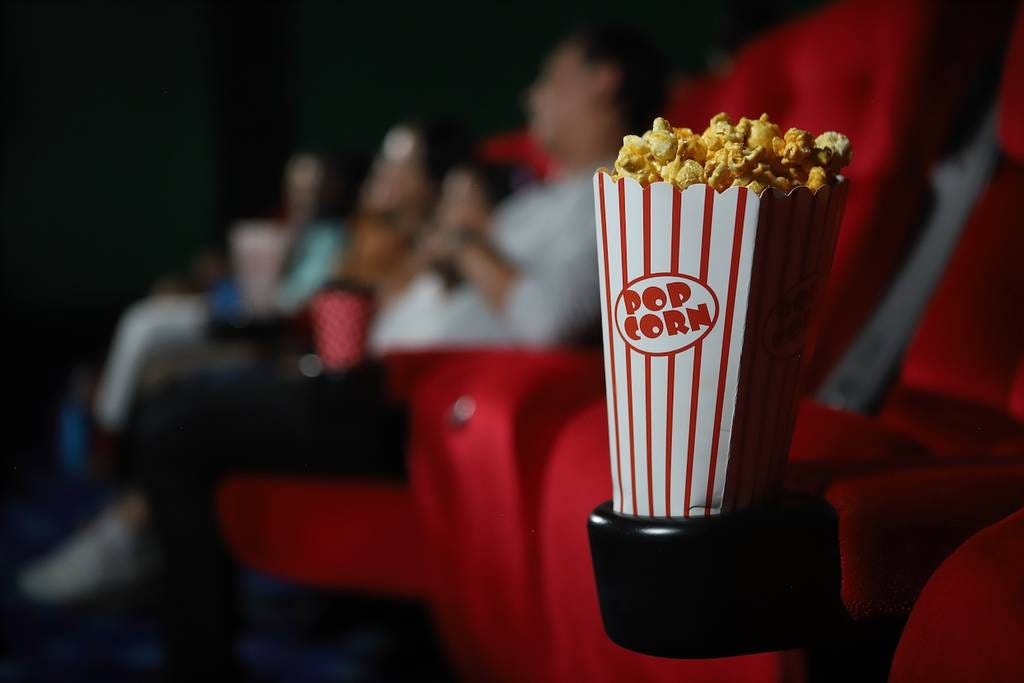
Speaking of inexplicable yet persistent popularity, movie theater popcorn. At the risk of irritating at least one person I love dearly, I cannot decode the disconnect between the anti-noise admonitions that bombard modern movie patrons and the fact that one of humanity’s noisiest foods—popcorn—is the venue’s most available and popular munchable. If we’re going to partake of the loudest food item this side of rock candy-covered corn nuts, then it should be an all-noises-on situation, with PSAs encouraging cell phone use and knuckle-cracking. If, instead, a quiet moviegoing experience is desired, the concessions stand should be filled with marshmallows, bananas, Twinkies and mashed potatoes, all unwrapped for silent access and consumption.
Popcorn and movies were paired as cheap luxuries during the Great Depression, but by 1949 the munching had gotten so bad that an Oregon state senator introduced a bill—with eight co-sponsors—to ban popcorn and peanuts in movie theaters. The snack lobby plopped bags of buttered popcorn on each senator’s desk two days later, and all nine of the bill’s sponsors were photographed chowing down, thereby scuttling the legislation.
Despite having relatively crappy hearing, I am horrid at blocking out ambient noise, and so I station myself as far away from other humans as possible when at the movies. Invariably, however, just as the last PSA telling me to silence my cell phone and my pie hole ends, a late arrival with a bucket of popcorn the size of a small child and six crinkly-wrapped candy bars plunks down directly behind me. I do appreciate the ongoing irony, if not the clamor.
Single-sport stadiums. The word I have historically used to describe the thinking behind having separate billion-dollar stadiums for professional baseball and football teams in the same city is “ant-brained”, but I’m starting to think that’s a disservice to our ant friends, who recently so infested our level 2 EV charger that it gave up the ghost, which both annoyed and impressed me. (Cranky old man alert) When I was a kid, baseball, football, even soccer and the Stones played in the same stadium, and somehow we all survived. Now, every time I drive through Baltimore I am reminded of what a waste of space and public resources it is to have two such massive humanity-holders side-by-side. At the ripe old age of 25, M&T Bank Stadium, where the Baltimore Ravens play, is getting a $600 million upgrade, every dollar of which is coming from public coffers in my home state of Maryland. I will always be fond of M&T as the site of my first-ever Covid vaccination, but in non-pandemic years it seems to be in use on average about a dozen days, which by my math works out to $50 million in upgrades per event.
I simply don’t believe we don’t have the technology and expertise to build stadiums that can provide compelling experiences for multiple sports. This is America, for crying out loud. We’ve been putting gas and electric engines in the same cars for 15 years, which to me seems seriously more complicated than putting butts in the same seats for different sports. Admittedly we were two years behind the Chinese when it came to plug-in hybrids, but we were first to put peanut butter and jelly in the same jar (Goober, 1968). And in 1904 an American, S.W. Atherton, invented the extension cord, which isn’t really relevant but nonetheless worth knowing.
What happened to all the quicksand? Like me and my brilliant friend Eric, who reminded me of this, kids who grew up on adventure TV and cartoons like Tarzan, Johnny Quest, and Clutch Cargo came to believe that quicksand would quite literally be one of life’s greatest and most consistent hurdles. And yet, here I sit at 67, having spent a lot of time in the places quicksand seems to frequent—US rivers and estuaries, the marshy coasts of Florida and the Carolinas, and the canyons of southern Utah—having had nary a single live quicksand-related experience. Just another bill of goods sold to us as unsuspecting children, like the existence of dragons and health benefits of whole milk.
How to end these things.
Comments (1)