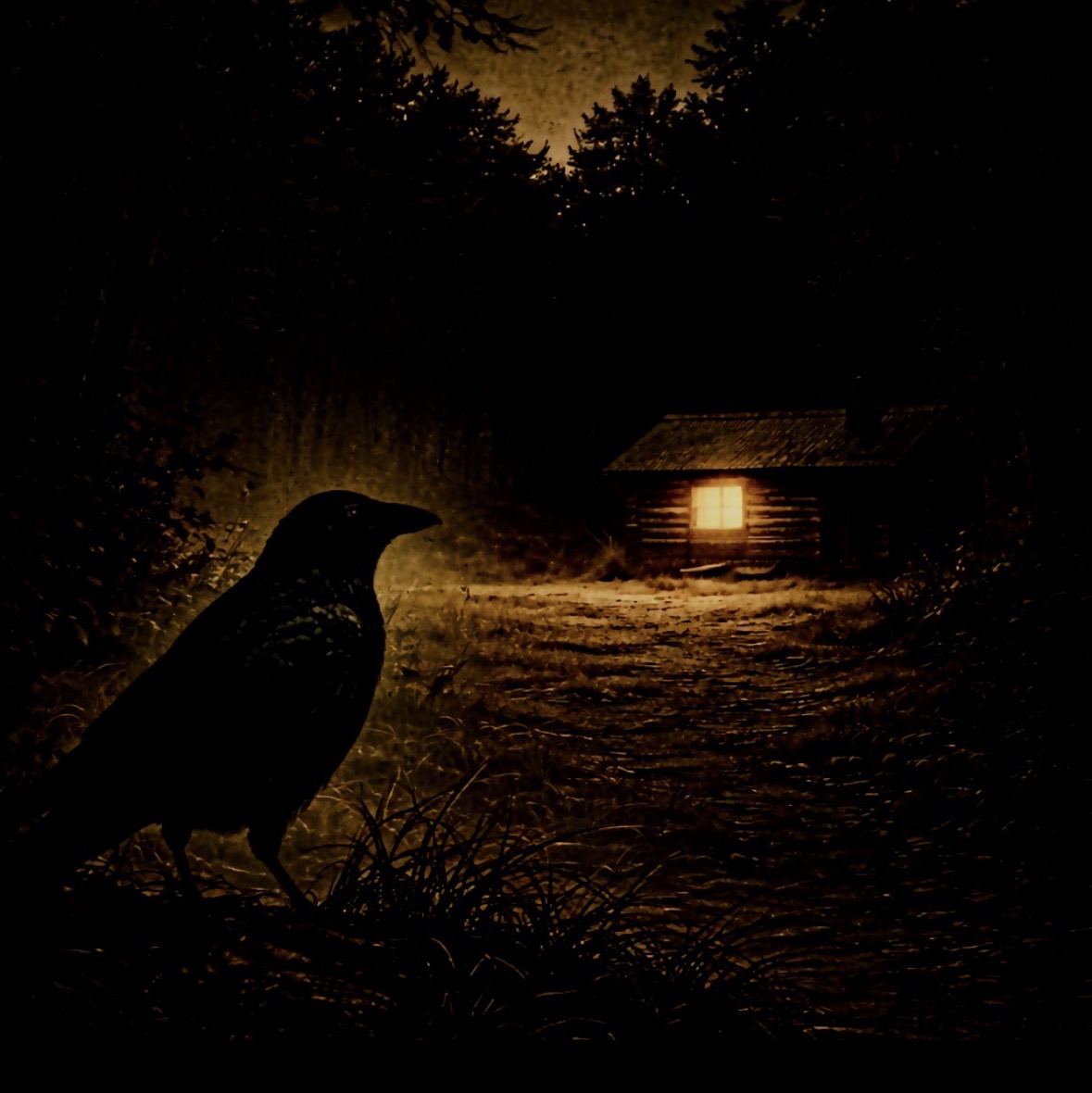
The Tale of Godfather Death
Maqama folktale of al-Andalus

May 18, 2026
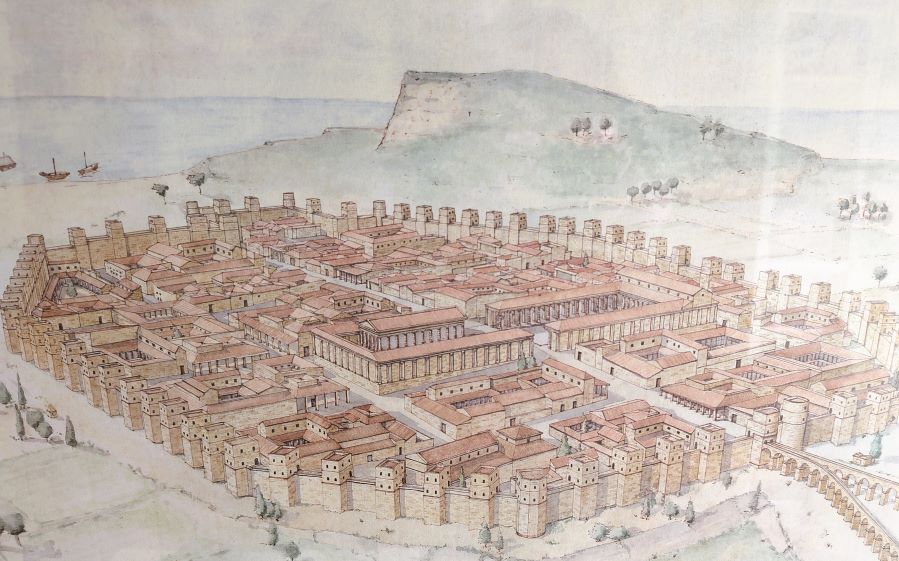
My tale is of the city of Barshilūna under the rule of Sulayman ibn Yaqdhan al-Kalbí al-Arabí, Walí of the Catalan lands by the Grace of Allah the Most Merciful. This city, founded a thousand years before as Barkheno by Hamílcar the Carthaginian, was known later as the Roman Barkino and retained this harsh name under the Visigoths until its name was softened into the mellifluous Barshilūna by the lyrical beauty of the Arab tongue: a transition from the uncouth masculine to the graceful feminine.
Truly it is a city of metamorphoses, where that rough young bearded male Barkino, a town that once barked its name like a hound, becomes the enticing female who now sussurates her name like a bewitchment, the Barshilūna that we know of and so much desire today, a houri with singsong wit and soft pleasurable thighs, the twin rivers of Besòs and Llobregat that flow their delightful way into the glistening sea.
Well, it is of this fair city I wish to speak of now, how one day a poor man went weeping through her streets disconsolate. He was a Christian, a Visigoth named Roderic, and a poor man with many children. His wife had just given birth to their eighth child, a son, and they had no clothes, no money, and in time would have no food to give the boy. Nobody would even be Godfather to the child, for the Christians have this thing called a baptism where one promises to be a father in the eyes of God and this Godfather must give the birth family a money gift. Such is their barbarism.
Roderic went cursing his poverty through the streets near the Rambla where the creek flows from the hills, and there in the dawn light he met a radiant man who asked him what was amiss. He told the glowing golden man of his trouble, how he was poor with many children and that no man would be Godfather to his newborn son.
“I will be Godfather to your son,” said the beautiful radiant man.
“And who are you?” asked Roderic.
“I am Jeshua, Jesus called your Christ, the true-shooter, the one who aims and shoots true with an arrow of holiness.”
“No thank you, then,” said Roderic. “You are not just as a divinity: to some you give plenty and to others you give misery and want. You allow this division into rich and poor and do nothing. Good day to you.” And he went on his way.
Then he met a fiery man with deep crimson skin and black horns, with a rather fetching little pointed beard and tigery eyes, though sinister in mien. Again they conversed, and again Roderic told him how he had no money and nobody to be Godfather to his poor child.
“I will be Godfather to your son,” said the sinister one.
“And who are you?” asked Roderic.
“I am Sheitan, called the Devil by your people,” said the man, “though truly I do not deserve the rep they’ve given me. I step out into the world to seek human sympathy, for truly I am a man of wealth and taste. I will stand Godfather to your son.”
“Nay then, I must respectfully decline,” said Roderic. “You are unjust, because you reward those who’ve served you faithfully all their lives with eternal torments, which hardly seems fair.” And he went on his way.
Then, at the place where the Rambla stream meets the sea, where men point into the distance and dream of New Worlds, Roderic met a third man. A tall thin man dressed in mournful robes with a scythe on his shoulder. Hooded so deeply that his face could not be seen.
This man also asked what ailed the poor beggarman. Again Roderic told of his woes, and how he had no Godfather for his baby.
“I will be Godfather to your son,” said the mysterious one.
“And who are you?” asked Roderic.
“I am Death.”
“Then I accept your gracious offer sir,” said Roderic. “You are a just man because you give the same to all, and make no distinction between the high-born and the low-born.”
So Death and the poor man went to fetch the child and they all went to the Church for this Christian baptism, this dunking-in-the-water which means so much to them. The Christian washes once in his lifetime, while the Muslim washes five times a day.
When it was done, Master Death said: “My Godson will become a famous physician. As a christening gift I give him the power to see whether a person will live or die. If at the foot of a sick-bed he sees me standing, the patient shall die. If I am absent then the patient shall live. Tell the boy when he reaches adolescence that his fortune is made and he shall be a rich doctor.”
So it came to pass. In time Roderic told his son Arnau about his special gift and set him up as apprentice to a barber-surgeon. Soon the lad was famous far and wide as an unerring diagnostician, though poverty had crippled him with lameness and he walked with a cane. He accrued many riches and set up his ailing parents in a fine house.
One day the Walí Sulayman called on Doctor Arnau, though the lad was no more than fifteen years of age. His Vizier Maliq, whom he’d always relied on for his wise judgement, was unwell, and the great lord demanded that Arnau cure him. He offered two barrels full of gold coins and a fine Arabian stallion to any man who could cure his minister.
When Arnau got to Maliq’s bedside he saw that Death his Godfather was at the foot of the bed, an infallible sign of the patient’s imminent passing. Desiring the gold and the honor, he begged Death to leave, but Death repeatedly refused him this request.
So Arnau turned the death-bed around, made it so Death was standing at the head and not the foot of the bed. Immediately the Vizier Maliq began to get well, and Death retired in frustration.
Arnau received the gold reward and the fine stallion and was appointed as personal surgeon to the Walí, but Death was angry and visited his Godson one night.
“If you trick me like this again, you shall die!” he threatened, shaking his bony fist.
Arnau was sore afraid and vowed never to trick Godfather Death again. But soon the great lord Walí Sulayman’s daughter, the beautiful Jazmin, was sick unto death, and Doctor Arnau was called to her bedside. This time the great lord promised the hand of his daughter, along with a handsome dowry, to whoever would cure her.
Of course Arnau saw Godfather Death there standing at the foot of the sick-bed. Of course he pleaded with him, beseeched the grim figure, to go away and leave the maiden in peace and health. Of course Death refused, because accompanying those destined to die is his duty – nay, literally it’s his only job.
And again, in desperation, Arnau played the bed-trick again. He turned it round so Death was standing at the head of the bed, the princess became well instantly, and Godfather Death went away in fury, vowing a final repayment for this treachery.
On the night of the wedding between Doctor Arnau and the Princess Jazmin, when they were alone in their luxuriant chamber of muslin silk and fine candles, when they had committed their seeds the each to other in the act of matrimonial love, when the bride lay sleeping, there came a heavy knock at the door.
Arnau answered the door in his bedchamber-robe. It was his Godfather Death come to visit. His Godfather led Arnau to the balcony of the chamber, lay down his scythe, and they stood there watching a procession of millions of tiny lights. Death lowered his hood and it was the face of an ordinary man, not a skull – but a face of the deepest melancholy with the most woeful eyes anyone might ever see.
“What are these lights, Godfather?”
“The are the life-lights of all the men and women on Earth, my son,” said Death. “Each one burns for a time and illumines the dark night, then is snuffed out just as others spark into being.”
“Which one is mine?”
“This one,” said Death, showing him a tiny flame guttering out in the palm of his bony hand. “This one will now be extinguished.”
And he opened his other fist to show a new flame just kindling into existence. “This is the life-light of your child, who lies sleeping in the belly of your bride, the woman sleeping now in the soft bed of her altered destiny.”
Arnau watched as the two flames were presented to him by Death, the one slowly dying out while the other was struggling to life. The failing light flickered out and Arnau dropped dead at the feet of his Godfather, who spoke mournfully to him as to his own son gone away:
“And so you thought to cheat Death! My son, nobody can cheat Death... least of all Death himself.”
And that is why Death will not show his countenance: that we do not see the great sadness in his eyes as he carries out his duty and so feel pity for him. For that pity is something he could not bear coming from us mere humans.
Comments (4)