The noontime coupling of the oriphantius
flash fiction on ephemeral lives

Apr 18, 2026
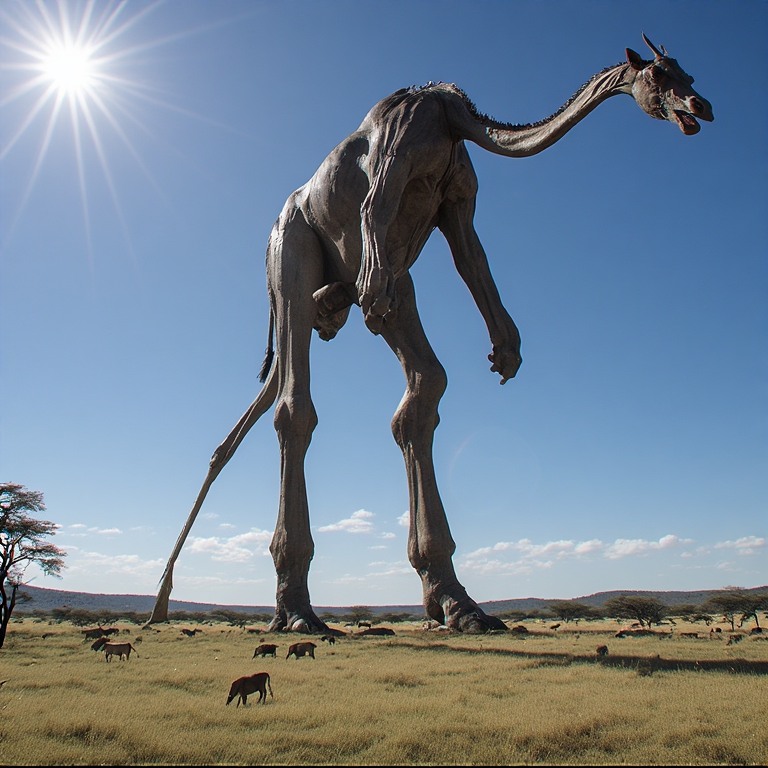
On the planet of Paleastra, our fauna has an unusual characteristic. The smaller the creature, the longer-lived, and vice-versa.
So it is that the graymoths of the Iykyoran Plain will live for several centuries, fluttering beneath the many moons night after night, never to waste away. Nomadic insectoid columns of silverback marchers will tramp several times around the planet in the course of their small but lengthy lives — unless they are trampled underfoot by larger beasts. Worms burrow beneath the soil for eons, and tiny scuttling crustaceans have seen the transit of geological epochs from their seabed habitats, where they lurk now as evolutionary relics.
Out on the savannahs, the swift apex predators such as the throat-tearing menashin and the crimson-taloned leapstalker have a reduced life of a mere year or two. The great herding beasts on which they prey, such as the horned jyllek, have an even more reduced livespan. Their slow-moving bodies bulk up huge and die over the course of a single season.
But the most transitory of creaturely existences, the most ephemeral of lives on this world of ours, is that of the great oriphantius. Most gigantic of animals, colossus of the plains; it will live for a single day.
When it is born in the morning of its life-day, clambering out of the womb of its dead mother as the sun rises, the oriphantius is only as large as a tree, or a nest-mound built by millennia-old termitan colonies. By midday the oriphantius pup has grown to adulthood, has become a true behemoth.
And now in its noontide maturity it seeks out a mate.
Early afternoon will see the oriphantius pairings, huge as mountains, procreating out here on the plains. The rhythmic movements of their great copulations sound like the rumblings of thunder, and they move the ground like troubled earthquakes. When the male unloads his seed into the dam, he bellows out a roar of release that shakes the savannah trees for miles around.
The pair then separate and move apart, never again to see one another. Making ground in vast strides, they diverge across the land all afternoon, with a determination to meet their deaths alone, to take no solace at all in togetherness. But the reproductive act is done, and their progeny already grows prodigious in the belly of the female.
As the sun goes down, the great oriphantius, now elderly, starts to weaken and slow more even than during its stately daytime progress. Its strides, each one a league or more, become painful and arthritic.
The oncoming of dusk sees the creature stoop and sink, submit to the heaviness of its age, curl up on the ground, settle for its first and last ever rest… and die.
Small carrion creatures who, in their longevity, have dined on countless generations of these beasts, will have gnawed at this oriphantius’s great-great-times-a-thousand-grandsire, now come to feast on the dying colossus in its final moments.
As it breathes its last, it barely feels the pecking and the tiny bites that will in a day or two reduce its corpse to a monumental skeleton, which in turn time and the wind will grind down to dust and carry away into the Western Bone Desert.
The people of this planet lament the fragility of mighty things. We think it pitiable that such vast lives should be so evanescent.
But then one night we catch a glimpse of the graymoths and their silvered wings in the light of the moons. Then we think on the many centuries these small nocturnal wanderers have witnessed, how these tiny things once saw the coming of our grandfathers and grandmothers, the pairings that created our parents and then ourselves, and how they will flutter this same way for our descendants so many untold generations in the future.
And we renounce the countings of our own years then, and reckon ourselves fortunate with whatever time we have to come. From time to time we come across the great eroding skeletons on the savannah, these day-old colossans now swiftly becoming dust, and we resolve to calculate not the duration but the beauty of our lives.
THE NOON COUPLING OF THE ORIPHANTIUS / END
Thanks for reading! If you enjoyed that and feel able to contribute, I'd be grateful for a tip