The Great Appeal of Carolyn Bessette-Kennedy
Love Story: John F. Kennedy Jr. & Carolyn Bessette
Feb 26, 2026 · 4 min read
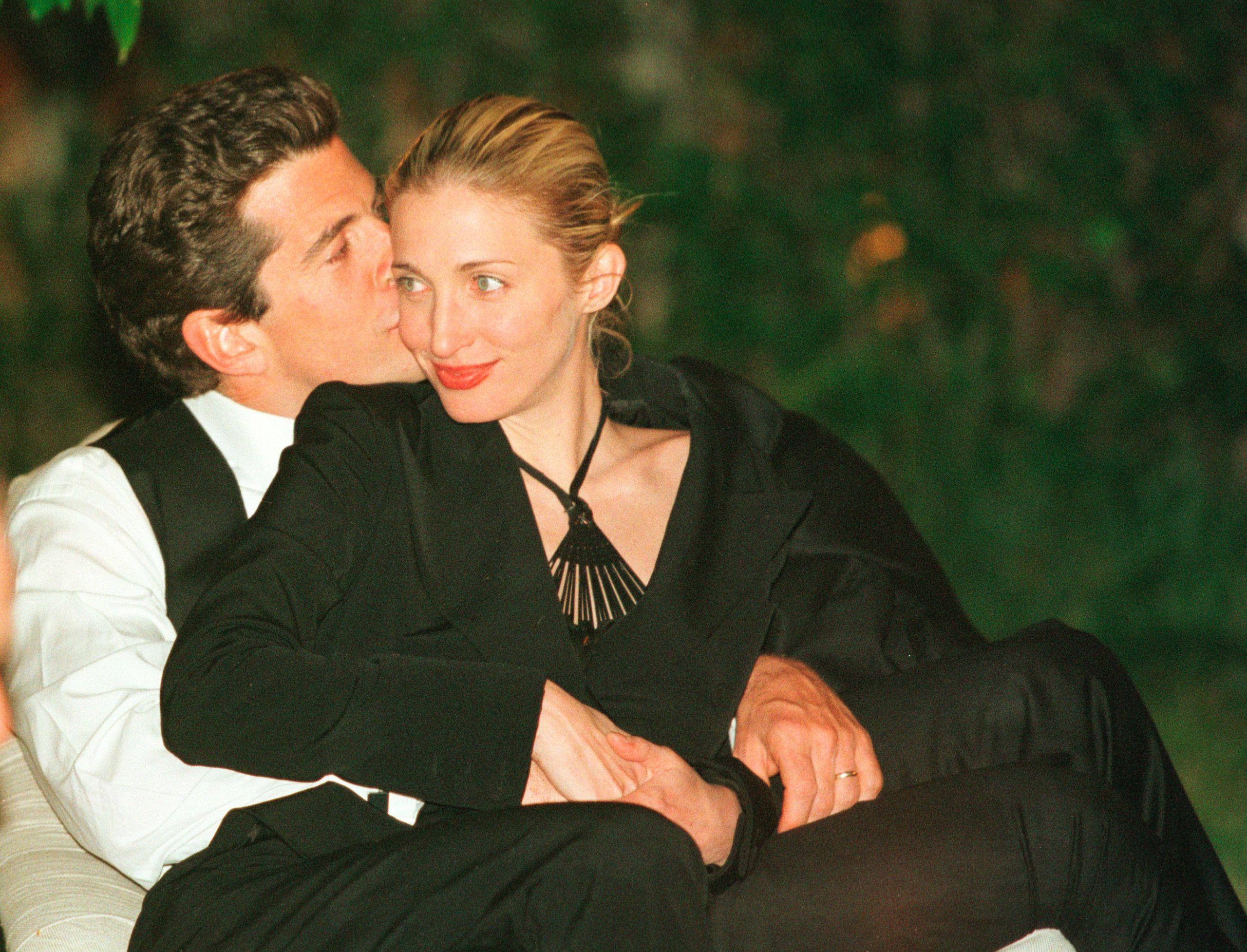
There are women who follow fashion, and then there are women who quietly define it. Carolyn Bessette-Kennedy was the latter.
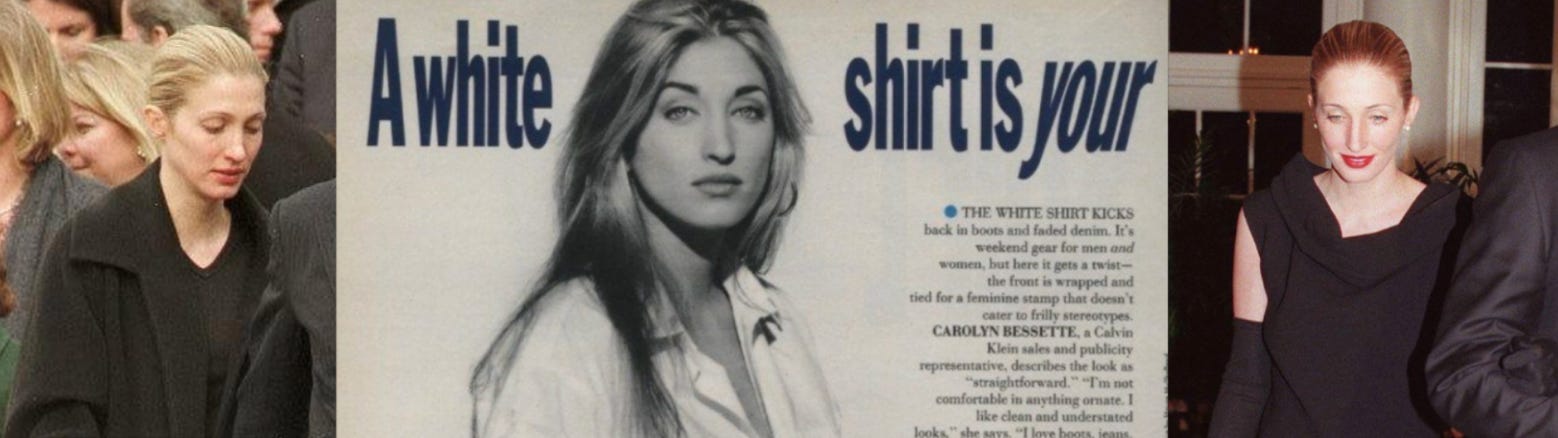
Before “quiet luxury” became a hashtag and before minimalism was bottled and sold back to us, Carolyn lived it. She stepped onto the streets of Manhattan in clean lines and neutral tones, somehow making restraint feel intoxicating. A black slip dress. A sharply cut coat. A pair of narrow sunglasses. Hair parted, however it fell that day, undone, but perfect. That was the formula, and she never over-explained it. (and do not forget her iconic Charles J. Wahba headbands…)
In the 90s, when logos were loud, and glamour often came lacquered in excess, Carolyn offered something different. She worked at Calvin Klein. She understood editing. She believed in the power of simplicity. And she proved that you don’t need embellishment when your presence is enough. She even had brands remove their logos before she wore them.
Every woman who has ever stood in front of her closet whispering, “I have nothing to wear,” understands the appeal. Carolyn’s wardrobe was a master class in intention. She wore silk slips as if they were armor. She favored ivory, charcoal, camel, and inky black. Even her casual looks, a sweater tossed over her shoulders, low heels clicking softly on the pavement, felt cinematic
It wasn’t just what she wore. It was how she wore it. She moved through New York as she belonged to herself.
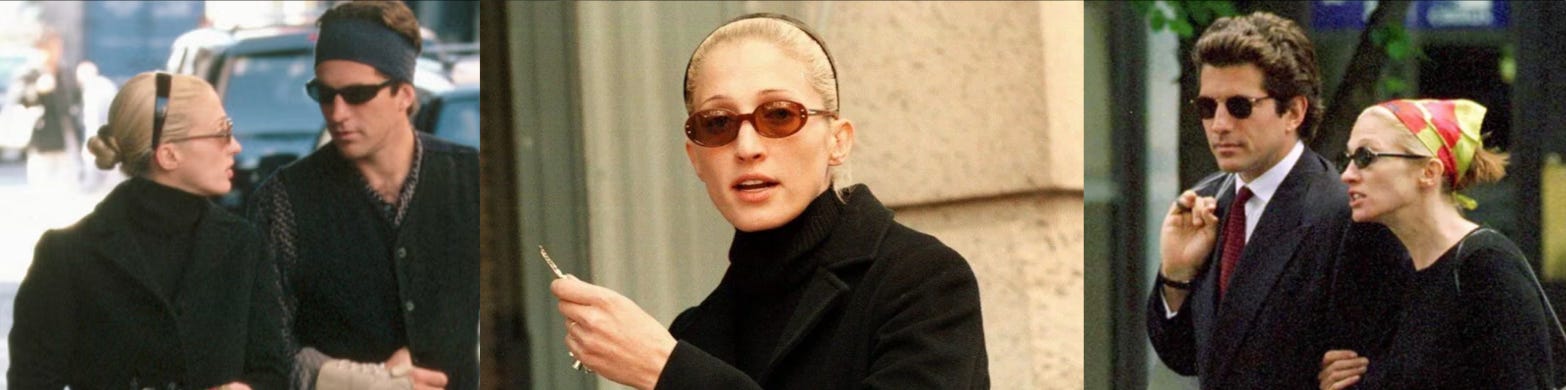
After marrying John F. Kennedy Jr., she became a fixation. Photographers followed her relentlessly. They waited outside her apartment. They trailed her down sidewalks. They turned simple errands into a spectacle.
She hated it.
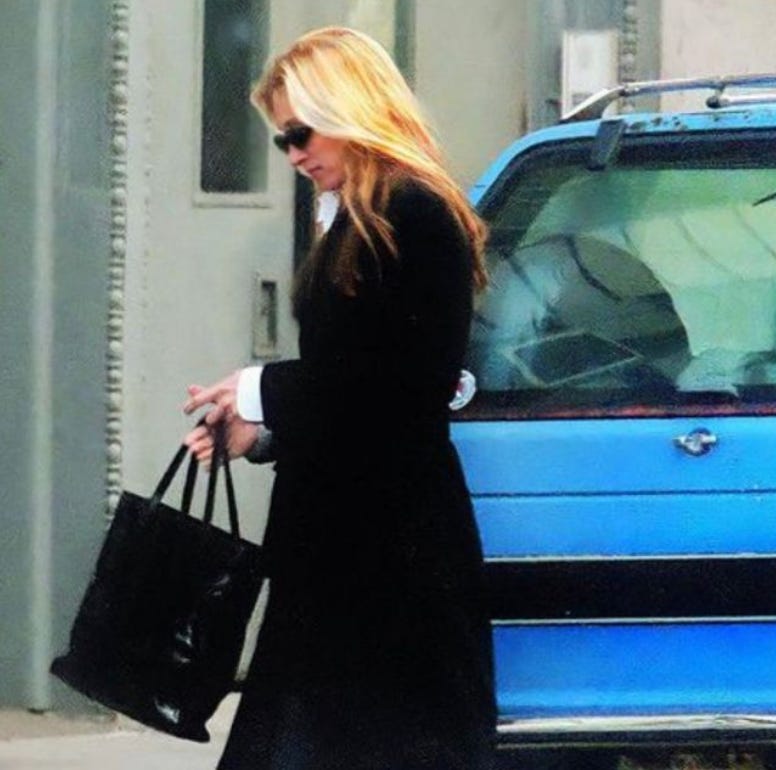
Friends have said she found the intrusion suffocating. And you could see it. The sunglasses grew larger. The jaw set tighter (as seen in the photo above to the right). She rarely performed for the cameras. There were no playful waves, no carefully staged smiles. Carolyn’s distaste was visible. She did not sign up to be public property.
In that refusal, there was something deeply modern. She was not trying to be famous. She was trying to live.
And maybe that’s part of why we admire her still. She did not court the spotlight. She endured it.
Fast forward to today, and suddenly the 90s are everywhere again. Clean tailoring. Bias-cut dresses. Barely there makeup. Women are trading in overdone for understated. They’re looking for pieces that feel timeless instead of trendy.
It’s no coincidence that Carolyn’s image is pinned to countless mood boards.
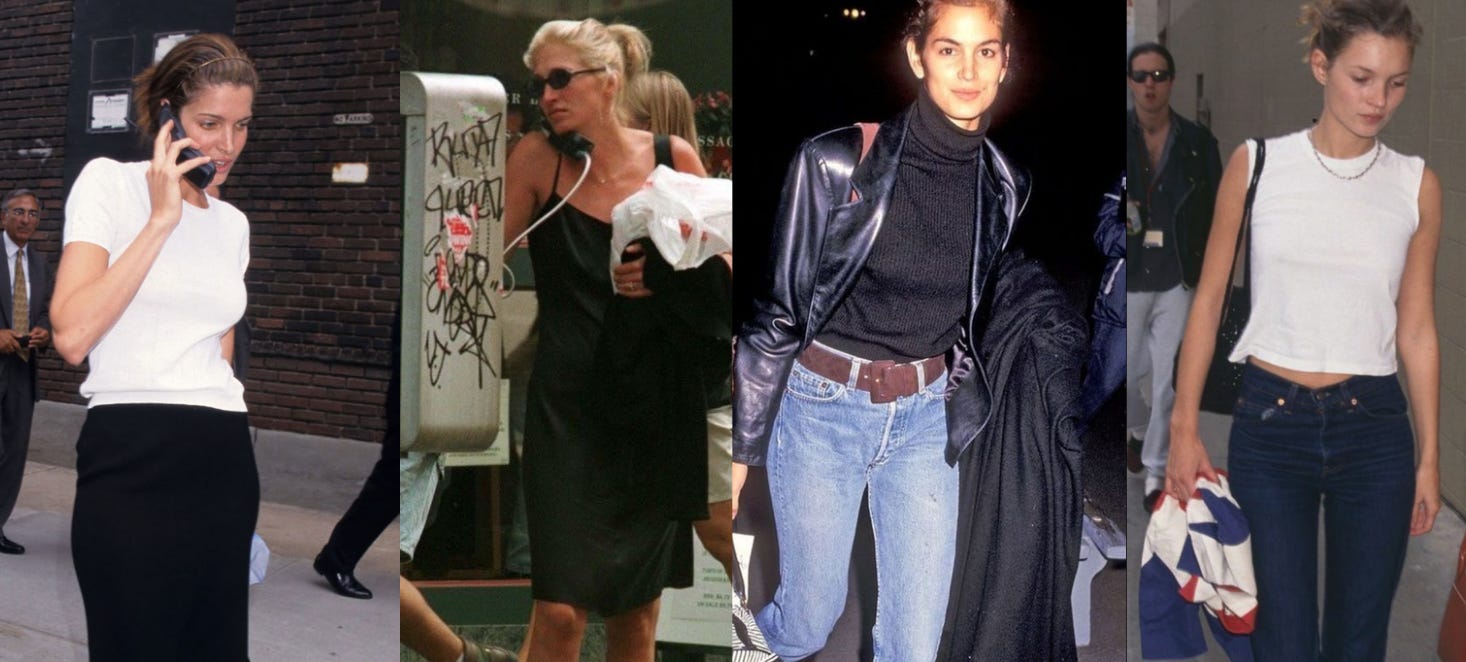
In the reimagined world of Love Story by Connor Hienes, the romance between John and Carolyn feels like a living fashion editorial. The way Hienes captures their presence makes every woman crave that era all over again. The soft lighting. The quiet apartments. The understated elegance of a couple who looked like they had stepped out of a Calvin Klein campaign and into real life.
Through his lens, Carolyn is not just stylish. She is luminous. She becomes the embodiment of that 90s ideal: intelligent, self-contained, a little mysterious. The kind of woman who doesn’t chase trends because she is in the mood. The kind of woman we all strive to be.
And it makes you want to pull your hair into a low bun. To slip into a silk dress. To walk through your city as if it were Manhattan in 1996.
There was a stillness to her beauty. Not flashy. Not loud.
Her face was striking, yes. But it was her restraint that left the deeper impression. She seemed to understand that elegance is often about what you leave out. No excess jewelry. No chaotic prints. No oversharing.
She made minimalism feel feminine, not severe. Romantic, not cold.
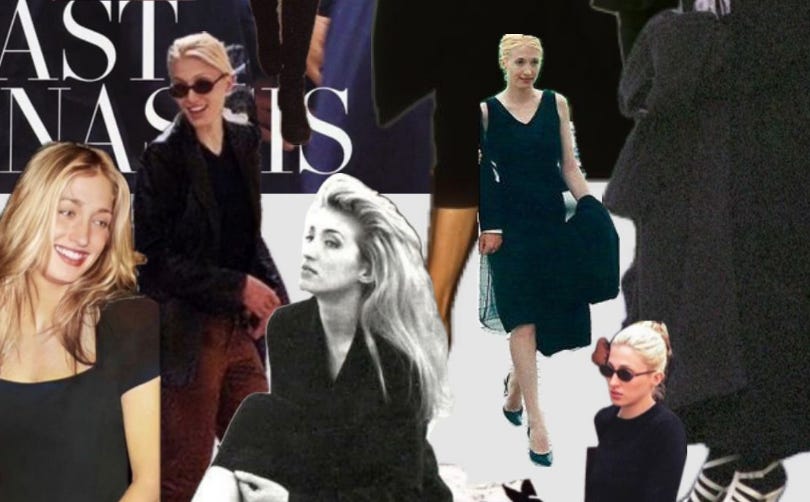
Even now, decades later, her photographs don’t feel dated. They feel aspirational. You could place her on a street corner today, and she would still look impossibly current. That is the mark of true style.
And then there was the love story.
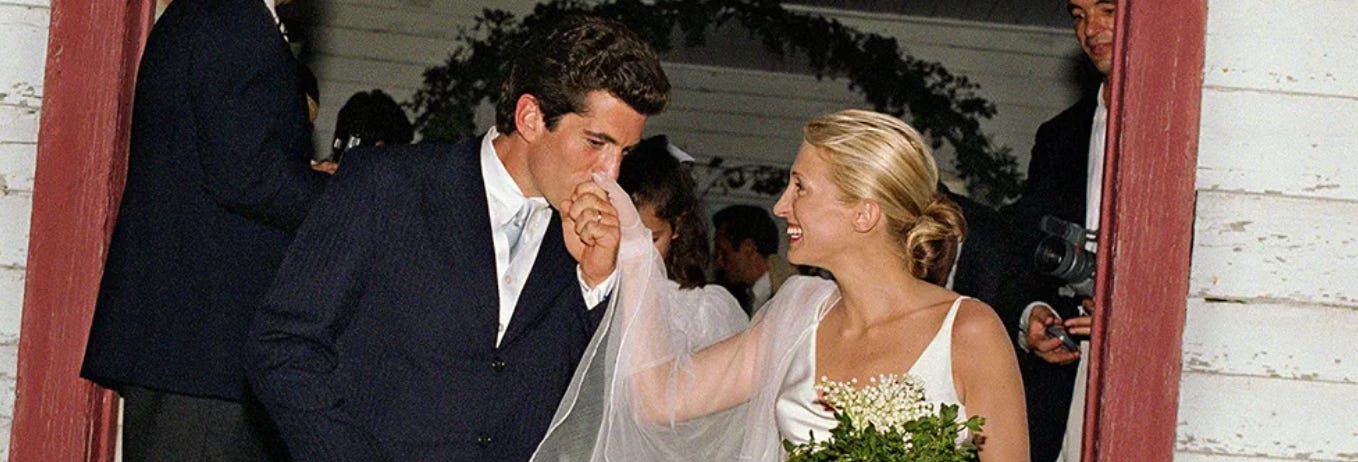
When Carolyn married John in a secret ceremony on Cumberland Island in 1996, it felt like modern royalty had found its queen. The son of America’s most mythic president and the cool, composed Calvin Klein publicist. It was Camelot, but pared down. Private and intentional.
Their chemistry was undeniable. He was warm and charismatic. She was poised and reserved. Together, they balanced each other. Photographs of them walking hand in hand still carry a charge. The way he looked at her. The way she leaned slightly into him.
It wasn’t a fairy tale without pressure. The scrutiny was relentless. Expectations were impossible. Yet beneath it all, there was something real.
In Love Story, Connor Hienes reminds us of that tenderness. He paints them not just as icons, but as two people trying to carve out space for their relationship in a world that would not stop watching. And in doing so, he revives the ache and romance of the 90s all over again.
Carolyn Bessette-Kennedy remains timeless because she never tried to be timeless. She simply was herself. Elegant. Private. Unapologetic.
And maybe that’s why, when we think of the 90s, we don’t just remember the fashion. We remember her.
xx