The Fifth Dimension of Music!
The Origins of Music
Mar 10, 2026 · 4 min read
I must ask you, how many dimensions are the world composed of? Science teaches us four: length, width, depth and the fourth dimension of time. But outside the scope of science, artists discovered a new dimension drowning in the sweet honey of its fabric.
The New Dimension was named Music.
There is geometry in the humming of the strings, there is music in the spacing of the spheres.
~ Pythagoras
Step past the fourth dimension!
This publication explores Western and Indian classical music — and everything they've grown into. Two beautiful traditions, each with their own vibe.
History of ‘Music’
The word ‘music’ derives from the Greek word, ‘mousike’, meaning “the art of Muses”. Muses refer to the nine goddesses in Greek Mythology. Daughters of Zeus (king of gods) and Titaness Mnemosyne (the goddess of memory), they were inspirational goddesses in the domain of literature, sciences, and arts.
Euterpe, Calliope, Polymnia, Erato were the Muses who inspired music, epic poetry, hymns and erotic poetry.
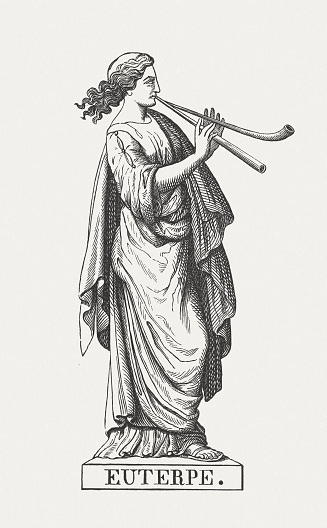
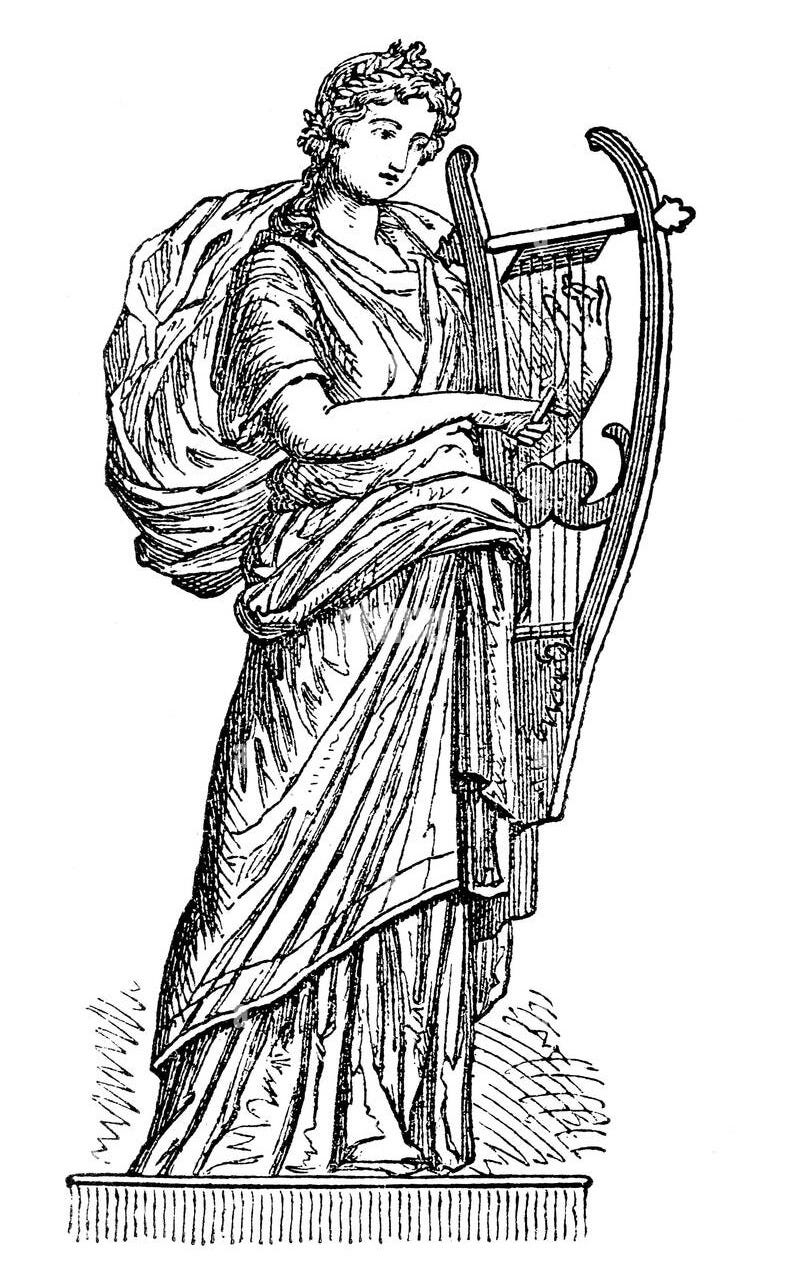
Mousike referred to not only music as we associate it today, but it also represented the broader domain of songs, dance, poetry, and other arts. This highlights how music was intertwined with all forms of creative expression.
Music transcends barriers; it’s a universal language capable of conveying feelings words sometimes fail to express.
Soon, “Mousike” was adopted as ‘Musica’ in Latin and further as “Musique” in Old French. As the Renaissance period emerged, music began to be associated more as composed auditory art mostly due to influence of church and priests in Medieval Europe.
Origins of Music are highly debated and remain one of the mysteries we are yet to solve. Experts have discussed whether music is an evolutionary adaptation or cultural creation, both seem plausible causes. There is no agreement as of yet on this interesting argument.
Laurel J Trainor argues that these seemingly opposing theories of evolutionary adaptation and cultural creation can be reconciled. Two thought processes arise around this discussion: the benefits of musical behavior drove the evolutionary adaptations or music is a cultural creation that was molded to existing brain structures.
Darwin’s theory on the origin of music relates it to sexual selection, perhaps arising during mating calls. But this theory has no solid connection to the actual origin of music.
Ancient societies such as Chinese, Egyptian, Greek, Indian, Persian, Mesopotamian, and the Middle East had a major influence on the development of music. Globalisation and the emergence of the Silk Road increased the communication amongst different societies especially the Indian and Chinese societies. The inter-sharing of cultures and rituals must have led to exchange in musical ideas, techniques and forms.
Historically, religions have often been catalysts for music. The Vedas of Hinduism immensely influenced Indian classical music, and the Five Classics of Confucianism laid the basis for subsequent Chinese music. [1]
Richard Wagner, a German composer, theatre director, essayist, and conductor, known for his operas, defined music as the shared ancestor of language as ‘speech music’. This is an interesting take, indicating how music is as old as the time humans began associating sound with meaning.
Maybe, this is one of the reasons the origins of music are difficult to mark across history. Music is the eternal pious water of our soul, it flows in our veins as much in our soul.
The oldest known instrument is no-doubtly the flute. There are many accounts of bones shaped as flutes from the Paleolithic period. The vast majority of Paleolithic instruments have been found in Europe and date to the Upper Paleolithic. [2] More specifically, The Divje Babe Flute from the Divje Babe cave in Slovenia is the oldest flute we have found. It is carved from a young cave bear femur.
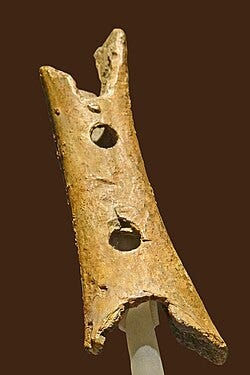
It is assumed that singing emerged much before the time flutes were carved, yet this claim is not confirmed.
In the Indian subcontinent, the prehistoric Indus Valley civilisation (from c. 2500–2000 BCE in its mature state) has archeological evidence that indicates simple rattles and vessel flutes were used, while iconographical evidence suggests early harps and drums also existed. [3] Chinese dynasties had similar bone flutes and a prehistoric instrument, known as qing.
Whatever the origin maybe, Music is a hidden language we all know how to speak :)
Sources
Grout, Donald Jay (1973). A History of Western Music. New York: W. W. Norton & Company. ISBN 978-0-393-09416-9.
Darwin's The Descent of Man, and Selection in Relation to Sex
History of Music [1]
Morley, Iain (2013). The Prehistory of Music: Human Evolution, Archaeology, and the Origins of Musicality. Oxford: Oxford University Press. ISBN 978-0-19-923408-0. [2]
Flora, Reis (2000). "Classification of Musical Instruments". The Garland Encyclopedia of World Music: South Asia: The Indian Subcontinent. pp. 319–330. [3]
Comments (2)

Thank you, I love knowing the history behind things, even when more questions arise than answers. That seems to be the trajectory of life, more questions than answers.