The Coffin
A woman is plagued by grief, with no end to the darkness.

Feb 26, 2026 · 5 min read
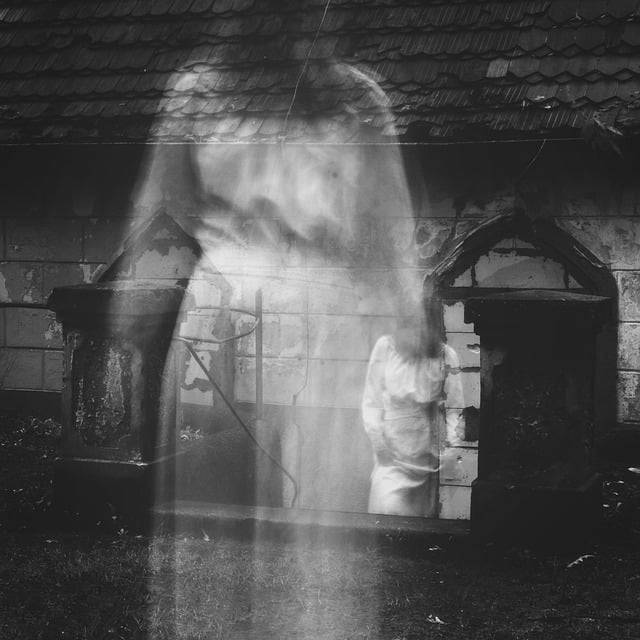
The woman stood still before the coffin, thinking solemnly to herself that nobody, no matter how terrible they are, should ever deserve to go through something quite as inhumane as this. She didn’t believe that word even came close to how unimaginably empty and colorless reality had become. It wasn’t terrible, nor dreadful—not monstrous, or even unspeakable. It was a feeling of consuming emptiness, a void that was settling within her bones like a sickness, or plague. No word came near the way she knew that she no longer had a purpose.
The coffin had been made out of pure mahogany, sturdy and polished, and it was small. It was far smaller than any should ever be, she thought, appalled that coffins of such size ever had to be built; but she supposed it didn’t matter, not anymore. As for the funeral, it had been held in a secret place, out in the woods behind their house, sitting atop the tallest of hills that overlooked their town. Only their family, along with Father Graham from St. Mary’s Church, had been invited, and nobody else—because no one could know.
When the Father was finished with his blessings and prayers, he invited anyone to speak, offering them the space to say anything they needed to in order to say the goodbye. Many stepped forward, standing timidly before the coffin as they spoke in fragile voices; but the woman hadn’t said anything. She felt very simply that there was nothing for her to say.
Once the ceremony was complete, the coffin was laid into the earth with care. Handfuls of dirt were thrown upon it—then it was covered, and the woman’s view was obscured more and more, until it was completely gone. The dark and full clouds had passed over the sun, swallowing the light, and the world was encompassed in gloom; the very same that tightened around her frail, fragmented heart.
The woman’s children had each brought a bouquet of flowers to rest atop the grave. They each whispered their solemn goodbyes, then they ran off and away, wiping their arms across their faces.
Her husband was next. He trudged up to the small grave. He whispered something unheard. Then his tears fell upon the dirt. He stepped away then, but he didn’t wander too far.
He wouldn’t leave without his wife.
The ceremony was soon over, and the family was beginning to disperse as Father Graham went to the woman’s husband.
“I can’t begin to understand how much torment you all must feel,” Father Graham said. “You have my deepest sympathies.”
“Thank you,” the husband said.
“If you, or your family, should ever need anything at all,” he went on, “you know just where to find me.”
“Of course.”
They shook hands briefly as Father Graham said, “Take care.” Then he left, heading for his car.
Only the woman and her husband remained, standing before the grave. They lingered in each other’s silent company, of which had not felt like true company in a long, long time, as the sun set restfully behind the rows of trees. They cast long, teeth-like shadows in jagged streaks across the forested land.
Her husband turned at last, and said, “Perhaps, we should go inside, darling. It’s getting dark.”
The woman said nothing back.
He attempted to put an arm around her, but she brushed him off. “My love,” he pleaded. “It’s best we go inside before it gets dark. We have said our goodbyes, we have—”
“I have not,” she said.
He looked at her. “Darling . . .”
“Please,” she whispered.
Her husband regarded her for a moment. Then, realizing there would be no change, he relented, and climbed the hill.
She gazed up at their husk of a house. She looked it dead in the eye, and found she did not recognize it anymore. Reality had done its impersonal work and was now laying to rest, leaving her trapped in one where colors, sounds, and life were nonexistent. She felt very clearly, within that void growing inside her, that reality would never feel the same as it had before; that their house would forever feel like a shambling place, one missing a quarter of its walls.
She saw her husband’s silhouette in the bedroom window, the lamp glowing dimly, as he beckoned her to come inside.
But she wouldn’t. Not just yet.
The woman stayed there until dusk. Once darkness enveloped the world, as if to match how she now viewed it. Or how it viewed her. She looked down at the ground, knowing all too well that the body was down there. It lay restfully in that unnaturally small coffin. It would never breathe again. It would never laugh, nor smile—she would never feel its warm embrace again.
She knelt, placing a hand upon the dirt.
“I promise we will be with each other again,” the woman said softly—and although she held a sick feeling these words were going nowhere, she found comfort in speaking them. “One day, someday soon, we will meet again . . . I promise, my darling.”
She wriggled her fingers through the soft dirt, as though she’d somehow get closer to him, and she prayed that wherever he was, he heard these words. She knew it couldn’t reasonably be, somewhere deep inside her, where the truth was mercilessly impersonal as reality itself. But, her faith unbreaking, she hoped still.
“Soon, my sweet boy,” she whispered.
The tears fell then, darkening the dirt.
Comments (2)