Summary of Auré
a draft of lore

Mar 26, 2026 · 6 min read
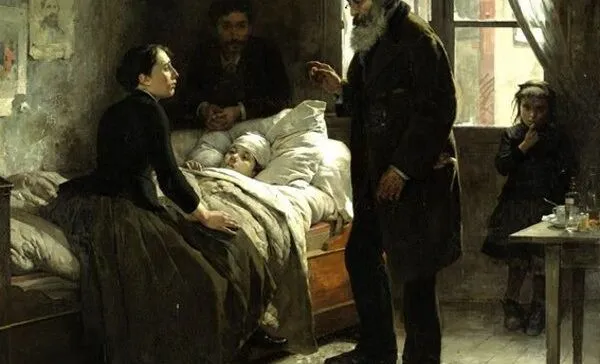
NOTE: this summary draft is outdated, but i'm putting it here anyway because i've decided to move my Auré excerpts over here. maybe some new people will see them. :)
Aurélien was born into a prestigious family, though what has made the family so prestigious has yet to be written, so you must take my word on the manner; he was born a quiet baby to a woman married into a prestigious lineage. Alongside his mother, who was the most doting of brides, stood his father, who was always firm by hand, yet still kind by gaze. His sister was born four years before him, and she was the doll of the manor, always pretty, always polite, always pleasant. Auré, as those would come to call him, would quickly disrupt the felicity.
During Auré’s fifth year it became clear that he was unwell. His mental development was quick, and of that his father was quite proud, but his mother and sister were not slow to notice how he’d fall and lose himself. This losing himself, at times, would occur mid-conversation, or while he slowly made his way down some stairs, or while sleeping; it was when he didn’t wake up one morning that the wariness became alarm. A doctor was commanded to visit that same day, and though the ailment could not yet be identified, it was spoken; that was a sentencing.
Auré’s father did not hate him, though the sudden alteration of his demeanor made the boy think it was so. The man was confused, and one must understand that he was a man who did not know confusion. Every question that he deemed worthy of asking, whether it be of himself or others, was a question that expected a prompt response. Something without resolution coming from his only son was not only a disgrace, but an insult. He became cold, for he could not comprehend a proper and close relationship with one intended for death.
Auré’s mother’s change was slower. She doted on the boy until she could no longer process such pain. She kept by his bed for months without end, as was expected of her. Other prominent mothers whispered and prayed for her, making sure to let her know they did so, and for such a while she was the pity of everyone’s hearts. She wore black, took the veil, and young Auré did not entirely understand why his mother looked at him the way she began to. He wanted her to laugh again, but truthfully, laughing became rather painful, in his chest; perhaps it hurt her too. To his mother, Auré and his illness became the same entity, the very same identity, something that merged uncomfortably into her own soul. How could she ever laugh again?
But you see, Auré refused to die, and it was such a small and hushed refusal. He was perpetually weak, but when his sister brought flowers and frogs and beetles into his room he smiled yet. When the maid, the one assigned to his room specifically, brought in his dinners he let her sit him up with little resistance. When he asked for his father, who rarely showed himself to the boy anymore, his eyes were still alight. After a time, a few years, he no longer became better or worse but instead existed in a cruel stagnancy. The women in town thought of his mother less, and the prayers subsided. His father avoided the topic with anyone, even his wife. The pair were tormented. Auré’s stubborn refusal to die felt like an insult to the already grieving pair. How long must their son draw out the inevitable? How long must they suffer in waiting?
Auré’s sister’s devotion never did cease, not while they were children. Those above-mentioned flowers and frogs and beetles became his entire world, all that he was permitted to see. He would ask her their names and purposes, and after a while, she began to know the answers. She would sit him up and he would brush her hair, long and pale and soft; he favored the way it always curled at the ends. She told him it was due to how she braided it when she slept, and then she taught him how to recreate the style. She would bring him things to read so he could keep learning (the tutor was dismissed when he turned seven and endured a bad couple of months, coughing and groaning and eating very little; it seemed the end), she would find new music he would certainly be captivated by, she learned to draw so she could teach him too—truly, it could be said that it was she who kept Auré alive, by supplying him with every wonder and joy human life has to offer, commonly known as intelligence and the arts and nature. Though Auré’s body could not heal, his mind flourished, and his heart grew bigger than his little chest could carry.
When Auré was sixteen, he rarely saw his parents, and that fact greatly bothered him. He had been quite an attached child, so this wound inside that overbearing heart was much too large for him to endure any longer. He was determined to meet them again, and he told his sister so. She told him that he needed to walk, that without that vital function, he was too akin to a lame horse, and that he might as well be dead. These words moved him, and thus he began to walk, truly walk, not just to his window and back, but to the door and down the hall, always stopping at the stairs for he could not yet trust his knees. The sight of him on the balcony drove his mother to tears, and his father to resentment. They would not meet him there; he would have to conquer the staircase.
And so he did, with his sister’s guidance and exercise and apprehension and practice, he did. His parents still would not meet him. They seemed to roam farther with each step closer he took, his father into town and his mother to the gardens. That is how it remained, and eventually, Auré did abandon the matter. He became too infatuated with being outside, with seeing everything as it belonged.
At eighteen he met his sister’s closest friend, and during that same year he fell in love with her. He was more than pleased when she admitted her love for him, after a fit of passion he was not aware he was capable of. They would write to each other, often, and they would both speak of each other, even more often. Her family found the young man strange, but he was the only son of such a prestigious family head. Perhaps it would be a worthy endeavor, a profitable match. Auré’s parents could not bring themselves to care for the situation either way, not in the slightest. Most of the fortune would be their daughter’s, as she was the eldest and she was healthy. Auré’s sister, however, did not approve.
She told the girl, “Dear, you let him fool you. He will never be better. The two of you could never live the life you so earnestly desire. If you marry him, you are destined to become his widow.” The girl then quit all correspondence with Auré. His heart was shattered, and though he knew hers to be broken as well, it must consist of a cold, hard substance.
He was never the same after that, after what he overheard his beloved sister say to the girl he adored, the girl he loved. Study was all that remained important. He must learn because he must change. He required discovery. He needed to heal.