ROBOT COMBAT LEAGUE
OFFICIAL SPORT RULEBOOK

Apr 6, 2026
Competition Format, Weight Classes, Regulations & Safety Standards
Version 1.0
Effective December 2024
INTRODUCTION
Vision & Mission
Robot Combat League represents the evolution of combat sports into the 21st century, combining cutting-edge humanoid robotics technology with the timeless appeal of competitive fighting. Our mission is to create a professional sport where human skill, strategic thinking, and technological innovation converge in spectacular fashion.
Unlike traditional robot combat competitions featuring wheeled machines, RCL focuses exclusively on bipedal humanoid robots that move, fight, and fall like human athletes. This creates a unique spectator experience that bridges the gap between human combat sports and the technological future.
Core Principles
Fighter Ownership: Independent fighters own and maintain their own robots, creating grassroots community investment
Weight Class Fairness: Multiple divisions ensure competitive balance and create pathways from amateur to professional
Technical Innovation: Encourage customization and advancement while maintaining safety standards
Safety First: Comprehensive protocols protect spectators, fighters, and technical staff
Entertainment Value: Balance competitive integrity with spectacle and audience engagement
Sport Overview
Match Format:
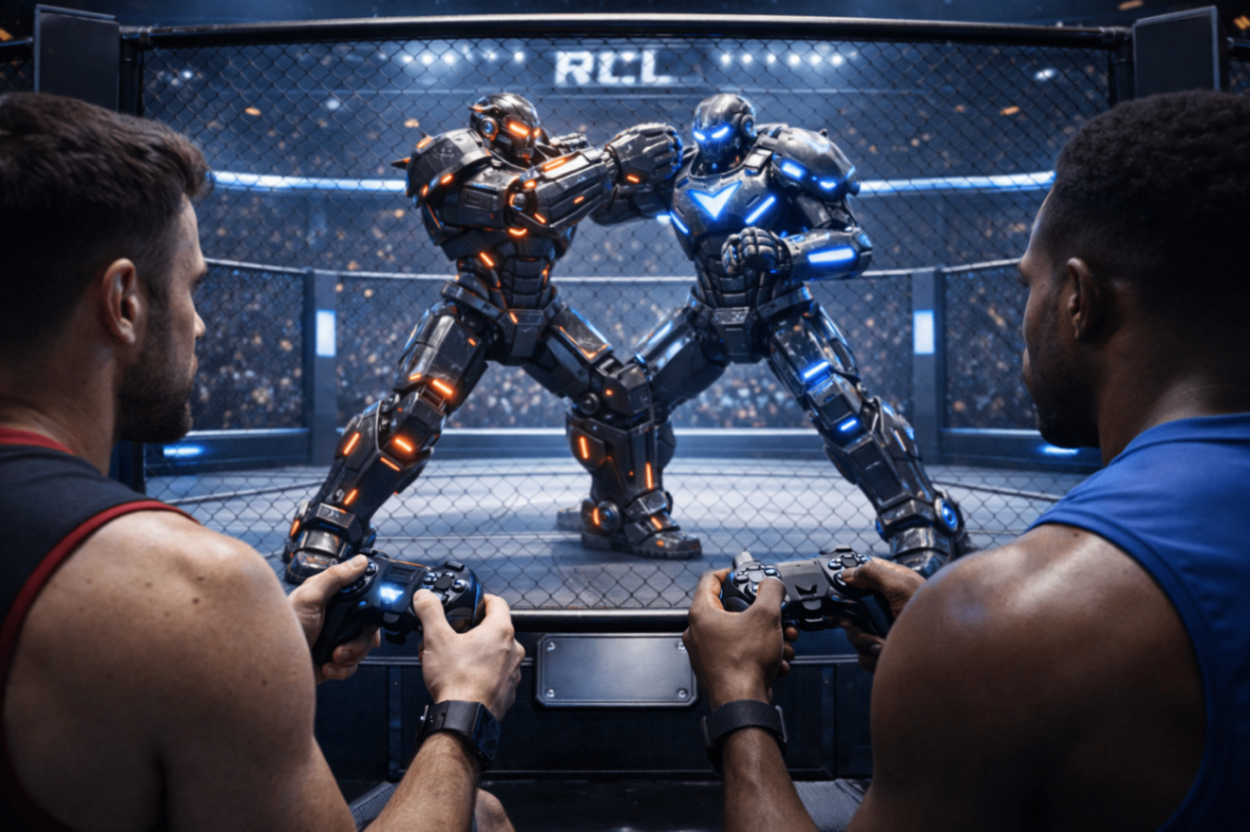
Two humanoid robots, each controlled by a human pilot using VR interfaces, game controllers, or exosuit systems, compete in enclosed arenas. Matches consist of multiple timed rounds where fighters score points through strikes, takedowns, and positional control. Victory is achieved by knockout, technical knockout, or judges' decision.
Competition Tiers:
Amateur Circuit: Entry-level fighters, local venues, learning environment
Semi-Professional: Regional competition, ranked fighters, prize purses
Professional: National circuit, championship belts, major sponsorships
KillRounds: Elite destruction matches where anything goes, robots may be totaled
WEIGHT CLASSES
Robot Combat League employs a four-tier weight class system that ensures fair competition while accommodating the full range of commercially available humanoid robots. Each division has distinct characteristics, competitive dynamics, and equipment requirements.
FEATHERWEIGHT DIVISION
Weight Limit
Under 40 kg (88 lbs)
Typical Robots
Unitree R1 (30kg), Unitree G1 (35kg), similar compact humanoids
Price Range
$6,000 - $16,000
Competition Tier
Amateur to Semi-Pro
Arena Size
4m × 4m (13ft × 13ft) octagon
Round Duration
3 rounds × 2 minutes each
Special Rules
Strikes only, no weapons allowed, protective foam padding required on impact zones
Division Characteristics:
Featherweight is the entry division designed for new fighters and accessible competition. The lower price point and smaller arena size reduce barriers to entry. Emphasis is on learning control systems, basic strategy, and robot maintenance. Matches are fast-paced with frequent falls and recoveries, testing balance control and pilot reflexes.
LIGHTWEIGHT DIVISION
Weight Limit
40 kg - 55 kg (88 - 121 lbs)
Typical Robots
Unitree H1 (47kg), Ti5 Yao Guang (48kg), Booster T1 (50kg)
Price Range
$34,000 - $90,000
Competition Tier
Semi-Pro to Professional
Arena Size
5m × 5m (16ft × 16ft) octagon
Round Duration
3 rounds × 3 minutes each
Special Rules
Strikes and grappling, blunt hand-held weapons allowed (max 30cm), advanced mobility techniques permitted
Division Characteristics:
Lightweight represents the sweet spot between accessibility and performance. Robots in this class typically feature superior speed, agility, and torque compared to featherweights. The Unitree H1's 3.3 m/s running capability exemplifies the dynamic action possible in this division. Introduction of weapons creates strategic depth—fighters must decide between offensive capability and defensive mobility.
MIDDLEWEIGHT DIVISION
Weight Limit
55 kg - 75 kg (121 - 165 lbs)
Typical Robots
Unitree H2 (70kg), Figure 01 (60kg), Fourier GR-3 (60kg)
Price Range
$60,000 - $150,000
Competition Tier
Professional
Arena Size
6m × 6m (20ft × 20ft) octagon
Round Duration
5 rounds × 3 minutes each (championship: 5 rounds)
Special Rules
Full combat rules, weapons up to 50cm, ground fighting allowed, power-limited cutting tools permitted
Division Characteristics:
Middleweight is the premier professional division showcasing the most advanced combat robotics. The Unitree H2's demonstrated ability to lift a G1 robot off the ground with a single knee strike exemplifies the power level in this class. These matches feature complex strategies combining striking, grappling, and tactical weapon deployment. Championship bouts in this division are 5-round affairs that test endurance, adaptability, and robot durability.
KILLROUNDS (OPEN WEIGHT)
Weight Limit
NONE - Open weight competition
Typical Robots
Any humanoid robot, frequently premium models or heavily modified customs
Competition Tier
Elite - Top 10 ranked fighters only
Arena Size
8m × 8m (26ft × 26ft) octagon with reinforced barriers
Round Duration
Single elimination - fight until one robot cannot continue
Special Rules
MINIMAL RESTRICTIONS - Full weapons, cutting tools, crushing implements. Expect total robot destruction. No time limit.
Division Characteristics:
KillRounds represent the ultimate spectacle in robot combat—no weight limits, minimal rules, maximum destruction. Only the top 10 ranked fighters across all divisions are eligible to compete. Robots are expected to be completely destroyed or severely damaged, creating intense risk-reward dynamics. Fighters receive significant prize purses but accept total loss of their robot.
These events are held quarterly as special attractions with premium ticket pricing. The destroyed robots become valuable salvage inventory, with working parts recycled into the marketplace. KillRounds create the sport's most viral moments and drive mainstream media attention.
COMPETITION FORMAT
Match Structure
Standard Match Format
Pre-Fight Inspection: 15 minutes - Technical officials verify robot compliance, weight, safety systems
Fighter Introduction: 5 minutes - Robots enter arena, fighters connect control systems, referee briefing
Round Sequence: Varies by division (see weight class specifications)
Inter-Round Break: 90 seconds - Fighters may perform emergency repairs, recharge batteries, adjust strategy
Post-Fight: Winner announcement, robot retrieval, damage assessment
Victory Conditions
Knockout (KO):
A robot is unable to continue combat for 10 consecutive seconds while the opponent demonstrates ability to continue. This includes complete power loss, critical structural failure, or loss of mobility in both legs.
Technical Knockout (TKO):
Referee stoppage due to overwhelming damage or performance disparity
Fighter retirement between rounds
Technical staff declares robot cannot safely continue
Three knockdowns in a single round (automatic TKO rule)
Judges' Decision:
If no knockout occurs and all scheduled rounds are completed, three judges score the bout using the 10-point must system (see Judging Criteria section).
Disqualification:
Repeated safety rule violations
Deliberate attack on opponent's control system antennas
Use of prohibited weapons or modifications
Failure to obey referee commands
Tournament Structures
Single-Night Events
Standard format for local and regional competitions. 8-16 fighters compete in single-elimination brackets. Winners advance, losers are eliminated. Championship bout determines event winner. Typical duration: 4-6 hours including setup and intermissions.
League Season Format
Professional divisions run seasonal schedules:
Regular Season: 10-12 events over 4-6 months
Ranking System: Points awarded based on wins, performance bonuses
Playoffs: Top 8 fighters qualify for championship tournament
Championship: Title bout between top 2 ranked fighters, winner holds belt until next season
Grand Prix Events
Special multi-day tournaments with larger prize pools and international participation. Typically 32+ fighters competing over 2-3 days. Used for cross-regional champion determination and major promotional events.
JUDGING CRITERIA
Robot Combat League employs the 10-point must system adapted from combat sports, with specialized criteria reflecting the unique aspects of humanoid robot competition. Three licensed judges independently score each round.
Scoring System
10-Point Must System
The winner of each round receives 10 points. The loser receives 9 points or fewer depending on performance disparity:
10-9 Round: Clear winner but competitive round
10-8 Round: Dominant performance, multiple knockdowns or severe damage
10-7 Round: Overwhelming dominance, near-stoppage situations
Scoring Criteria (In Order of Priority)
1. EFFECTIVE STRIKING (40% weight)
Impact force and frequency: Number and power of strikes landed
Target selection: Strikes to critical components (head, torso actuators, joints) score higher
Knockdown generation: Strikes that force opponent to ground
Damage inflicted: Visible damage, component malfunction, mobility reduction
2. CONTROL & POSITIONING (25% weight)
Ring generalship: Dictating pace, position, and distance
Grappling effectiveness: Time in dominant positions (applicable in Lightweight+)
Recovery ability: Speed and efficiency of returning to feet after knockdowns
Defensive positioning: Evasion, blocking, distance management
3. AGGRESSION & PRESSURE (20% weight)
Forward momentum: Moving forward and engaging consistently
Strike volume: Frequency of attacks, keeping opponent defensive
Pursuit: Following up on successful attacks, preventing opponent reset
4. TECHNICAL PERFORMANCE (15% weight)
Movement quality: Balance, coordination, footwork precision
Technique execution: Proper striking form, efficient energy use
Weapon deployment: Strategic and effective use of allowed weapons (where applicable)
Adaptation: Adjusting strategy based on opponent's actions, damage taken
Special Considerations
Technical Malfunctions: If a robot experiences a clear technical failure unrelated to opponent actions (battery failure, control system dropout), the round may be scored 10-10 or declared a technical draw at judges' discretion
Point Deductions: Fouls result in point deductions: 1 point for first offense, 2 points for repeated violations, disqualification for flagrant or dangerous violations
Weight Class Adjustments: Featherweight emphasizes recovery and mobility more heavily; Middleweight weights power and damage higher; KillRounds score only on damage inflicted
SAFETY REGULATIONS
Safety is the paramount concern of Robot Combat League. All participants—fighters, technical staff, officials, and spectators—must adhere to comprehensive safety protocols. These regulations are mandatory and non-negotiable.
Robot Safety Requirements
Mandatory Safety Systems
Primary Kill Switch: Wireless emergency stop accessible to fighter, referee, and arena control. Must cut all power to actuators within 0.5 seconds. Redundant backup required.
Geofencing: Robots must have programmed movement limits preventing operation outside designated arena boundaries. Automatic power-down if boundaries breached.
Impact Limiters: Featherweight division requires foam padding on all strike surfaces. Higher divisions may use harder materials but must pass impact testing.
Communication Encryption: Control signals must be encrypted to prevent interference or hijacking. 128-bit minimum encryption standard.
Fail-Safe Defaults: Loss of control signal must result in immediate safe mode: robot lowers to stable position and powers down actuators.
Prohibited Modifications
Projectile weapons: No firearms, pneumatic launchers, or any mechanism that fires objects
Explosive materials: No pyrotechnics, explosives, or incendiary devices
Chemical weapons: No liquid sprays, adhesives, or chemical irritants
Electromagnetic weapons: No devices designed to disrupt opponent's electronics (exception: this is legal in KillRounds)
Autonomous operation: Robots must remain under human control at all times. No fully autonomous AI combat systems.
Arena Safety Standards
Barrier Specifications: Minimum 2.5m height polycarbonate walls, steel reinforcement for Middleweight and KillRounds. Rated for 5,000N impact force.
Emergency Access: Four clearly marked emergency entry/exit points around arena. Technical crew stationed at each point.
Spectator Distance: Minimum 3m clearance between arena barrier and first row of spectator seating. Additional clearance for higher weight classes.
Debris Containment: Arena floor must have drainage system for hydraulic fluids. All debris cleared between matches.
Lighting Standards: Minimum 1000 lux at arena floor. Emergency lighting system required. Strobe effects prohibited due to robot vision systems.
Personnel Safety
Fighter Requirements
Safety Briefing: Mandatory pre-event safety briefing covering emergency procedures, arena rules, and specific event hazards. Attendance verified by signature.
Equipment Inspection: All control equipment inspected 30 minutes before scheduled match. Backup controllers required for all divisions.
Insurance: Fighters must carry liability insurance (minimum $1M coverage) or purchase event insurance through RCL.
Age Requirements: Minimum age 18 for all divisions. Minors may participate with parent/guardian co-pilot and signed liability waivers.
Technical Crew Safety
Personal Protective Equipment: Hard hats, safety glasses, steel-toe boots mandatory for all crew entering arena
Arena Entry Protocols: No entry without referee clearance. All robots must be powered down and disconnected before human entry.
Electrical Safety: All crew working with robot power systems must have electrical safety certification. Lockout/tagout procedures required.
Emergency Response Training: Minimum two crew members per event with first aid/CPR certification. Fire extinguishers positioned at all entry points.
Incident Response Procedures
Level 1 - Minor Incident (Technical Malfunction):
Referee signals timeout
Both robots powered down
Technical crew assesses situation
Match resumes or postponed depending on repair time
Level 2 - Moderate Incident (Barrier Breach, Component Ejection):
Emergency stop activated - all robots powered down immediately
Arena evacuated of non-essential personnel
Damage assessment before spectator area cleared to re-enter
Match canceled, rescheduled at league discretion
Level 3 - Critical Incident (Injury, Fire, Structural Failure):
Full arena emergency stop
Spectator evacuation initiated
Emergency services contacted immediately
Event suspended pending investigation
Full incident report filed with league officials and relevant authorities
TECHNICAL SPECIFICATIONS
Robot Requirements
Minimum Standards (All Divisions)
Bipedal Configuration: Robot must walk on two legs. Wheeled, tracked, or quadrupedal designs prohibited.
Autonomous Stability: Must demonstrate ability to stand and walk without external support for minimum 5 minutes.
Degrees of Freedom: Minimum 12 DOF (6 per leg). Recommended 20+ DOF for competitive performance.
Height Restrictions: Maximum 200cm standing height. Minimum 100cm.
Power Source: Battery-powered only. Tethered power prohibited. Minimum 30-minute runtime required.
Allowed Modifications
Structural Reinforcement: Armor plating, joint protection, impact-resistant materials permitted within weight limits
Actuator Upgrades: Higher-torque motors, upgraded servos allowed if weight compliant
Custom Hands/Grippers: Modified end effectors for weapon holding or grappling (division-dependent)
Sensor Additions: Additional cameras, IMUs, force sensors to improve control
Cosmetic Modifications: Custom paint, decals, LED lighting (as long as doesn't blind opponent cameras)
FIGHTER CONDUCT & ETHICS
Code of Conduct
All participants in Robot Combat League events are expected to maintain the highest standards of sportsmanship and professionalism. This code applies to fighters, technical staff, coaches, and associated personnel.
Required Behaviors
Respect for Opponents: Treat all fighters with dignity before, during, and after matches
Respect for Officials: Comply with referee instructions immediately and without argument
Honest Competition: Compete fairly without attempting to circumvent rules or sabotage opponents
Safety Compliance: Follow all safety protocols without exception or complaint
Professionalism: Maintain appropriate behavior in public appearances and on streaming platforms
Prohibited Behaviors
Unsportsmanlike Conduct: Excessive celebration, taunting, verbal abuse
Technical Interference: Attempting to hack, jam, or disrupt opponent's control systems
Fraud: Misrepresenting robot specifications, weight, or capabilities
Illegal Modifications: Using prohibited weapons or systems, exceeding weight limits
Match Fixing: Any form of collusion or deliberate loss for financial or ranking gain
APPENDIX
Glossary of Terms
Actuator: Motor or mechanical device that enables robot movement
DOF (Degrees of Freedom): Number of independent movements a robot can make
Kill Switch: Emergency stop system that immediately cuts power
Knockdown: When robot is forced to ground and takes >3 seconds to recover
Torque: Rotational force, measured in Newton-meters (N·m)
Pilot: Human operator controlling the robot
Ring Generalship: Controlling position, distance, and pace of combat
Technical KO (TKO): Stoppage by referee or retirement
Control System Types
VR Control:
Fighter wears VR headset providing robot's viewpoint. Body movements tracked and translated to robot motion in real-time. Provides most immersive experience but requires significant training.
Game Controller:
Standard gaming controllers (Xbox, PlayStation, Nintendo) with button/joystick mapping. Most accessible option for new fighters. Limited fine control but excellent for learning.
Exosuit Control:
Fighter wears motion-capture harness that directly mirrors their movements to robot. Provides intuitive control but requires physical conditioning. Most common in professional divisions.
Hybrid Systems:
Combination approaches using multiple input methods. For example, VR for vision with controller for fine hand movements. Allowed in all divisions.
###
OFFICIAL RULEBOOK VERSION 1.0
Effective December 2024
Subject to revision. Check website for current version.
Comments (1)