PHATTI GOES WESTERN MEDICINE
Episode 1: The Prodigal Patient

May 24, 2026
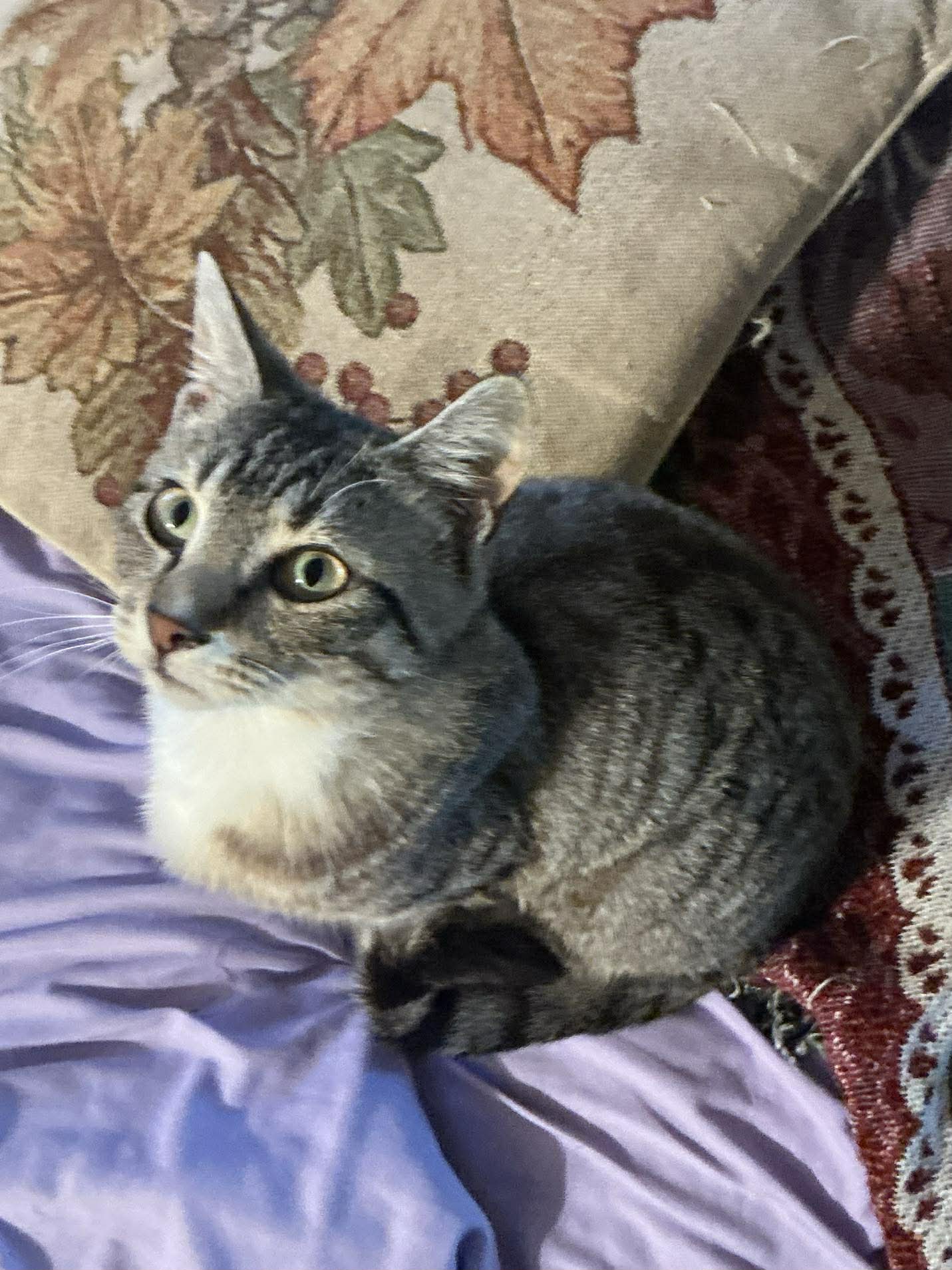
In which a man who hasn’t seen a doctor since the Bush administration gets knocked flat by bacteria, assigned a geriatric specialist at 54, and begins the long, humiliating process of becoming a medical chart.
May 2026
I want you to understand something before we start because this is important context. I fired my doctor in 2006.
Not “switched providers.” Not “sought a second opinion.” Fired. The way you fire a contractor who keeps showing up late and blaming the lumber. I looked at the American primary care system, did the math on what I was paying versus what I was receiving, and I said out loud, to a man with a stethoscope, “We’re done here.”
Then I didn’t go back. For twenty years. Two full decades. The only time I set foot in a medical facility was when a bone broke, because bones are honest. They either hold or they don’t and the ER doesn’t require a relationship. You show up, they X-ray, they cast, you leave. Transactional. Clean. No one tries to upsell you a colonoscopy on the way out.
I’m telling you this not because I’m proud of it. I’m telling you because it’s the opening context for the dumbest sentence I’ve heard in 2026, and I’ve been reading Nature.com.
“Your assigned primary care physician is Dr. Jani. His specialty is geriatric medicine.”
I am fifty-four years old.
GERIATRIC.
Now look. I know my body reads like a building inspector’s condemned list. I know I walk into rooms the way old barns settle, slowly, with audible protest and with a general sense that something structural has shifted. But geriatric? I’m not even eligible for AARP’s good discounts yet and the hospital looked at my chart and said, “Get this man a specialist in dying of old age.”
I didn’t pick Dr. Jani. The hospital assigned him to me like a public defender. Much like a public defender, I’m sure he’s doing his best with an impossible caseload and a system designed to process humans like cattle through a chute. Let’s not pretend either of us chose to be in that room together.
The Event
Here’s what happened.
April 17th, 2026. Community-acquired bacterial pneumonia. Severe. The kind where your lungs decide they’d rather be aquariums than organs and your body starts running a fever like it’s trying to burn the house down to kill the mice.
I went to the hospital. They admitted me. On April 20th — three days later — they discharged me.
Three days. For severe pneumonia. In a man who hasn’t had primary care since the year Twitter was invented.
Here’s the part that should concern you, congregation: they never took a picture.
No chest X-ray. No CT scan. No imaging of any kind. They listened to my lungs with the same tool a veterinarian uses on a horse, gave me antibiotics, watched me for 72 hours, and sent me home. With a referral to a geriatric specialist. At fifty-four.
I walked out of that hospital with no baseline image of my chest, no idea what my lungs looked like during the event, and a follow-up appointment with a man who specializes in people twenty years older than me.
That’s not healthcare. That’s a drive-through with an IV drip.
The Follow-Up
Two weeks later I’m sitting in Dr. Jani’s office. This is my first primary care appointment in twenty years. I have prepared for it the way I prepare for everything. By making a list. A list of everything that’s wrong with me, ranked by how much it’s ruining my ability to function as a human being.
Here is the list, which I delivered to this man like a plaintiff reading charges:
Item one: My heart rate. Resting, it’s around 80. Tolerable. The moment I do anything — walk across a room, carry a bag of feed, exist with mild intention, it rockets to 117. Minimal exertion. I’m not running marathons. I’m standing up.
Item two: My left shoulder. Pain scale 7 to 9. Localized in the middle of my left scapula, which is a fancy word for the flat bone in your back that exists solely to give pain a home address. It radiates up into my neck and when it’s feeling ambitious, crosses over to the right shoulder. The area is numb but somehow also produces pain, which is a medical contradiction that I’m sure has a Latin name and no cure. It swells sometimes. And any movement — any shift, any twist, any miscalculated step — can trigger a jolt of pain severe enough to stagger me mid-stride. Not “wince.” Stagger. Like a man who’s been hit with something he didn’t see coming.
Item three: My right shoulder. Partial rotator cuff tear. Preexisting. I can raise my arm to horizontal and no higher, which means I can wave goodbye to things at eye level but nothing on a high shelf is safe from neglect. This one is bearable. This one is background noise compared to the left.
Item four through six: Bum knee. Bum hip. The general structural decay of a man who’s spent his life doing physical work and avoiding the people whose job it was to maintain the machinery.
I laid all of this at Dr. Jani’s feet like a cat bringing dead birds to the porch.
He ordered X-rays. He ordered bloodwork. He said insurance would cover TB, Hepatitis C, and HIV testing.
He said insurance would not cover hormone panels or genetic testing.
Now. The genetic testing matters. My daughter KatieBeth has a confirmed 17p13.1 microdeletion syndrome. 274 kilobase pairs deleted, starting mid-ACADVL. She is missing genes. Confirmed. Documented. On paper.
I believe — with the conviction of a man who has done his research and has a body that’s been whispering the same story for fifty-five years — that I carry the same deletion. That hers wasn’t de novo. That she got it from me.
If that’s true, it changes everything about my medical picture. It means I’ve been walking around with haploinsufficiency for decades, undiagnosed, because nobody thought to look because I wasn’t in the system. Because I fired my doctor in 2006 and the system forgot I existed.
The insurance company, the entity that spent three days on my pneumonia and assigned me to geriatrics, says they won’t pay to find out.
Jesus help me.
The Imaging
May 5th. X-ray day.
Drove to the imaging center. Signed in. Verified insurance. Sat in a waiting room where every single person — every one — was face-down in a device. Phones. Tablets. Not a word spoken. Not a glance exchanged. A room full of human beings waiting to have their insides photographed and the only light in the room was the blue glow of screens.
They called me back. Three X-rays of the left shoulder. Three of the chest. Each one required a pose that my body performed the way an old truck performs a three-point turn. Technically possible, audibly painful and visually concerning for everyone watching.
Less than an hour, sign-in to exit. Efficient. Boring. The machinery of Western medicine doing what it does best. Processing the body while ignoring the person inside it.
The Blood Draw
Drove a couple miles to Dr. Jani’s office. Sat in the waiting room. Here is where the day got interesting because God, the universe, or whatever force writes the script of my life decided I needed material.
There’s a woman in the waiting room. Emphatic. Loud. Listing medications the way a sommelier lists vintage wines. Antidepressants, muscle relaxers, painkillers, each one ending with “and I never took another of those.” A pharmacological autobiography delivered at volume, concluding with the revelation that she smoked from age 15 to 52 and quit cold turkey. I’m sitting there with my condemned-building body thinking, Ma’am, I respect your journey but I’m trying to quietly fall apart..
I noticed something else. Every patient in that waiting room, from X-ray to blood lab, looked better off than me. Healthier. More mobile. Less visibly held together by spite and stubbornness. I was the worst-looking person in a medical facility catering to geriatrics.
Wait.
They called me back. The nurse was a young Black woman with a laugh you could hear two rooms over. The kind of laugh that makes you think maybe the medical system hasn’t killed everyone’s spirit yet. She had a tray in front of her. On the tray, a dozen vials.
A dozen.
She starts by saying, “We’ve got a lot to draw.”
Now. I’ve been around long enough to know an intimidation tactic when I see one. I’ve read about it. I’ve written about it. Manufactured urgency. Anchoring. Show them the big number so the real number feels like a relief. The insurance company ordered four vials. FOUR. The dozen were set decoration. Stage props. A little theater of medical severity designed to make you feel like your blood is in high demand.
Cute.
She grabbed my arm, looked at the veins, and commented on their thickness and girth. I thanked her. A man takes his compliments where he can get them and at fifty-five with a body like a FEMA disaster zone, “nice veins” is the best I’m getting from a medical professional.
Then, I swear this is true, she starts talking like a prepper. Full SHTF vernacular. End times. Self-sufficiency.
Then she pivots to the Epstein files.
A phlebotomist. Drawing my blood. Talking about Jeffrey Epstein.
I was wary. I laughed a lot of it off. The only thing I said with any seriousness was this, “Knowing how to farm and milk a goat will be worth more than any degree.”
Which I believe. Which, coming from a man with three BS degrees and a PhD in Common Sense, should carry some weight.
She finished. Four vials. Not twelve. The other eight sat there empty, watching, like middle managers at a meeting they weren’t needed for.
I walked out. Got in the truck. Turned on the local radio.
“Crazy Train.”
Ozzy Osbourne singing me out of the parking lot like a Greek chorus with a guitar solo.
If that’s not Western medicine in a nutshell, the institutional theater, the assembly-line processing, the prepper nurse, the phantom vials and Ozzy narrating the exit then I don’t know what is.
Results pending.
Body still broken.
Insurance still gatekeeping.
At least my veins are impressive.
Next Episode: The Lab Results.
DISCLAIMER: Professor Phatti MacHine’s medical credentials are limited to having a body that is falling apart and the stubbornness to write about it. Nothing in this series constitutes medical advice. If you need medical advice, please consult a licensed professional — and then use the SHOVEL framework on them, because nobody gets a free pass.