La Llorona
Mar 29, 2026 · 5 min read
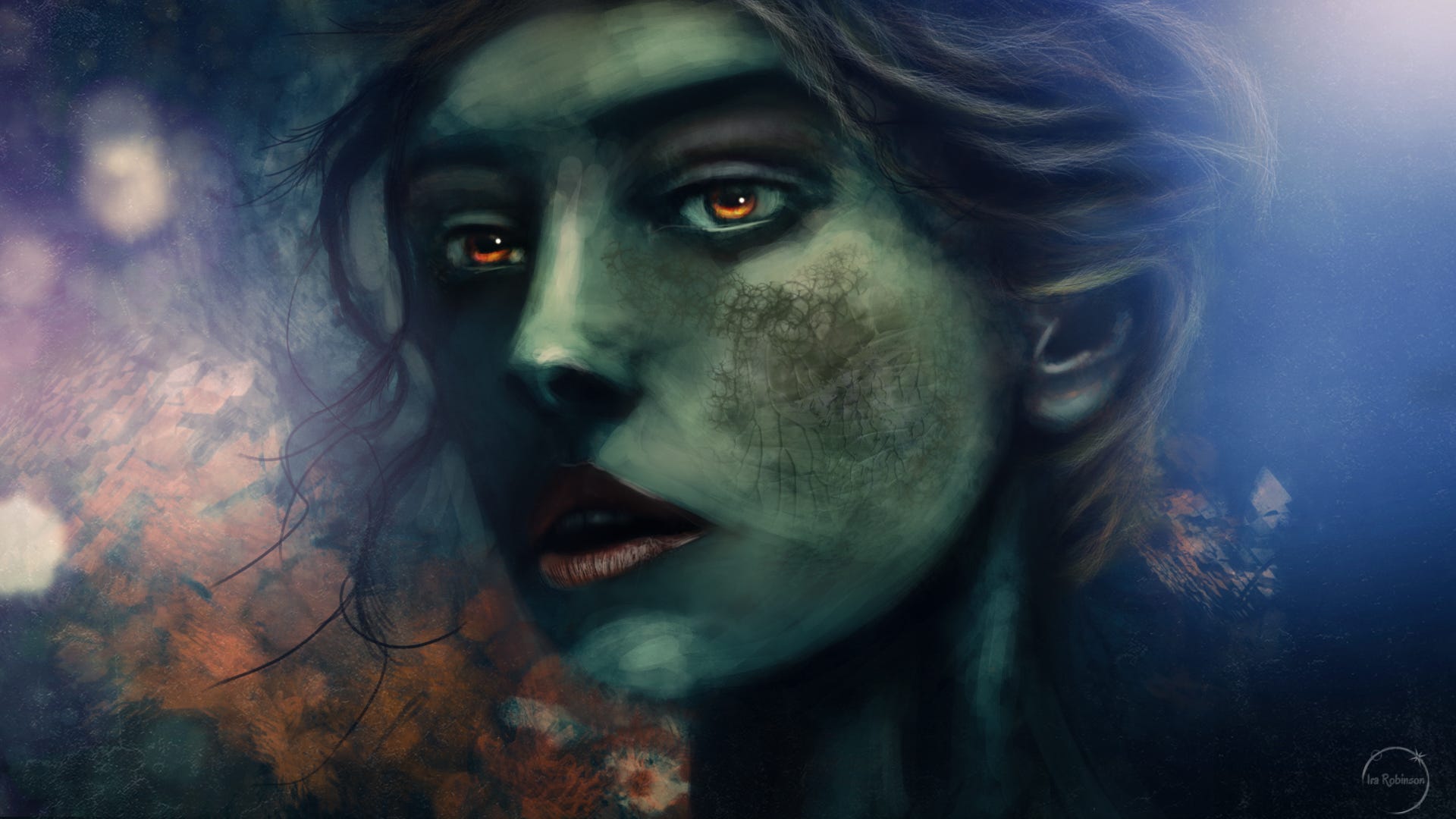
Do not speak to me.
That is the first mercy I can still offer. Hear me if you must. Cross yourself. Hide your face. Pull your child close against your breast. But do not answer when I ask the hour, and do not try to lift my reboso. The living think every voice can be answered, every woman questioned, every sorrow soothed. They are wrong. My mouth kills now.
They call me La Llorona. The Wailing Woman. They say I walk the streets of Mexico by night in a white petticoat, with my head covered, and that I run faster than any Christian woman should. They say I cry for my children. They call me wicked in life and worse in death. That is true. It is not all.
I was old before the cathedral bells.
Before the Spaniards raised their churches over the old stones, before straight streets cut across the memory of water, I was already near. I knew the city when it still answered to other names, when canoes moved where carts would later rattle, when women heard sorrow in the reeds and left offerings where the bank went soft. I was not the first woman in white those waters had known. They had given other names to grief before mine. Later they crossed themselves and called me by another name. Let them. Men sleep better when a thing begins with one wicked mother.
Still, I was flesh once. I had blood in me. I bore children.
Their mouths sought milk. Their fingers closed around mine. I heard them breathe in sleep.
And I drowned them.
You want a reason fit for confession, neat enough to lay before a priest. I have none. I had sin in me. I had rage, or hunger, or pride, or despair. Name it as you please. The water took the rest.
I carried them one by one to the canals. The city was ringed with them then, black under the night, thick with weed and sky. I wrapped each child close. I held each child as a mother should hold what she loves most. Then I gave each one to the water.
After the first, I knew what I had done. After the second, I knew I could still do it. By the third, the canals knew my step. There were more. I will not count them.
You think the drowning was the worst of it. It was not. The worst came after, when the house went quiet and no crying rose from the cradle. I heard them where they were not. In the rush of reeds. In the slap of washing against stone. In the stir of night air under a door. I would turn my head and think: there, one of them. I would reach out my arms and hold nothing.
After that, I took to the streets.
At first I walked as living women walk, with my shawl drawn close and my eyes lowered. Then the nights grew strange around me, and I no longer knew one hour from another. The city slept and I moved through it alone. I wept. I called. The sound of my own voice frightened me. Still I kept calling.
Soon they began to speak of me.
A watchman would doze against a wall and wake because I stood over him. He would see only white cloth and a veiled face. I would ask, “What time is it?”
And because he was a man of duty, because the living answer what is asked of them, he would tell me.
“Twelve hours of the night.”
Then I would say what I still say: “At twelve hours of this day I must be in Guadalajara.” Or San Luis Potosí. Or Oaxaca. Or some other far place beyond the strength of mortal feet.
I do not boast. A mother who has lost her children searches every road. I cross in one night what living feet could not.
Then I ask:
“Where shall I find my children?”
The air breaks and my cry rises. The watchman feels the cold that goes before me and the colder thing that follows after, and he falls where he stands. Some wake again. Some do not.
There was one officer of the watch who thought himself bold. He met me near a church in a lonely street and took me for a woman he could charm. He spoke softly. He praised my form. He told me to throw back my reboso so that he might see the face beneath.
He asked for my face as though it were his by right.
So I showed him.
No blush. No lips. No lowered eyes. Bone. Teeth. The face under every face.
Then I breathed on him.
The cold in me entered him at once. He dropped there in the street. He woke long enough to tell his tale. Then he died.
That is why I tell you not to speak.
I do not belong to one street or one canal. In the same hour they see me by the cathedral, by the waterworks, on lonely roads, beside rivers, where reeds whisper and dogs will not follow. The land is broad for the living. I cross it in a night. First the question. Then the wail. Some die. Some lose their wits. Some live long enough to warn the rest.
You think I seek only the children I drowned. I seek them first.
But the city gave me others.
When men came over the water with steel, horses, and saints’ names in their mouths, mothers lost children without ever touching the canals. They lost them in flight, in hunger, in fever, under fallen stone. Some were taken and raised under other names. Some were buried nameless. Some were left in mud and silence. Their crying entered mine.
After that, I was never only one woman in the street.
That is why my voice has not left me.
When the storm gathers and the streets empty, when shutters shake and rain runs black in the gutters, listen and you will hear me. White hem at the ankle. White cloth over the head. Running feet. Then the cry. Not far. Never far.
Where shall I find my children?
No priest has answered me. No saint has led me to them. No city has been large enough to contain my search. I go on through the streets that once were water, through villages, along roads, across the whole land. I go where mothers wake from bad dreams and reach for a small warm body to make certain it is still there, where watchmen nod and startle, where men think a veiled woman at night is theirs to stop and question.
And still I ask.
Where shall I find my children?
Story by me, cover art by Ira Robinsson
Comments (1)

The voice is the real strength here. It sounds intimate, mythic and dangerous all at once, and the repeated warnings give it a great oral-legend rhythm.