If no one sees your writing, are you still a writer?
In today's creator industry, the problem isn’t performative; it’s invisibility.

Feb 27, 2026 · 6 min read
“Once I publish, I’m closer to existence.” That’s what my normie brain insists whenever I near the end of a draft, whether on Substack or a novel no one’s seen.
(Update: The funny thing is: I've self-published my book Intrinsic last November, but the longing remains. The incomplete feeling never truly stops.)
I don’t just write to create. I write to be real. And unless someone sees it, I’m not entirely sure I exist as a writer.
“Publishing means I’ll be closer to becoming an actual fiction writer. Because at the moment, although I am almost there, I'm just not quite yet,” my brain whispers once more.
Does this thought ring true to you as much as it does to me? This, despite having several unpublished stories tucked somewhere in our computers or notebooks? They have the ceremonious “The End” written quite aptly at the end, but somehow we feel like we don’t deserve to be called writers unless our work is out for public consumption.
No shame in wanting to be seen
If you find yourself nodding in agreement, we’re not alone. American novelist Ursula K. Le Guin once said that writing, at its core, is a conversation. Even if you write in solitude, you're always reaching toward someone. And even though she mostly applied it to a writer’s reality, it can apply to any creative, whether you’re an illustrator, a painter, or a musician.
Le Guin stated:
To write is to tell something to somebody to communicate to others...Solitude is non-communication, the absence of others, the presence of a self sufficient to itself.
Another author, Cheryl Strayed, said that writers need others to legitimize themselves and their thoughts:
There is a deep longing to feel legitimate in the world, to feel that others hold us in regard.
Or what about Christopher Hebert’s take, who admits that there is a fine line between needing readers and the exhaustion of seeking approval:
What’s interesting, I think, is how quickly we can replace the anxiety about physically writing with anxiety about our books out in the world. Ourselves as writers. Validation is the curse.
As a writer whose work first got published in a teen magazine way before social media, seeing my byline in the glossy page was monumental, and I firmly believe I wouldn’t be writing today if it weren’t for that moment.
Sure, having a byline is technically getting credited for doing the work, however, it has always meant so much more. It’s claiming accountability, that if a reader finds the text inaccurate, unfair, or harmful, the responsibility falls entirely on the scribe. It’s opening oneself to outside feedback and being ready to expound on it when asked. It’s narrating what one knows to a world that’s willing to accept what one has to say.
Which brings me to the very essence of getting published: it confirms that you are a writer, just as you have suspected, because you have witnesses to prove it.
‘Creating for the sake of creating’
Knowing this, I find myself ruminating lately on the so-called “creating for the sake of creating” idea, which has emerged amid the rise of performative posts on social media, including Substack, Medium, et al. But before we get to that, let’s define what it means first.
It is uncertain who may have said it originally, but “creating for the sake of creating” is the notion that, in order to find more meaning and satisfaction in our creative pursuits, one must already find fulfillment in the process of making. This emphasizes that outside validation should be just a bonus—the icing on the cake—and that you should be making art for yourself.
Especially in the realities of hyper-productivity, creating for the sake of creating is the practice that claims to be the anti-performative, because it doesn’t care to be seen. It centers on the private joy of creating with no audience in mind.
While avoiding an audience might have been possible a decade ago, it’s much more difficult in today’s society, where everyone is armed with a selfie camera on their smartphone. Our way of life has evolved so rapidly, thanks to interconnectivity. We realize now that the world is small and yet still so big at the same time.
Let’s take Substack as an example. Currently, there are over 20 million monthly active subscribers on the platform. An average user probably has fewer than 1000 subscribers. And if we’re really being honest about it, you’ll probably only interact with 10-15% of them throughout your time there.
None of these numbers should really matter, right? Yet we obsess over them because the overlords make it virtually impossible to do the opposite. Because if we cannot have high engagement or generate more likes and shares, we will get punished by the algorithm. We’ve known this for a long time and have come to live with it. This has been the name of the game on all platforms for many years now.
So what’s a creator to do? Let’s see.
Perhaps listen to experts who will teach them how to grow their following or get more subscribers?
Yes, please.
How to make their Notes viral?
Okay.
When to schedule Posts?
Sure.
We could go on. It’s exhausting just thinking about it. Creation is supposed to be fun, right?
Artists can’t be no-shows today
Which is how we circle back to the “creating for the sake of creating” line. It’s the supposed response to the performative acts we see on various sites nowadays. It’s telling creators that to enjoy creating work in this age of social media, one must consider resisting the algorithmic jousting and the game for fame. Otherwise, we’ll just be like everyone else who chases metrics and gets validation from one stranger's heart-reacting our creations.
However, there are several flaws to this argument. First, that one heart react from a stranger who lives halfway across the world can make a lot of difference for someone who may have had a bad day. Second, if there are alternatives on how to use online platforms that don’t deal with metrics, I’m pretty sure any human being would opt in. But we do live in a digital age and capitalist system, and as long as tech companies keep making their products that way, we as creators are left with only two choices on usage: either mind the metrics or stay the fuck off it completely.
In the 1956 book The Presentation of Self in Everyday Life, by sociologist Erving Goffman, he proposed that social life is like theater. People present themselves to others as if performing a role on a stage—appearance, language, timing, and setting—shape others’ perceptions.
So if they don’t perform? Then they risk not being recognized as creators at all. Not performing is still a kind of performance, often read as negligence, irrelevance, or even failure.
The fact of the matter is, with all the lure of social media popularity, what the creator is intrinsically after is not fame or approval. It is the need to exist and be acknowledged somewhere, somehow. Even the town weirdo doesn’t get to be one unless one insider calls them that.
So, excuse us if sometimes we go live on video and exude spontaneity. Forgive us if we wear our hearts on our sleeves or appear too unvarnished, too vulnerable. This is us playing the game for the sake of our creations to be recognized by others. Because our creations are extensions of ourselves in some way, shape or form. Perhaps it is a performance, but trust its authenticity. Because any writer, illustrator, painter, or musician is a human being compelled to create something that reflects a part of their identity. This is why we feel the need to share our creative pursuits all along. If no one sees them, it’s like a part of us ceases to be real, too.
And if you think we can all make the choice of “creating for the sake of creating,” I implore you to think again. Those who decide to be invisible do so because they’ve already been seen. This belief comes from a place of privilege, of already being entrenched in.
When you see a creative trying their hardest to be visible, remember: they’re not just performing. They want to live. And so consider your next action carefully. You might be tempted to scroll past, mute, or unsubscribe, but every activity has ebbs and flows. What they’re just insisting on is their existence. And sometimes, all it takes to affirm it is one heart react.∎
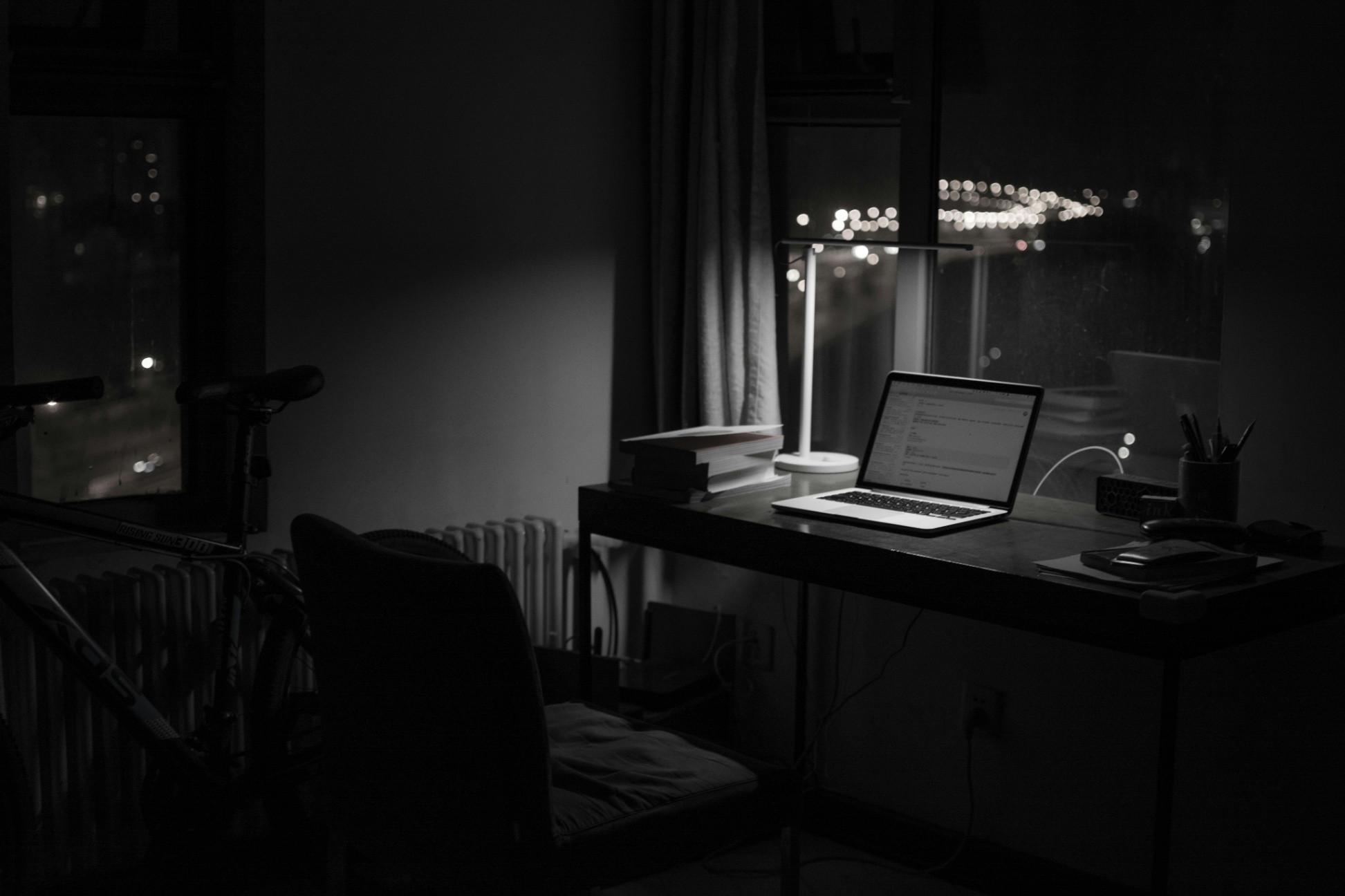
This essay was originally published on my Substack, on June 26, 2025. It's behind a paywall there, but thought it'd be nice to share it here in full. I've updated some parts to reflect recent occurrences and conditions. Photo by Orange Chen on Unsplash.
Comments (5)
This article couldn't come at a better moment for me. As I am questioning my very existence on Substack (after a two-months hiatus and a vertiginous drop in engagement), this piece comes as a validation of everything I felt over the past few months. When I follow someone, I interact with their stuff. When I read a piece, I also interact with it. Because, as you said, this can make all the difference in the world to someone. And, God, I'd hate to think my next favorite author got discouraged by the algorithm and decided to no longer share their work. But in this day and age, our very existence is affirmed by numbers and metrics. We cannot escape it. No matter how self-righteous we pretend to be on that matter. Thank you for sharing this, France. It made a difference in my life today.
I struggle with this a lot. Technically, yes, I am an author. What I really want is to be a storyteller. That requires people to tell stories to. Working to attract the audience takes away from creating stories. It sometimes seems like an endless, fruitless cycle. And yet, I keep going.