I Found Gatsby's Green Light
A personal essay on having parallels with F. Scott Fitzgerald's The Great Gatsby (1925).
Feb 26, 2026 · 5 min read
Please note: this personal essay includes parallels with F. Scott Fitzgerald’s The Great Gatsby (1925)—including a major plot point of the classic American novel. I've included footnotes at the end of this essay!
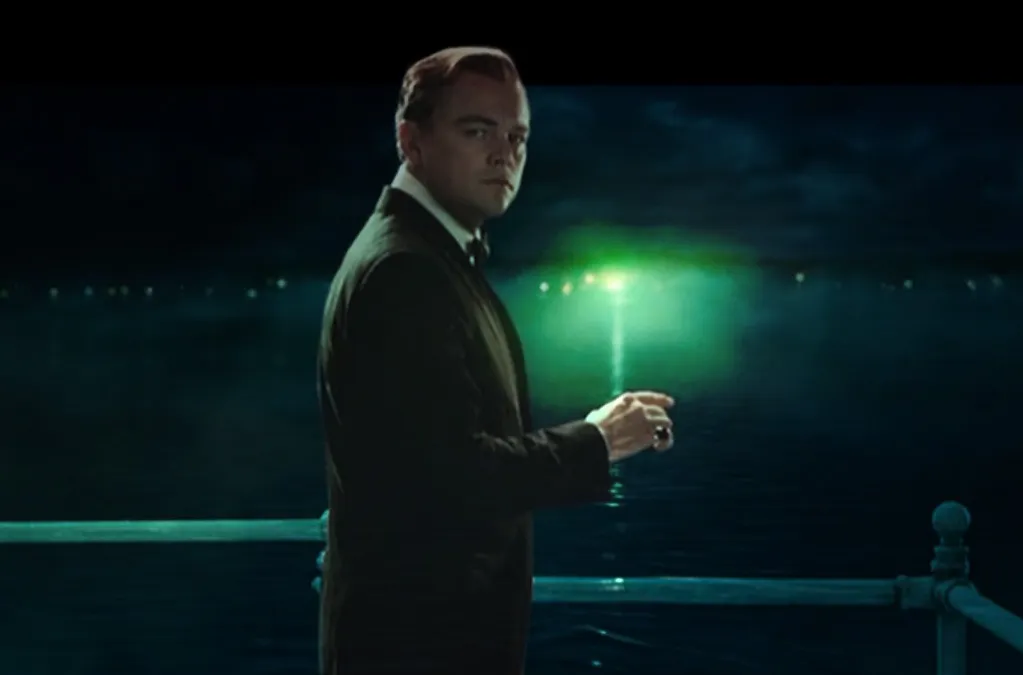
I am a Gatsby kind of woman—I have a dream grounding me, a commitment to being the best, and a love out of my reach. A green light shining—only to be noticed at night when your thoughts go untamed. You can see it from your mansion—or in my case—from your window. Oh, my dear… I found Gatsby’s green light!¹
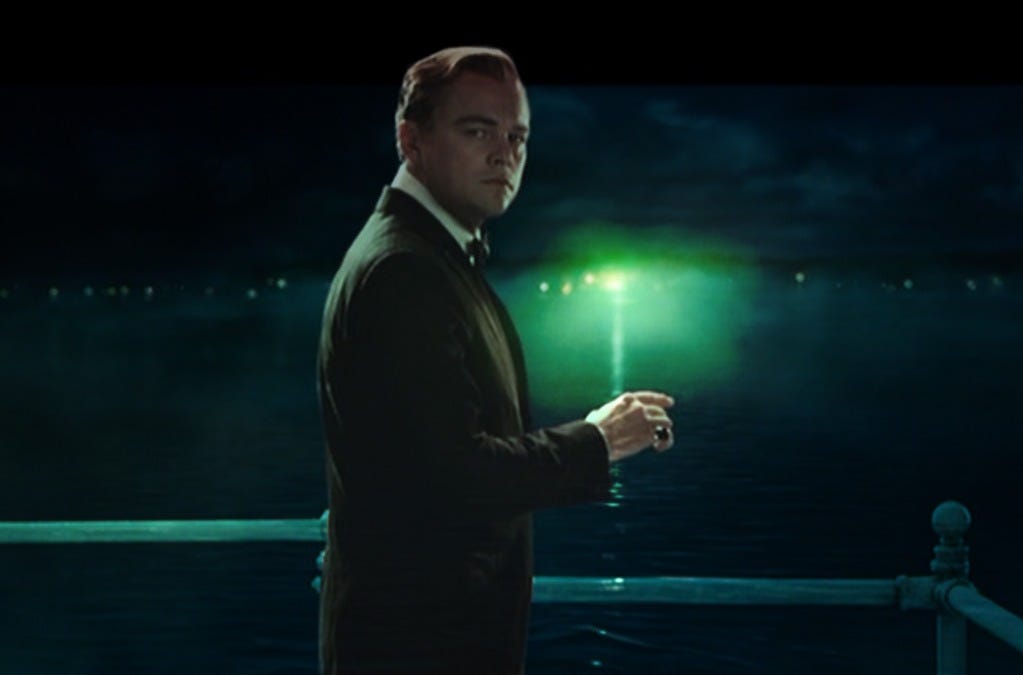
I instantly gasped. ‘Why is there an actual green light—in the distance—near his neighbourhood,’ I almost screamed in laughter.
His. Referring to the young man who had rekindled my interest last summer—he lived in a neighbourhood across mine. In fact—instead of a bay—my modern nonfictional retelling of The Great Gatsby had a road between my ‘Daisy’ and I. As obviously, I am the Gatsby here.
Yet to make this story even more literary accurate, this young man actually has the appearance of a young Jay Gatsby type; blond hair, dazzling smile, dreamy eyes, rough hands, and a personality which inspires the writer in me. The parallels I have with this novel are quite incredible to experience… plus he knows his way around a sailboat too—talk about Fitzgeralding life, darling!
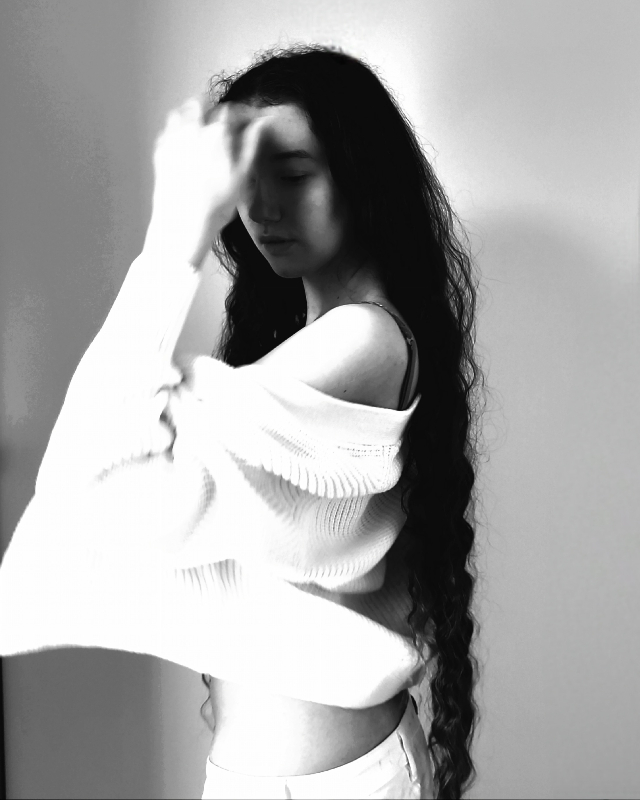
However, I am by no means a Daisy Buchanan, and never will be in my appearance, or intellect. I am a tall, fine, proud former dark blonde naturally turned brunette with beautiful Sisi curls² on my good days and the long waves of Rapunzel hair on others. That is a vivid portrait to remember me by… but my personality is far too broad to be summarised in just one line—you could tell by my writing that I am the truest of poets; all romantic, all realist, all rare enough to have my own poetic voice experienced in minimalistic prose when I am not going by stanzas.
Nevertheless, seeing that green light these past few nights—weeks even³—have made my modern Gatsby experience entertainingly uncanny.
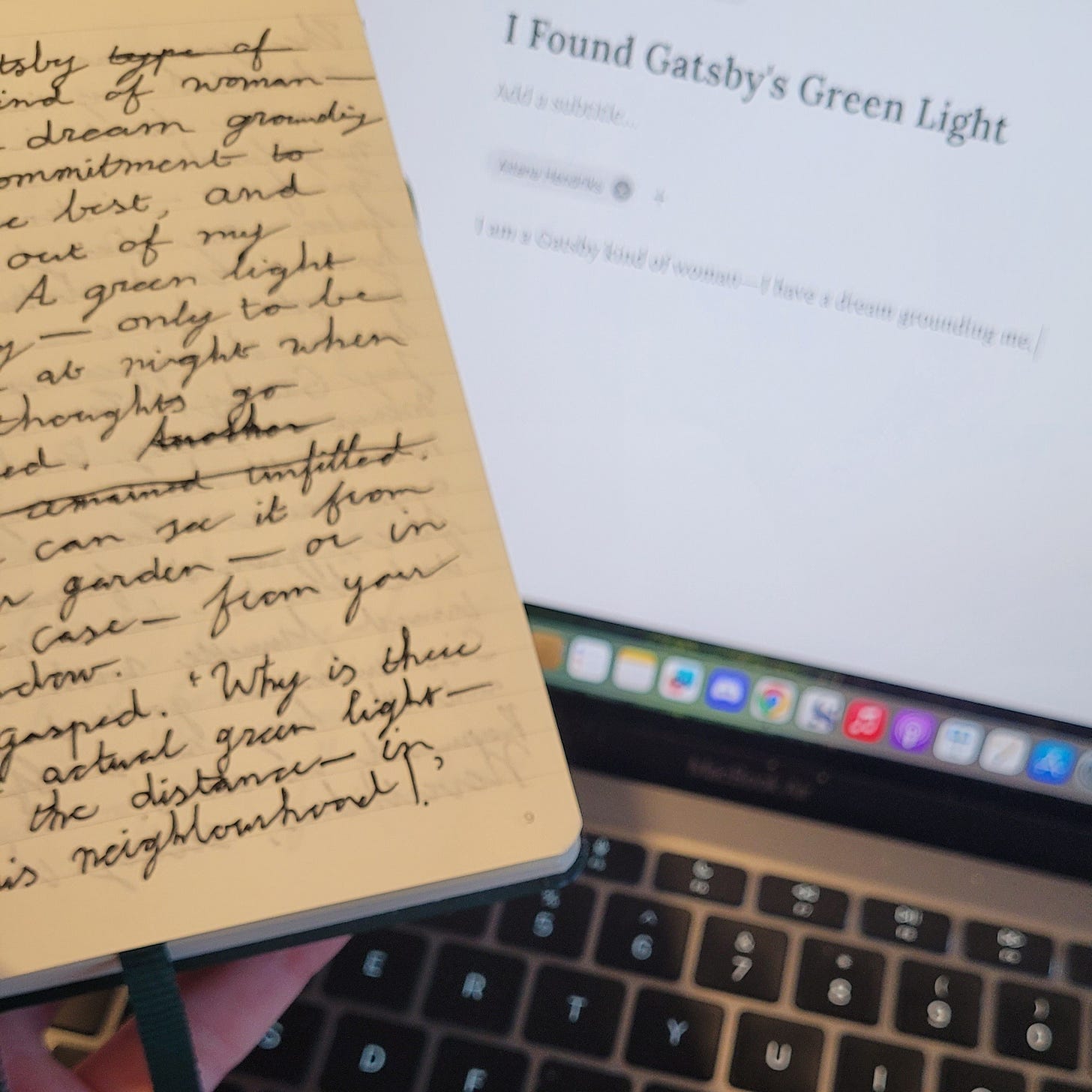
Thus, the Fitzgerald writer in me had to scribble this piece in my green pocket size Leuchtturm1917—even if this young man no longer had my heart or eye—I had already lost interest long before I lived this particular Gatsby moment.
Ah, yes, unlike Gatsby, I prefer my lovers unemotionally unattached—meaning, ‘having moved on from their former lover nor ever mentioning having feelings of love for said former lover when I had explicitly declared my own romantic interest when he asked for further elaboration.’ A very reasonable crash in the matters of the longing heart. No woman should ever fall hard for a man whose heart is spoken for—no matter how in denial he must be of his own affection, or however blind he must be to the love he could have had if he had taken the risk to open his locked heart. Unfortunately, no word of mine was a key to his.
Now I am not being too harsh or cruel to this young man. I admire his crushing honesty, and still hold some affection I cannot describe without the occasional scream of indifference... Perhaps it is a fading disappointment of character. That said, without his profound declaration of love for his ex—the timing of it was surprisingly crucial; before rejecting me indefinitely and instantly after investigating the wild desires of this sensually sophisticated young woman—I realised my heart was, too, still spoken for.
Truly, my heart had only ever belonged to one man. My utter green light. My reasoning of an ache I wish upon no soul, yet could be comforted by the rarity of his smile—a smile which, ironically, Fitzgerald writ about, and reminded me of this passage the first time I had seen him smile.⁴ Just for a moment, I relived his smile as I writ about my own bittersweet reality:
He was and always will be my Gatsby—but I was the one being Gatsby in terms of love and longing. What a cruel duality to be lived!
There, I stood—still in front of my window—looking at this alluring light—which should be a light representing my biggest dream, or my biggest desire—technically speaking, both if we are following Gatsby’s footsteps. May I take a moment to highlight that I could have a degree as a Fitzgerald scholar in another life—I am sure of it…
Instead I embraced an emptiness.
Because I know how The Great Gatsby ends—I know the tragic belief Gatsby carried until his last breath.⁵
If this green light was meant to be a sign, I refused to see my hope die.
After all, I am the Gatsby kind of woman—I have a dream grounding me, a commitment to being my best self, and a love still out of my reach. Ah, I sure be meant to be beautiful and damned, old sport.6
Call me—a hopeful romantic whose heart will always long, and love, until her last breath.
Because that is how we explore the Poetic Existence, my Sunbeams of life!
—Aitana Hendriks
Follow me to receive more personal essays, modern romantic-confessional poems, literary musings, and prose writings.
Footnotes:
1 The reference to ‘Gatsby’s green light’ alludes to F. Scott Fitzgerald’s The Great Gatsby (1925), which Gatsby observes from his mansion across the water at the end of the Buchanans’ dock; in the novel, the light symbolises his longing for Daisy and the American Dream.
2 The term ‘Sisi curls’ refers to the iconic hairstyle of Empress Elisabeth of Austria (1837-1898), historically known as Sisi.
³ I began noticing the green light in late November or early December 2025.
⁴ F. Scott Fitzgerald, The Great Gatsby: Penguin 75th Anniversary Edition (London: Penguin, 2010), p. 51.
⁵ Referring to this passage—‘No telephone message arrived, […] I have an idea that Gatsby himself didn’t believe it would come, and perhaps he no longer cared. If that was true he must have felt that he had lost the old warm world, paid a high price for living too long with a single dream.’
⁶ The phrasing here references Fitzgerald’s The Beautiful and Damned (1922) and The Great Gatsby (1925), particularly Gatsby’s characteristic use of ‘old sport’.
Originally published on 14 December, 2025. From 'Poetic Existence by Aitana Hendriks'.
Comments (1)
Firstly, I want to thank you for taking the moment to read my essay which should've taken at least the estimated 5 minutes of your time. Secondly, and most importantly, you made my day here, seeing my prose in its essence of Fitzgeraldian characteristics. There is many layers of emotional complexity in this essay. I am glad to hear you spotted them during your reading.