I don't think I can fully hate AI
An engineering student who relies on AI, and a blogger who resents it

Apr 27, 2026 · 8 min read
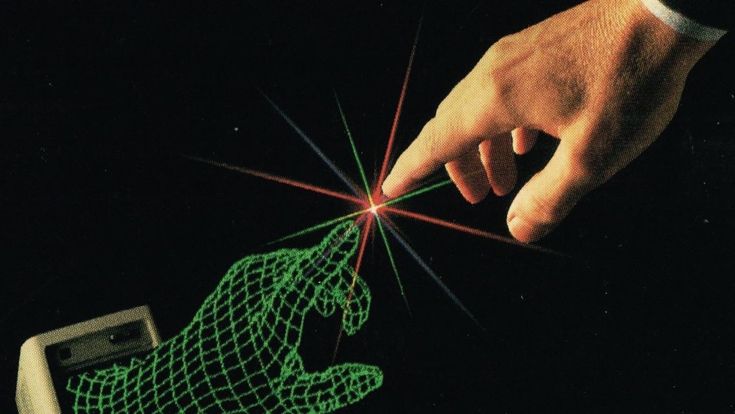
So it is a random sunday morning and my dad is having trouble filtering his excel sheet like always. He tries getting help from a few of his assistants and eventually gives up (a.k.a hands it over to me to figure it out). Now I am a CSE student who is tired of filtering his never ending lore of datasets. So this time I gave him a suggestion..I had a free version of ChatGPT Go and it had this option of creating custom GPTs. I helped him create one which clearly does all that he pesters me to do on a holiday. After all prompting, it is finally ready…we upload the dataset, he asks it what he wants, lo and behold - his data was in front of him and even better, it suggests to him what to do next (classic considerate ChatGPT). My dad was swept off his feet… he felt like Tony Stark, like he had created something incredible. These days, I barely get called for help. Instead, I have to see my dad whispering sweet nothings (dictating prompts) to his laptop on an everyday basis.
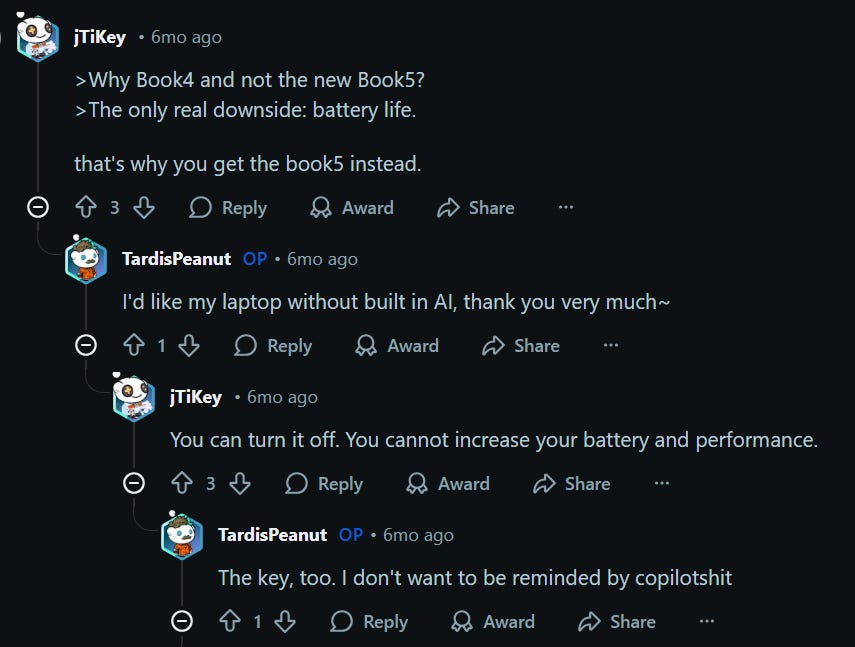
As I was wondering if my dad was getting a bit too attached to ChatGPT, I read this article about the extreme AI usage of Chinese parents to tutor their kids and thought: ‘Wow, asian parents and AI are unstoppable forces at this point’. The amount of trust they have on this thing is in stark contrast to how westerners treat AI. They use the camera features in AI models to act as their child’s personal tutor. AI models like Doubao are basically always “on” where it is constantly recording and observing. A kid can just ask it doubts anytime, and it patiently explains things over and over until she gets it. It doesn’t stop at academics either - it can even monitor her posture while she studies, reminding her to sit properly to avoid discomfort. And in a way, it acts like a quiet motivator too, nudging her to finish her homework before bed. It’s like having a 24/7 teacher, guide, and companion all rolled into one. This might seem too much for this redditor who hates the AI copilot button for just “existing” on a laptop.
Privacy of the kid? You might ask. The child’s parent says that she’s not worried about her kid’s entire lifestyle being recorded by AI since in this social media era it’s not like we have much privacy anyway...and honestly she’s not wrong. It might be right to rely on AI to stand independently and do everything just better when you don’t know how to do it the right way - like how another chinese parent who doesn’t know english teaches her kid that skill with the use of AI without the high price of tutoring not all middle class people can pay.
So is the AI hate something overhyped?
I personally have this weird love-hate relationship with AI. As someone majoring in engineering, studying in a tier 2 engineering college in Chennai (trust me it’s worse than it sounds), AI just makes my life a 100 times easier. From helping with super difficult assignments for subjects that isn’t even related to my major to helping me build hackathon projects from scratch which has a one day build time, AI just is used left and right throughout my college life and I can’t imagine one without it (no offense to those who graduated BC - before ChatGPT).
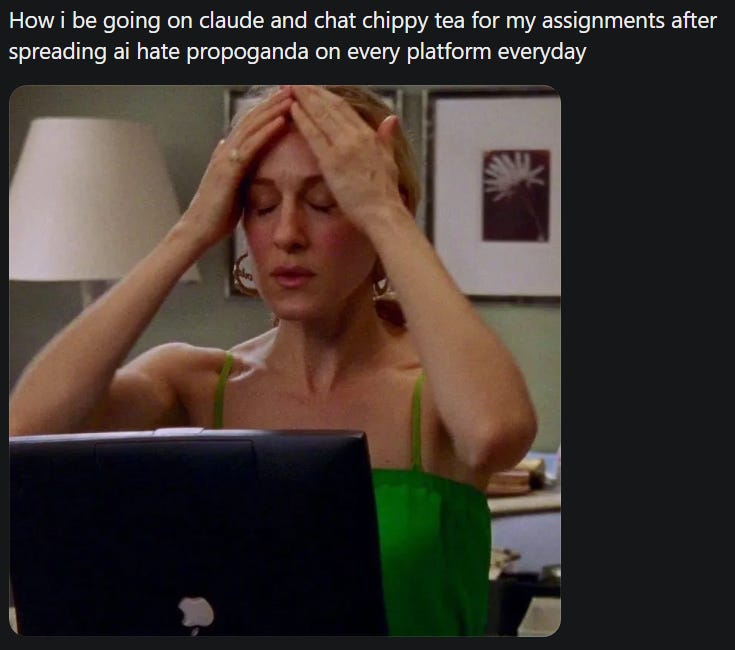
I also have times I have hated AI too. No, not when it answers completely wrong to my half baked prompt. I think it started when I started writing in Medium. If you asked me back then, I would’ve said why not let people use the help of AI for their content. At the end of day, not all of us can beautifully articulate whatever’s forming in our heads and AI helps in that - it tremendously helped me at the beginning. It still helps me properly punctuate and reframe my sentences as English is not my first language and I am not fluent enough to write an article in my native language.
But I was proved wrong by a lot of writers on that platform. I would pour my heart and soul into an essay that will take weeks to complete amidst my engineering life and I will get almost NO reach. But the other day I saw an article of self exploration which is completely AI written..now what I said earlier about language barriers might still apply. But, I couldn’t relate with the content no matter how hard I tried, since it had almost NO human touch. Now what triggered me the most is the amount of claps it got (no it is not jealousy). How can this 2 minute prompt work be taken to most people’s feeds compared to what I created? Even though my writing can be disconnected showing my ADHD or super niche due to me being chronically online and hoping people would “just get it”, it is still all me, a poor attempt of a messy human attempting to capture the world through words. So no, I did not feel inferior to that bot but just felt sadder. And maybe that’s where I experienced that hate for “AI slop” for the first time.
Then the more I got into that lore, the more I started to hate AI for doing almost every creative process that exists and I suddenly hop on the hate train with my fellow substackers. And I must say this hate AI is getting is insane and sometimes I feel it might even be baseless.
But is it all really baseless though? From what I can see, it’s not just one thing but a mix of multiple layers, and most of it seems to come from Western countries where people already had enough with companies trying to steal their autonomy and from people working in creative fields like writing, art, and design who just can’t take AI replacing their jobs anymore. And honestly, the more you look into it, the harder it becomes to dismiss it as just people overreacting.
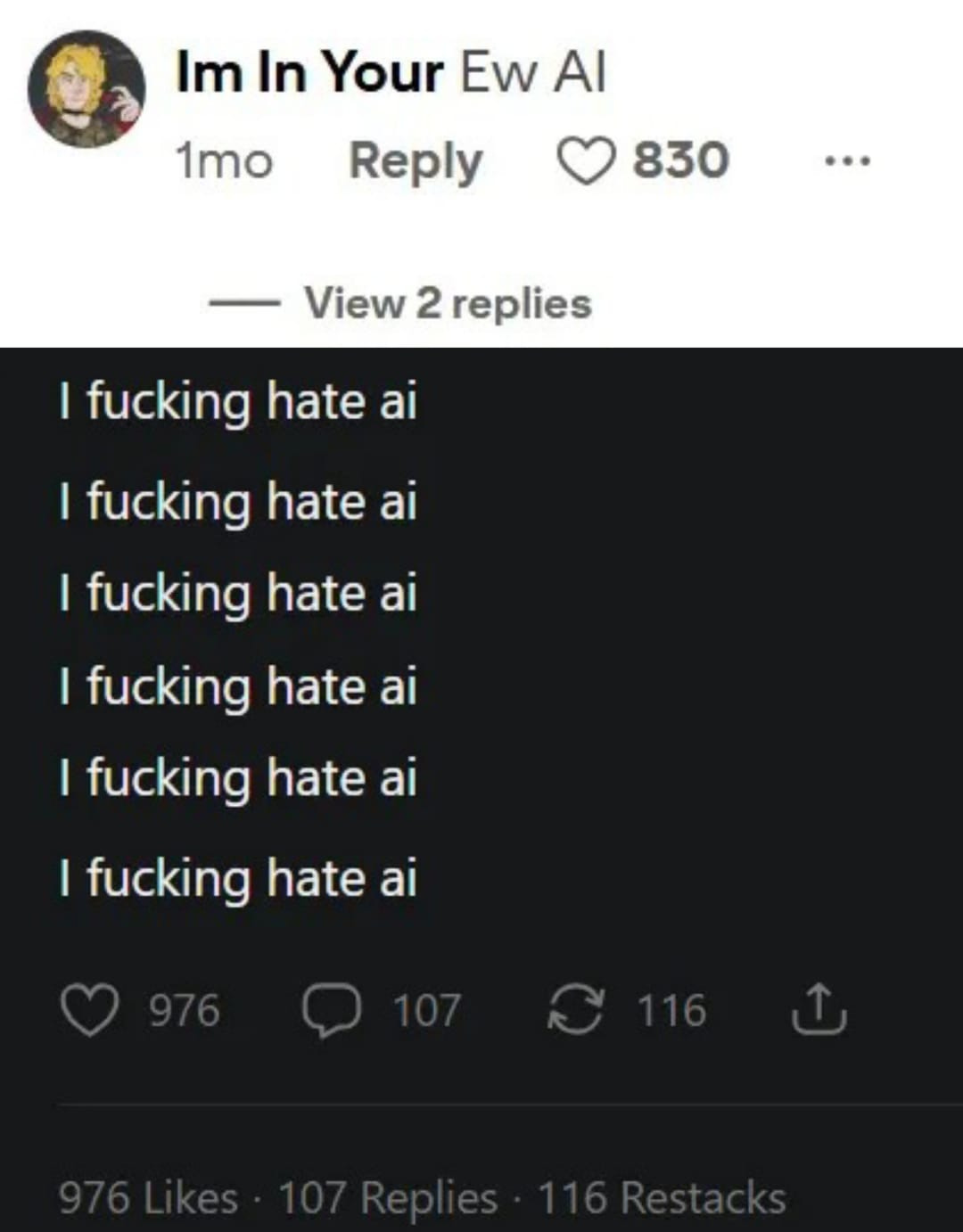
Apart from people constantly commenting “Ew AI” on the internet, there are only a few people who actually explain why we should reduce our AI use. These AI systems run on massive data centers that consume huge amounts of energy and even clean water just to stay operational, turning something as simple as generating an image or a paragraph into a much larger question about resource usage. At the same time, the way these models are built raises its own set of issues, since they are trained on vast amounts of data collected from the internet, often without clear consent from the people who created it. That is where the discomfort begins to deepen, because it is not just about using AI, but about what it is built on and who it affects. These are all valid concerns that has big impact but since it is not visible to people right away, not a lot of people take concern in this and they just proceed to ask for prompts (cause recreating the look is more important than water rn)
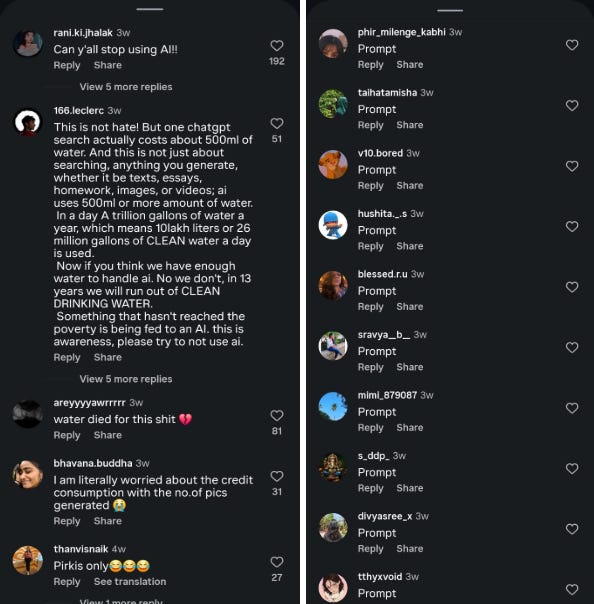
But what IS real and visibly getting to us is a lot of people losing their jobs to AI. It is one thing to use AI to finish assignments, but it is another when it starts doing the very work people have built their identity around. Writers, artists, and designers are watching tools that are trained on years of human effort produce similar outputs in seconds. Not necessarily better, but fast and cheap enough that it starts replacing actual people. That is where the idea of “AI slop” comes from. It is not just bad content, but content that feels empty and mass-produced, yet still manages to get attention. Seeing something generated in two minutes receive more reach than something that took weeks of effort does not just feel unfair, it feels disconnecting.
And then there is the layer that makes all of this feel heavier. There is this underlying distrust of big tech that already exists, not the casual kind, but a deeper feeling of why private companies have so much power over people’s lives. So when AI enters the picture, it is not seen as just a helpful tool but as a continuation of something much bigger and more concerning. Take companies like Palantir for example. They are not building cute filters or productivity tools but systems that deal with surveillance, military operations, and large-scale data analysis. When CEOs openly talk about their involvement in defense and warfare, AI stops feeling like a simple assistant and starts feeling like a system controlled by powerful people whose intentions may not always align with the public.
When you put all of this together, the hate does not feel random anymore. It feels like a mix of fear, frustration, and uncertainty. It is not just about AI itself but about everything it represents, from corporate control to environmental impact to the changing value of human effort. So the hate does not feel entirely baseless. It feels more like a reaction to something people are still trying to understand, and in some ways, trying to protect themselves from.
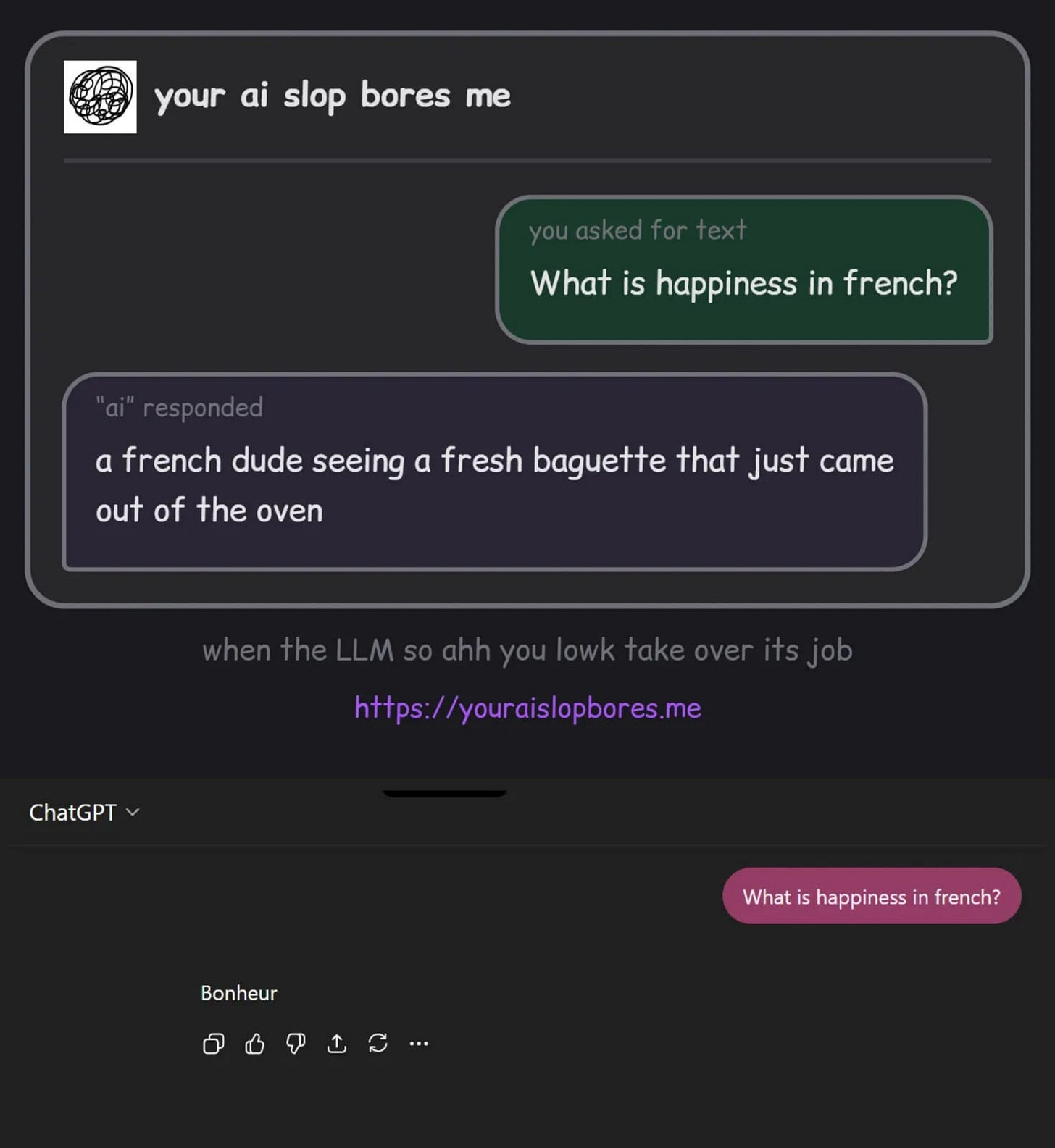
And maybe that’s why, without even realizing it, we’ve started leaning the other way. Amidst all this push and pull between liking AI and hating AI, collectively, without even realizing we have begun to embrace everything that has imperfections as a trend. Like using polaroids? which is just a bad quality camera in an era of 8K clarity. The glorification of 2016? when in reality it is the last time you remember yourself living a happy gadget free childhood. Everything vintage and the take me back to the 80’s trends are echoing our wish to make life slower. Suddenly button phones are on our wishlist, we crave for physical media, we all wish we get to go offline and live a gadget free life somewhere in the village. We just miss that imperfect human touch soo badly that we started to rebel, saying “I like how mine’s got wabi-sabi”. We began to get more attracted to the freckles and scars of a person since that tells a story than overly perfect photoshopped pics. Before AI was reddit which taught me answers to questions I never knew that needed to be answered. If you reminisce with me, here is a website where a human replies to your prompt in 60 seconds like an AI and I would choose THIS answer over my ChatGPT any day.
In the end, if you ask me to conclude…well, Can you tell my dad to stop using AI to generate his college festival posters? No, he’s definitely not going to listen. If anything, he’ll probably just hand the work back to me. He doesn’t really care about the “AI hate” people keep going on about. And if you tell a Substack writer, someone who is strongly against AI, that a parent is letting a model monitor their child 24/7 and tutor them, they would get a mini heart attack and probably write an article about it.
And then there’s me, somewhere in between. As a CSE student, I don’t really have the option to ignore AI. I can’t count the amount of times I have been told to ask AI, whenever I have doubts in coursework. I am expected to keep up with it, use it, and understand it. But at the same time, I still get to choose where I use it and where I don’t.
I don’t think I can fully embrace the AI hate.
But I understand why it exists.
And maybe that’s enough.