Hatherfen Moor
A Folklore Horror: Don't terry at the waters edge, the faceless ones will find you.

Mar 25, 2026 · 4 min read
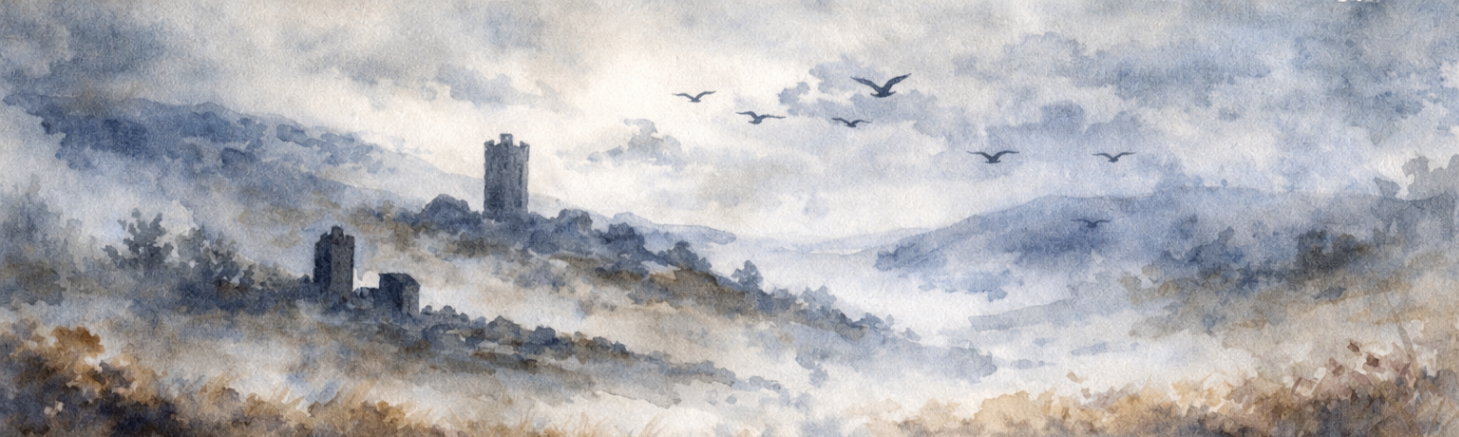
Hatherfen Moor
Elswith was a quiet child of little remark.
Her mother lay one month in the peaty soil beneath the yews, and her father was a grieving widower of few words. By day he buried his grief with work carving wood with his rough hands, by night he sat sharpening his axe. When Elswith spoke to him, he often did not answer. Only the scrape of metal on stone replied.
The days grew swollen with sorrow, heavy with the absence of joy. The loneliness consuming her, eating away at her spirit.
The village elders gave her pitying looks when she passed, whispering into the folds of their cloaks once she was gone. The other children turned cruel. They excluded her from their play, their laughter trailing behind her like nettle stings.
On one such day, Elswith returned home, eyes rimmed red, cheeks pale from tears. Her father presented her with a gift, a lifelike doll carved in the image of her mother. He placed it in a chair beside the hearth.
Elswith crawled into the doll’s wooden lap, pressing her face to the linen dress that was once her mother’s and slept. Her father nodded, and returned to his work.
For a week she climbed into the doll’s lap each evening. She told it stories, sang her mother’s lullabies, and slept against its unyielding arms. But wood cannot answer, and silence cannot soothe forever. Soon, her loneliness crept back, gnawing at her.
Elswith began to wander further, drifting to the edge of the moors. There she caught frogs, spoke to birds, and watched spiders weave their silver nets in the reeds.
One such afternoon, something watched her in return.
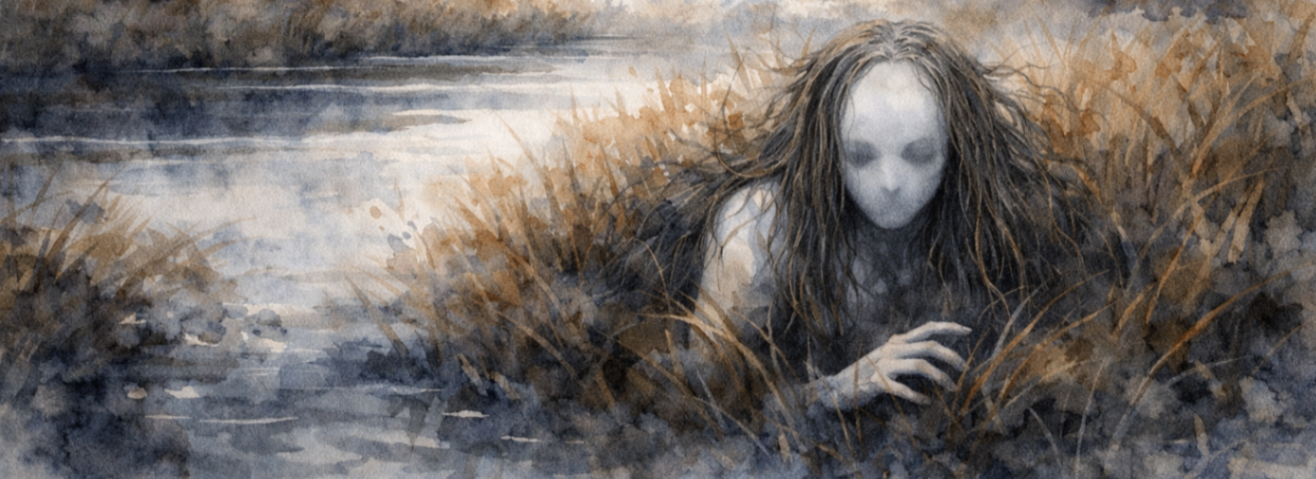
It hunched low between the rushes, its skin the color of drowning pools, shifting and pale. A strange creature, its head tilted in curiosity. When Elswith lifted her hand, it lifted too. When she turned, it twisted its frame to follow.
The next day, she returned with scraps of bread. The creature came closer, curious. It had neither eyes nor mouth, only stretched skin pulled tight across a shape that mocked a human skull.
The impressions where features should be trembled, as though something beneath strained to press forward, desperate to split the surface and see. Elswith did not mind. Strange company was better than the suffocating weight of none at all.
Each day the creature stretched and contorted itself, trying to match her form. It rose from its crouch, stood upright, stepped where she stepped. Bit by bit, it became more human.
Elswith whispered her secrets to it. She told it of her mother, and how she missed her so deeply the ache felt endless. She told it of the doll her father had made, and how she grew angry with it for being silent, unfeeling.
The following day, from behind its sealed mouth, came a sound,
a low, muffled hum. Her mother’s lullaby, warped but recognizable.
Elswith pressed her face to the faceless thing, wrapped her arms around its damp body, and curled into its lap at the edge of the moor.
That evening, as she walked home, the creature followed. Her father saw her passing near her mother’s grave, hand in hand with the figure.
“Elswith!” he called.
Both turned toward him. His blood froze. Surely it was a trick of light, reeds and shadows conspiring against his eyes. By the time Elswith reached him, the faceless creature was gone. He said nothing.
Two days later, the woodcutter passed his wife’s grave, and found it disturbed. The soil clawed up, the casket torn. Inside, he saw not her bones, but the carved doll he had made.
Rage consumed him. He stormed back to the cottage, bursting through the door.
And froze.
At the hearth stood his wife.
Her hair, black as midnight, tumbled across her shoulders. She wore her cooking apron, hands folded gently just as he remembered and she hummed her lullaby.
But when she turned, her smile split ear to ear, the skin tearing wider than flesh should bear. Jaws unhinged, opening into a cavern of glistening red, saliva dripping from rows of sharp teeth. Her eyes were without love and life just wet, glossy voids, swallowing the fire’s glow.
“Father, look!” Elswith cried, radiant with joy. “Mother has returned to us.”
The contrast between her delight and his horror drove him stumbling from the cottage. That night, Elswith fell asleep in her mother’s protective embrace while her father hung himself in the woodshed.
A week later the villagers saw Elswith in the market. She walked hand in hand with her mother and father. Their faces were pale, skin smooth, their movements mimicking Elswith.
And so the elders whispered of Hatherfen Moor, that faceless ones linger in the reeds, watching with patient hunger.
They come to those who tarry at the water’s edge, hearts swollen with sorrow.
They slip into the shapes of the lost,
and follow the living home.
Even now, they say, if you wander too near the bog with grief in your chest,
the faceless ones will find you
and wear the faces you long for most.
by Heather Patton / Verdant Butterfly

🖤Leave Some Love, Like and Comment
──────────── 🦋 ────────────
©2026 Heather Patton · The Verdant Butterfly
Shared free with love for this community.
Please credit the author when quoting or sharing, and never republish without permission.
Comments (4)
I do really like your writing, so much feeling and the detail pulls you into the story.
