Forgetting
Chapter 1 from a book about a beautiful princess
Mar 6, 2026 · 15 min read
Before the spark, before the joining,
I was wide as weather, thin as wanting—
A note held long in some vast throat,
A word the universe forgot it spoke.
I do not remember what I was
But I remember that I was.
I remember light that was not light,
And company that cast no shadow.
Now I am poured into a cup of blood and bone,
And the cup is so small,
And I am learning, again,
To forget.
I. The Before-Place
There is no word for where I was.
Not heaven. That is a human shape pressed onto something shapeless. Not void. I was not nothing. I was… adjacent. I was the space between one breath and the next. I was the pause before thunder, the held note, the almost.
I had no body, but I was not without form. I was a kind of knowing. A temperature. A frequency that hummed alongside other frequencies in a vast and gentle chorus. We were distinct but not separate. The way colors in a sunset remain themselves while bleeding into one another.
I did not have a name. Names are for things that can be lost, and nothing could be lost there. Nothing could be found either. We simply were, the way light is, the way gravity is. Not doing, just being.
Time moved differently. Or rather, time did not move at all. Everything existed in a single sustained moment, like a chord that never resolves. I knew things without learning them. I felt held without being touched. I was complete.
I did not know I was waiting.
Perhaps I was not waiting. Perhaps waiting is something that can only happen afterward, when you have somewhere to go. But something in me, some part of that frequency, that knowing, was already leaning toward a door I could not see. Already tilting toward a threshold I did not know existed.
And then.
II. The Spark
The first thing I knew was cold.
Not temperature—there was no body yet to register temperature. But a coldness of separation. A sudden boundary where there had been none. I was no longer part of the chorus. I was a single note, plucked from the chord and sent spinning into darkness.
I felt myself contracting. Compressing. Everything I had been was being folded smaller and smaller, like a letter pressed into an envelope too small to hold it. Pieces of me were left behind. I could feel them falling away like sparks from a fire, like words from a sentence being erased one by one.
Wait, I tried to say, but I had no mouth. I’m not ready but I had no thoughts yet, only the raw sensation of becoming less than I was.
Two cells met in a darkness I could not see, and I was pulled into them like water into a drain. The spark was not gentle. It was not the soft glow that humans imagine when they speak of souls entering bodies. It was violent and bright and terrifying, a lightning strike in a closed room and I was the lightning.
I crashed into matter.
Matter was heavy. So heavy. I had not known that existing could weigh so much. Every particle of these joined cells pressed against me, and I pressed back, and we did not fit, we did not fit, we did not fit—
There was no going back. The door had closed behind me. The Before-Place was already becoming a blur, a half-remembered dream, a warmth I could feel fading like the last heat of a sun slipping below the horizon.
I tried to hold onto what I had been. I reached back for those other frequencies, those companions I had known for eternity—or for no time at all—but my reaching had no hands. My remembering had no memory. I was already forgetting.
The chorus faded.
The cold remained.
I was alone.
III. Becoming
The body grew around me like a house being built while I stood in the foundation, watching walls rise.
At first, there was only division. One cell, two cells, four, eight. I felt myself spreading thin across the multiplication, stretched like too little butter over too much bread. Each new cell was a room I had to fill, and I did not have enough of myself to fill them all.
Something was different here.
I could not name it. I had no names yet, no language, nothing but sensation and a dim, fading memory of having once known more. I could feel it, a gap. A place where the pattern should have continued but didn’t. Like a melody missing notes. Like a staircase missing steps.
It did not hurt. It was not wrong, exactly. It was simply other. This body I was growing into was shaped differently than… than what? I could not remember what I was comparing it to. The Before-Place was slipping further away, and with it, any sense of what “normal” might have meant.
I was becoming this.
Whatever this was, I was becoming it.
The cells kept dividing. A spine began to form, a ridge of intention running through the soft chaos. A heart—two tubes twisting together, beginning to pulse. I felt the first rhythm move through me, and it was the most terrifying thing I had experienced since the spark. A beat. A tempo. Time.
In the Before-Place, there was no time. Now there was a drum marking seconds, minutes, hours. Now there was a next and a then and an after. The heart beat, and I learned that I was mortal.
I tried to resist it. I tried to hold still, to refuse the forward motion. But the body did not ask my permission. It grew.
A brain began to fold itself into being. Neural pathways sparked and stuttered, and suddenly I had something like thought. Not words yet, not ideas, but impressions. Pressure. Warmth. The faint, rhythmic sound from beyond the walls of my world: thum-thum, thum-thum.
A heartbeat not my own. Larger. Steadier.
Mother.
I did not know the word yet, but I knew her. Knew the warmth of her blood moving past me, the gentle pressure of her body curving around mine. I was inside someone. I was held.
The fear began to ease.
Not disappear. I was still afraid. Still grieving, though I could no longer remember what I had lost. But the aloneness was less absolute now. There was a presence beyond my walls. There was company.
I was still becoming.
Perhaps becoming was not only loss.
IV. The Warm Dark
By the time I had fingers, I had forgotten how to count them.
By the time I had eyes, I had forgotten what light looked like in the Before-Place—if there was light there at all. I only knew darkness now, the red-black warmth of my world, and it was enough. It was everything.
I grew, and the growing was sweet.
The fear faded first. Then the grief. Then the memory of having feared, of having grieved. I floated in warm salt water, and my hands—strange, webbed slightly between the fingers, a pattern I could not explain but which felt right somehow, like a souvenir from somewhere, opened and closed against the dark. I kicked legs I was still learning to use. I swallowed the water that sustained me and tasted what my mother tasted: coffee, something sweet, the mineral tang of vitamins.
I was not alone. I was never alone. Her heartbeat was my constant companion, my first music, my truest lullaby. When she laughed, I felt it in my bones. A gentle shaking, A vibration that said joy without needing words. When she cried, I felt that too: the chemistry of her sadness filtering through to me, and I would kick, not in protest but in answer. I’m here. I’m here.
I did not know if she could feel me yet. But I could feel her.
There were other voices. Deeper, rumbling through the walls of my world like thunder from a distant storm. I learned the rhythm of them, the bass note that came and went, the presence that would press against my mother’s belly and make the walls of my world vibrate. Hello, little one. We’re waiting for you.
I did not want them to wait. I did not want a waiting or an after. I wanted this. This warm dark. This perfect suspension. This world where I was fed without asking, held without reaching, loved without having to learn how to be lovable.
The gap in me, the place where the pattern had not completed, did not matter here. In the warm dark, I was whole. In the warm dark, I was enough.
I grew eyelids and closed them.
I grew ears and listened.
I grew a brain that dreamed, though I would not remember the dreams.
I forgot. I forgot the spark and the cold and the terrible compression. I forgot the Before-Place entirely—it slipped away like water through my strange webbed fingers, and I did not mourn it because I could not remember there was anything to mourn.
This was home.
This had always been home.
I could not imagine anywhere else.
V. The Narrowing
The world grew smaller.
Or I grew larger. It was the same thing, in the end. The warm dark that had seemed infinite began to press against me, walls I had not noticed becoming walls I could not ignore. I stretched, and there was nowhere to stretch. I turned, and turning was harder. My knees pressed into my chest. My hands found my face and stayed there.
Something was coming.
I did not have a word for fear anymore. I had forgotten fear in the long sweet months of floating. But I felt it now, rising like old water from a deep well. My heart beat faster. My body knew what my mind did not: that home was temporary. That all homes are temporary. That the warm dark was ending.
I kicked but there was nowhere to go.
I pushed but the walls pushed back.
Then the walls moved.
The first contraction was like being gripped by a giant hand. The world squeezed, and I squeezed with it, helpless, compressed. It stopped. I gasped or tried to, though there was no air, only the fluid I had breathed all my life. Then it came again. Tighter. Longer.
No, I tried to say. No, no, no. I want to stay. I want to stay here. I don’t want to go.
My wanting did not matter. The body that had been my home was becoming my passage, and passages only move in one direction.
The cord that fed me—my lifeline, my second heartbeat—shifted. Wrapped. I felt it loop around my arm, then higher. Around my neck. I could not move to free myself. The contractions came faster now, and with each one, the cord pulled tighter, a noose I had not asked for, a complication I could not understand.
Wrong, something in me whispered. This is wrong.
I could not stop it. I could only move forward, pushed by forces larger than myself, squeezed through spaces too small, twisted in ways that bodies are not meant to twist. I felt something in my shoulder give—a crack, a white-hot flash of wrongness—but there was no time to understand pain. There was only pressure and darkness and the cord tightening and the terrible, impossible journey toward a light I did not want.
The warm dark was ending.
I was ending.
I was being born.
VI. The Passage
The light was violence.
I had not known that light could hurt. In the warm dark, there was no light, only the red glow of blood and the black comfort of closed eyes. Now there was brightness and it was everywhere and it was screaming at me and I was screaming back.
Air. I had not known I would need to learn to breathe.
The fluid that had sustained me was being suctioned from my nose, my mouth. My lungs, those small pink sacs that had floated useless for nine months, were suddenly required to work, and they did not want to work, and I choked, and someone hit my back and I gasped and the air was cold, the air was knives, the air was nothing like the warm wet world I had lost.
I cried.
I did not have words for what I was feeling. I did not have concepts. I only had sensation: cold where there had been warmth, brightness where there had been dark, separation where there had been connection. The cord was being cut—I felt it, a snip that did not hurt but meant alone, meant severed, meant you must survive now on your own.
Hands touched me. They were enormous. They were dry. They moved me through space in ways I could not control, and I did not know if they were helping or hurting. My shoulder screamed—the broken place, the wrongness from the passage—but no one could hear it except me.
Voices. So loud. The deep rumbling voice I had known from beyond the walls was here now, breaking, saying words I could not understand but which sounded like crying. The heartbeat I had loved for nine months was somewhere nearby but muffled now, distant, separated by air and light and skin that was no longer mine.
I wanted to go back.
I wanted to go back so badly that the wanting was a physical pain, a grief larger than my small body could contain. I wanted the warm dark and the floating and the heartbeat pressed against me. I wanted to forget this, forget all of this, forget that there was a world outside where light hurt and air was cold and bodies could be damaged.
Please, I wept, though I did not know what I was asking for. Please.
There was no going back.
There is never any going back.
VII. After
The world was too much.
Every sensation was an assault. The brush of fabric against my skin—I had never felt fabric. The rush of air into my lungs—each breath was a small violence. The cold of metal when they took my measurements, the sharp sting of injections, the endless, endless handling. I was touched and moved and examined, and I could not protest, could not explain that every touch was too much, that I needed darkness and warmth and the steady drum of my mother’s heart.
They gave me to her, eventually. Laid me against her chest. For a moment, one brief, blessed moment, I remembered. The heartbeat. The warmth. I pressed my face against her skin and breathed in her smell, and something in me knew her, remembered her, loved her with a force that had no words.
It was not the same.
I was outside now. Separated. The heartbeat was there, not here, not surrounding me like water, not vibrating through my bones. I was a visitor to her body now. A guest. The cord was cut, and I was my own creature, and being my own creature was the loneliest thing I had ever felt.
My shoulder hurt.
Something was wrong with my shoulder, they kept touching it, making concerned sounds, whispering words I could not understand. My neck ached where the cord had pressed. My body was a catalog of wrongnesses that I could not explain.
Worse than the pain was the forgetting.
It began immediately, the way it had begun after the spark. The passage was so traumatic that my mind refused to hold it—within hours, the memory of the crushing contractions was fading. Within days, the warm dark itself was becoming a blur. I could still feel an echo of it, a ghost-sensation of floating, but I could not hold onto it. It slipped through my fingers—my strange webbed fingers, which people were also touching, also examining, also making concerned sounds about.
This, I realized dimly. This is what happened before.
I could not remember what “before” meant. I only knew that forgetting was familiar. That I had done this before. That I was always doing this, always losing what I loved, always arriving somewhere new and having to learn, again, to call it home.
The warm dark faded.
My mother’s arms became the world.
I forgot, again, that there had ever been anywhere else.
VIII. The Searching
Something was wrong and the wrongness had a shape they could not see.
For weeks, I was a mystery. My shoulder healed, but other things did not work the way they expected. I cried when other babies slept. I could not eat the way other babies ate. My body, so new to the world, was already speaking a language no one understood.
Hospital. The word would mean nothing to me for years, but I learned its feeling: bright lights, cold hands, the sharp smell of things that stung. I was moved from place to place, examined by faces that blurred together, subjected to tests that poked and prodded at the gaps in my pattern. The missing pieces. The notes that were not there.
My mother held me through all of it. I could feel her fear like a temperature change, could feel her exhaustion in the slowing of her heartbeat, but she did not let go. She carried me from room to room, from building to building, from answer to non-answer, searching for a name for what I was.
17p13.1, they would eventually say. Microdeletion. 274 kilobase pairs. Missing.
Missing.
I did not know then what I know now: that pieces of me had been left behind. That in the becoming, in the spark, in the passage from the Before-Place to the warm dark, some part of the pattern had not made the journey. Like the forgetting—like all the forgetting—something essential had slipped away, and I had arrived incomplete.
But “missing” is a word for people who expect wholeness.
And I was never going to be what they expected.
I was going to be something else entirely.
IX. Becoming Again
I do not remember the diagnosis.
I was too small, too new, too busy learning how to exist in a world that was not made for me. I remember or I think I remember. Though memory is a liar. That moment something shifted.
My mother was holding me. The room was quiet. And she was crying, but not the sharp, scared crying of the hospital days. This was slower. Deeper. A grief that had found its shape and was settling into it, making room.
She looked at me. And I looked at her, or tried to, though my eyes were not good at focusing yet. And I felt her arms tighten around me, not in fear but in decision.
Oh, she seemed to say, though she said nothing. So this is who you are.
Yes, I tried to answer, though I had no words. This is who I am.
The missing pieces did not grow back. The gaps in my pattern stayed gaps. I would not walk the way other children walked. I would not speak the way other children spoke. The webbing between my fingers—that strange inheritance, that echo of water, of the Before-Place, of some becoming I could not remember—would mark me as different.
Different is not wrong.
Different is just different.
And in my mother’s arms, in the warmth that was not the warm dark but was close, was almost, was enough—I began the long process of learning to love this world. This difficult, too-bright, too-cold, too-much world. This world that had not asked for me, that did not know what to do with me, that would spend years trying to fit me into shapes I was not made to fit.
I would learn to move through it my own way. Crawling when others ran. Silent when others spoke. Finding joy in the frequencies they could not hear, the colors they rushed past, the small eternal moments they were too busy to notice.
I was still forgetting.
I was also still becoming.
That, perhaps, is what souls do: we forget and we become, forget and become, crossing threshold after threshold, losing everything and finding everything, dying into new lives again and again.
I had been wide as weather, thin as wanting.
I had been a note held long in some vast throat.
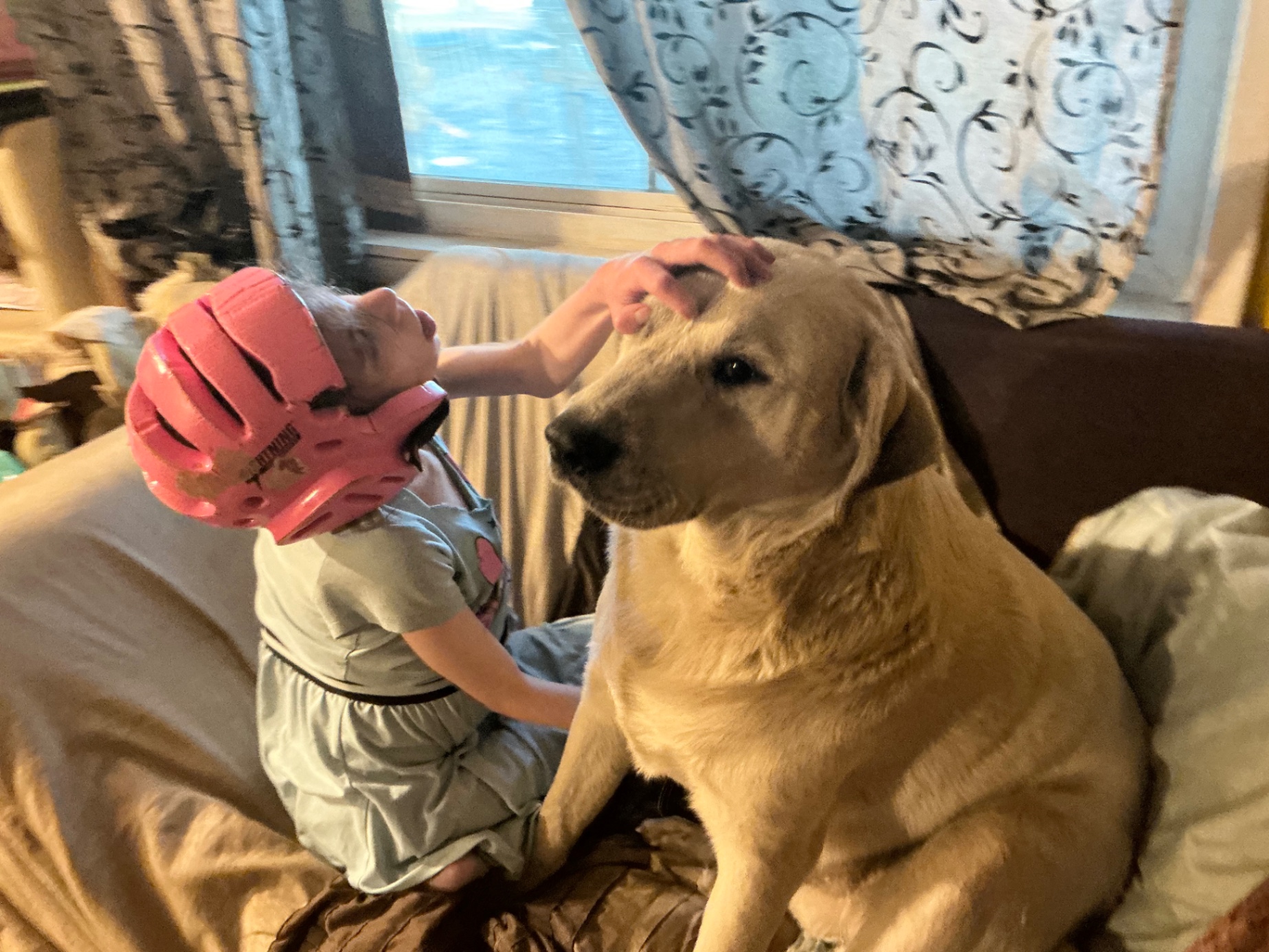
Now I was a girl with webbed fingers and a crooked smile and a mother who would not let go.
Now I was KatieBeth.
And that was enough.
She does not remember being born.
She does not remember the warm dark.
She does not remember the Before-Place
where she was wide and weightless and known.
But sometimes, in the quiet hours,
when the world is still and the light is soft,
she looks at something no one else can see
and smiles
as if she hears, very faintly,
the echo of a chorus
still singing her name
in a language that has no words
only love
only light
only home.
For my youngest child , Lady KatieBeth on her 17th birthday.
Who arrived different and stayed extraordinary.
Your story is still being written.
Comments (2)