Flight HVA 311: The Vale Divergence
They weren’t supposed to see it.
Mar 3, 2026 · 3 min read
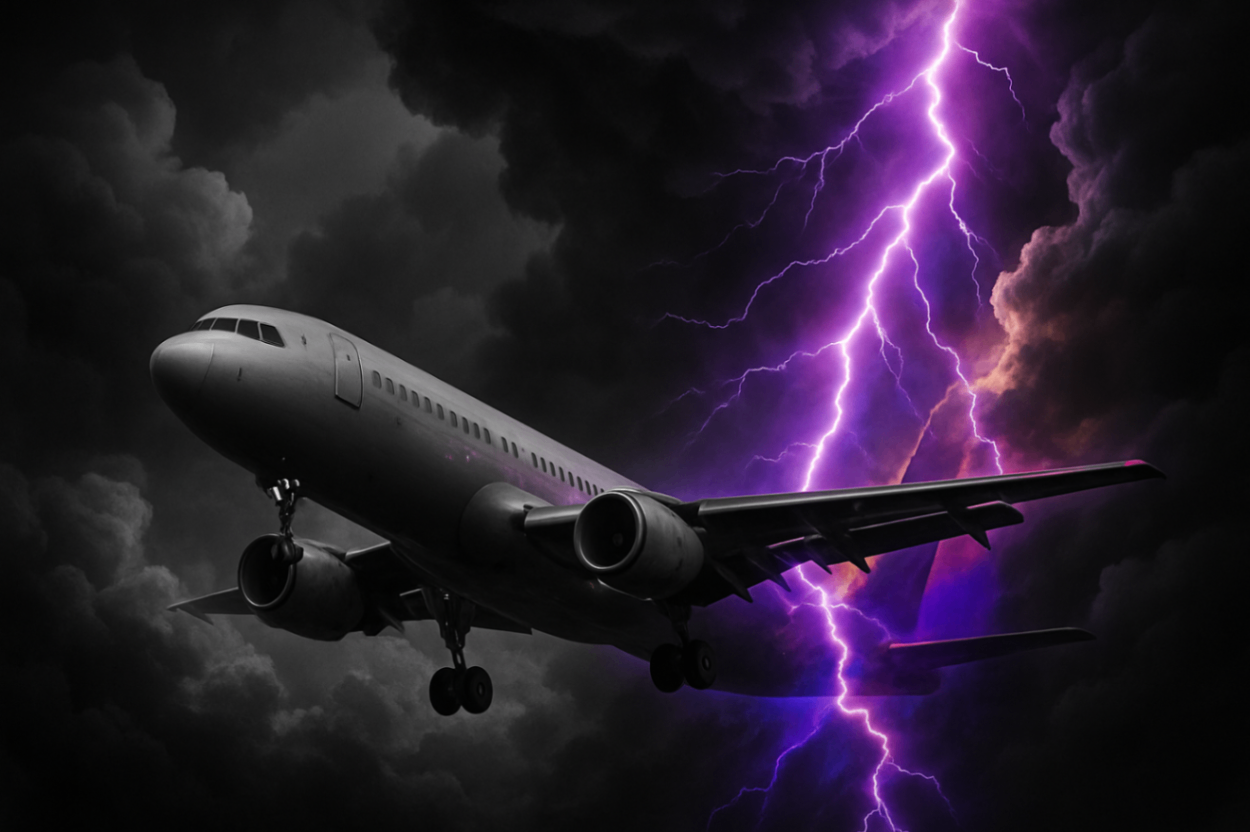
HVA 311, a commercial airliner en route from Vancouver to Seoul, carried 312 passengers and crew—no distress call. No debris. No storm. Just a sliver of space across the Pacific where the atmosphere shifted and time forgot how to hold shape.
They called it a slip.
They never made the report public. Not the black box anomalies. Not the way the radar bent like a half-melted mirror. Not the way every nearby frequency, even satellites, picked up a sound like a child humming in reverse.
Inside the cabin, it began with the hum.
A tone that started in the teeth and spread backward, like thought was pulling away from the skull. Then came the lights. Not a flicker, a shudder. Like the plane itself was blinking.
Passengers saw colors without names.
One woman claimed her seatbelt whispered her daughter’s name.
Another watched frost form on the aisle, spelling words in cursive before vanishing.
A businessman tried to stand and found his body half a second behind his intention, like his nerves were tuned to a delayed broadcast.
And someone, always someone, heard the forest.
Except it wasn’t a forest. Not really.
It was something else’s memory.
Something watching.
They breached the seam.
The fault line where the Hollow Vale thins, a boundary so precise it only opens when reality vibrates at just the wrong frequency. Normally, that line is dormant. Inert.
But HVA 311, with its perfect trajectory, its unshielded hull, its mechanical obliviousness, triggered a match.
It mimicked a signal. Not human. Not alien. Older.
A call and response pattern recorded once, long ago, by deep-sea researchers who went missing a month later.
HVA 311 answered it.
And the Vale answered back.
But it wasn’t the Vale alone.
The Others live adjacent.
Not gods. Not aliens. Just witnesses.
Close enough to observe. Far enough to avoid infection.
They’ve seen our wars. Our rise. Our fear.
And they’ve stayed silent.
Until that day.
We got too close.
Not by will.
By accident.
So they did what all cautious witnesses do when something unsanctioned peers through the glass:
They closed the curtain.
They absorbed the anomaly.
Not out of cruelty.
Out of containment.
We were the spill.
They were the seal.
Inside the Echo Plane, everything is distorted.
Thought becomes light.
Grief shapes gravity.
Identity is not fixed.
Time is weather.
The Hollow Vale is the tear.
The Echo Plane is the pressure behind it.
Some passengers split — their past selves walking alongside their present selves.
Others were rewritten.
One child became a conduit, a kind of spiritual steward whose humming held the only anchor between here and Elsewhere.
And the captain?
He didn’t survive.
He converted.
His consciousness now burns at the edge of the Vale, a beacon pulsing out warnings in the same forbidden frequency that doomed them. Every so often, that pattern flickers across the wrong radar screen and gets written off as interference. There is no crash site. No survivors.
Except maybe one.
A woman showed up in Seoul weeks later, barefoot, wearing a stewardess uniform from a discontinued airline. She spoke no language we know. But when she played the hum from the recovered black box, she screamed.
Then laughed.
Then whispered a single phrase:
“It saw us back.”
Flight HVA 311 is now canon in the Hollow Vale.
A ghost ripples in a world where truth rots under memory, and echoes can kill.
Ask yourself:
If something saw us and took us to stop us...
What would happen if we ever made it back?
If this resonates with you, please consider subscribing to https://ko-fi.com/thehollowvale to help bring more of the dark to light.