Community Is A Force Multiplier For Organizers
(Reposted from Substack)
Surviving Late-Stage Capitalism
Feb 27, 2026 · 7 min read
Communities As We Experience Them
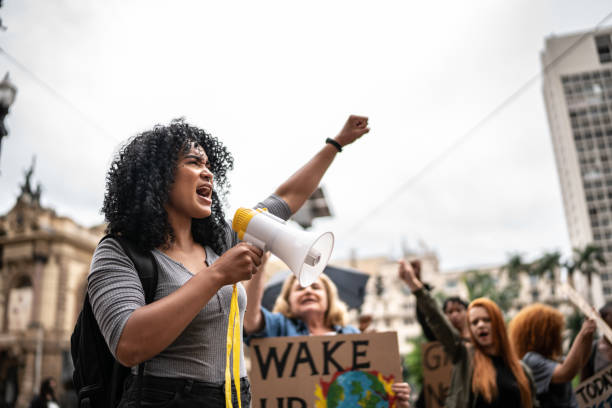
The simplest, easiest, and most convenient way for anybody to make a difference is to get involved locally - engage in local politics, volunteer, demonstrations/protests organized within your community- rather than trot off to the state capital. I would suggest some level of community engagement for everybody honestly, at least for some time. It teaches a person loads and loads about the place they call home, the people surrounding them, and how they developed the outlook they have on the world.
For example, I’m from a small Virginia town, nestled between two ridges in the perfect center of fuck-all nowhere. You have to drive an hour (give or take) if you need to give birth or have a serious medical problem. Or if you want a job that pays more than minimum, or if you want anything but disappointing bar food, sub-par asian fusion, and pretty decent Mexican food, or just about anything else of interest besides church on Sunday and drinking Busch Light with cops in a Walmart parking lot. I mean, it’s basically just water anyway…

For the record, I’ve not hung out with cops- neither at Walmart nor anywhere else- as I have a very simple, very rigid “as few cops as possible” policy wherein I don’t interact with them unless it’s unavoidable, but I’ll save those thoughts for a different piece…
To the God-fearing, gun-toting conservatives around me, church and the parking lot were bastions of their community. Obama was literally the antichrist for wearing a beige suit and being biracial. My bible-thumping grandma used to clutch her pears if I wore all black because clearly that’s Satan’s entry-level employee uniform. I figured out pretty quickly that I’d have to find that sense of inclusion and belonging elsewhere because what was close and easy was not for me at all. Being a neurodivergent leftie puts something of a target on one’s back in a rural, hyperconservative town. It has a tendency to leave a person feeling alienated and listless.
They were all having a blast getting hammered with Officer Obie while I struggled to keep my head above water. Eventually I found a sense of belonging amongst a gaggle of misfit neohippie types and ended up a roadie for my friend’s band, mostly to get into festivals for free and get a brief escape from the Bizarro-World-Andy-Griffith-Show that was my surroundings. I ended up having a pretty good time and learning to appreciate myself more as a result of finding that cadre of weirdos to hang out with.
When I left town for a while and moved to Colorado Springs, I started going to local a socialist party’s meetings. It took practically no time for me to make some friends, butt heads with a couple people and have good-natured, but heated debates, and get involved locally doing mutual aid and direct action work. I helped organize a protest at the only Trump rally held in COS during my time in the city, and we managed to get a few hundred people (including the liberals who stayed on the sidewalk while we took the highway outside the convention center) to make noise and voice displeasure before being summarily dispersed by cops. We were active during the BLM protests in the summer of 2020, and rallied even more people to march throughout the city several times despite heavy resistance from local law enforcement.
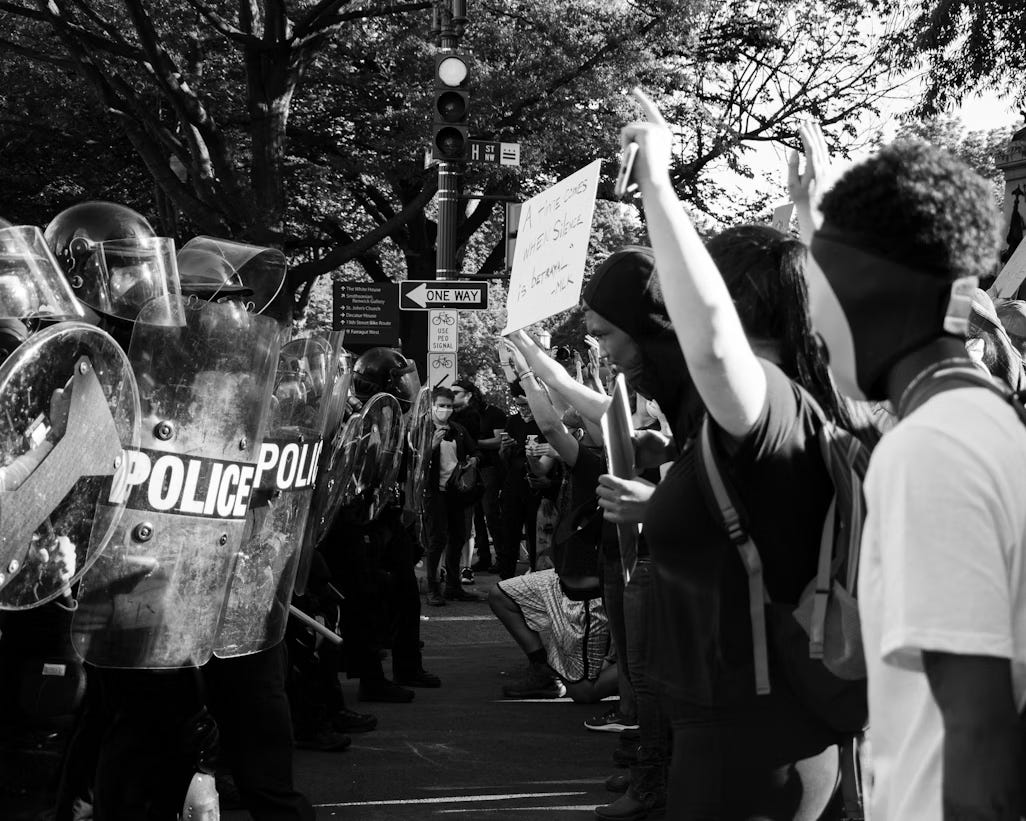
That was the community I finally felt right in: DSA and leftist organizing spaces in general. I knew everybody had the best interests of both society as a whole as well as the individuals in that society in mind when they deliberated or debated specifics. Nobody was acting in bad faith (except the couple CIs planted by a task force, wild times that haven’t got any less wild as the years go on). You could (and still can) trust your comrades, because you have the same goals, similar ethics, and complementary motivations.
The Wide-Angled View
On a societal level, think about the impact that sense of belonging has for someone being multiplied by a handful of people all working together to assert their agency to their government. We have to fight for the world we want, or else give up on wanting it. If we can marshall enough popular support, that world becomes just close enough we can reach out and grab a hold of it. The three most impactful elements of an engaged community are communication, collaboration, and coordination.
Communication
Since communities are diverse collections of people who share a geographical location and have a shared stake in each other’s successes and failures, hearing from each subgroup within the community is essential for making prosocial decisions that benefit everyone. In the context of activism and organizing, this might be focusing on ICE-blocking over defunding the police, for example, since that reduces the threat to frontline communities more immediately and is easier for a broader public to get behind. Coming to such a conclusion, however, cannot be done with a single data point. As many inputs as possible are taken in when an organization wants to determine how best to direct their efforts.
Not communicating your needs effectively in these situations is a great way to, like in any other situation, ensure you’ll get things you don’t need and miss out on support that you do need. The onus, however, is on the organizer to make sure everyone has an opportunity to be heard, either aloud at a meeting or anonymously through a suggestion box (or similar method) depending on level of comfort, or by some other means as is appropriate. Take all suggestions seriously and engage with them on their merits; you might be surprised who comes up with what ideas or has which complaints to address.
Collaboration
Drawing on the varied skills that all the members of a community bring to the table by working collaboratively serves a dual purpose for organizers. Collaboration, the act of working with those you otherwise would not, is an effective method for building solidarity and rapport between subgroups within a community. It also serves to broaden the coalition that is tackling a given issue, so by including as wide-reaching a range of voices in the discourse as possible, organizers can expand their movement’s horizons to larger-scale issues they then will have the resources to take on directly.
Coordination
Like fingers on the same hand, all parts of a political movement or activist group must be working in tandem to get the best results consistently. Occasionally, abberations occur and things go smoothly in spite of a lack of coordination, but such instances are the exception and not the rule. The best habit to get into is coordinating both internally and externally (within the organization and amongst outside entities) so that any party involved in the work they are doing has the same expectations and game plan to operate by.
Final Thoughts
All of this is far easier said than done. These are all active skills that must be practiced to be properly applied. The value of community bonding and actively participating in one’s community cannot be emphasized enough, as it is the best possible avenue for the broader left-wing movement to make forward progress. There are two policy sets to choose from in America: a conservative agenda espoused by members of both major political parties, or an economically populist agenda championed by the left flank of the Democratic party. Corporatocracy or social democracy.
For what it’s worth, reverting back to Keynesian economics and having a New Deal-style (though without the discriminatory policies and practices) welfare state with robust labor protections is not going to solve the underlying problems. There will still be issues of wealth inequality, racial, ethnic, and economic disparities that will need to be addressed. There will still be forms of institutional oppression. Social democracy still functions as a form of capitalism, so it’s still predicated on exploiting workers and leveraging wealth to extract more wealth from those under your heel.
But, once people see a functional government for the first time, as long as constant pressure is exerted to continue making gains for the working class and not making concessions to the wealthy, material conditions will improve consistently for working people. A fully socialized society would be the ideal next step, and laying the foundation for faith in government in a society that is so painfully black-pilled (like ours) will be a necessity to avoid devolution into the neofeudal hellscape Peter Thiel dreams about.
Thanks so much for reading this far! If you’ve made it to the bottom of the page, please like, share, and/or comment on this piece, and subscribe to get more of my work sent directly to you as soon as it drops. This project is a fully independent one, and I have no incentives or obligations beyond producing informative and enjoyable content. Subscribing is the best way to show support, and engagement gets my work seen by others who could also benefit from the information presented.
Comments (2)