Broken By Design: The Social Safety Net Meant To Leave Us Behind
For those of us that need extra support, help may never come- because it's being kept from us by design.

Surviving Late-Stage Capitalism
Mar 11, 2026 · 7 min read
This is a special preview- released early only on Wrizzit- of an article about to drop tomorrow morning. If you like this piece please follow me here and subscribe on Substack, if you feel comfortable doing so.
An Unnecessary Odyssey
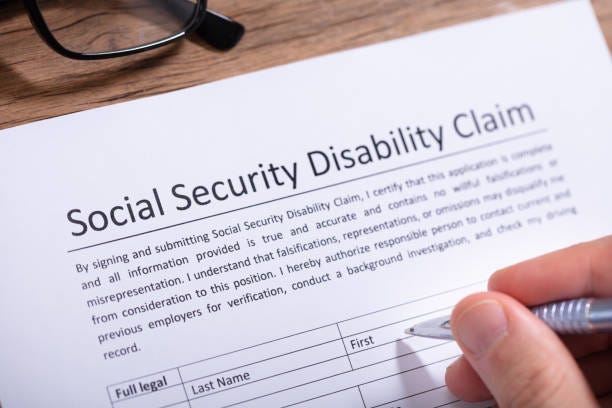
Last Thursday, like a handful of days over the last couple weeks, I spent a good deal of my mental and emotional energy trying to get the remainder of my disability paperwork sent in. I didn’t apply because I wanted to, or because I’m lazy and just want to do nothing all day. I can’t work right now, but plan to eventually step myself out of the system gradually. I want to be a productive member of society, but right now I need some extra stability that I can’t get on my own due to a handful of psychiatric disorders.
The process itself is needlessly difficult to navigate, even if you’re neurotypical and don’t have problems with emotional dysregulation, executive functioning, or distress tolerance. All of those challenges are exacerbated by the SSDI application process, and it’s becoming clear that those problems are so pervasive because they are meant to keep people from getting the support they deserve. I’ve put in a LOT of work to get to where I am today, but I’m not yet, and likely never will be, able to do many things others can without some accomodations.
The initial phase of the process was a chore, but was manageable- I go to the office, explain what I needed help with- they push me to apply online, without ever having a website that functions or is accessible without lots of struggling and calling numbers buried deep within the broken site you tilted at daya after day like the windmill it is. I then go back, ask for help from a human being, wait a month for the call, then struggle even more to complete the paperwork online that could have been emailed as a pdf given the issues I have getting into my Login.gov account yet for some reason were kept behind a login link I can’t access. I call three different numbers trying to get into the account yet again before finally speaking to someone who- after 20+ minutes of jerking me around and suggesting impossible and unrelated fixes- finally sends me the pdfs, saying I can fill them out and send them in by mail. Fuck. Why not start from that point, if it can be done so simply?
If you’re a working person trying to make sense of the dumpster fire we all live in, SLSC is for you! Subscribe or follow to get more commentary, analysis, and clarity.
Engineered Dysfunction And Disability Rejection Rates
Social Security Disability Insurance (SSDI) Claims face some of the highest rejection rates for any social safety net program in America. This is often due to, critics of the system argue, a perception that people will fake disability claims in order to drop out of the workforce and live on the public dime. While this is debatable, it makes sense from a pragmatic perspective, to some degree, and having standards makes total sense. What doesn’t make sense is the rate at which claims are denied.
There are five levels of the disability decision process in the United States, ranging from bureacratic decisions made at the state level all the way up to federal court adjudication: [3]
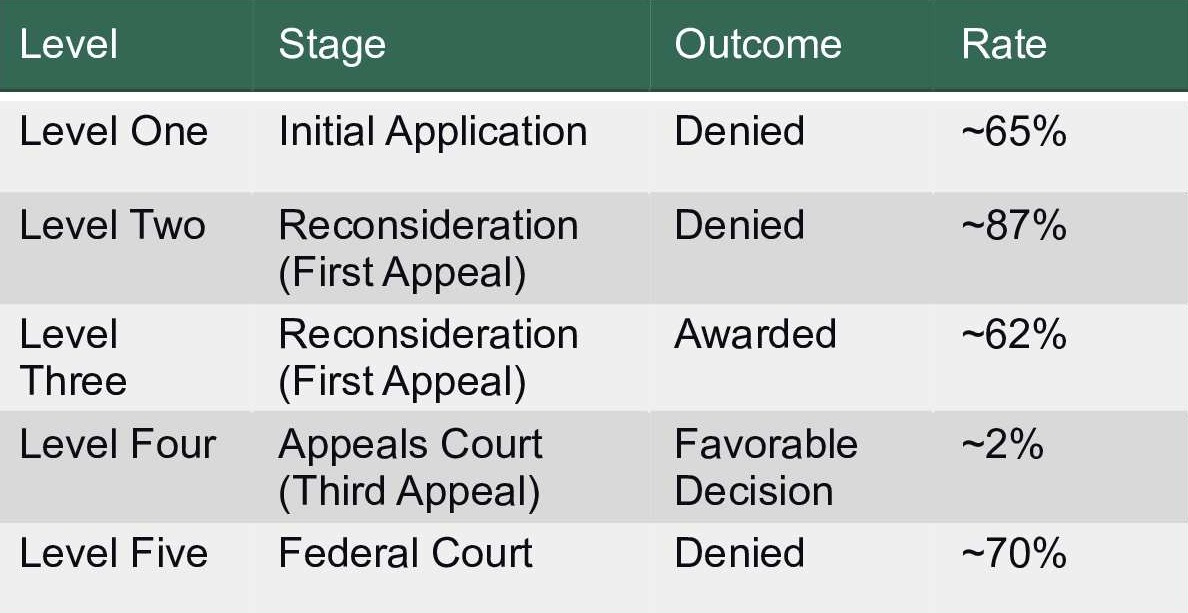
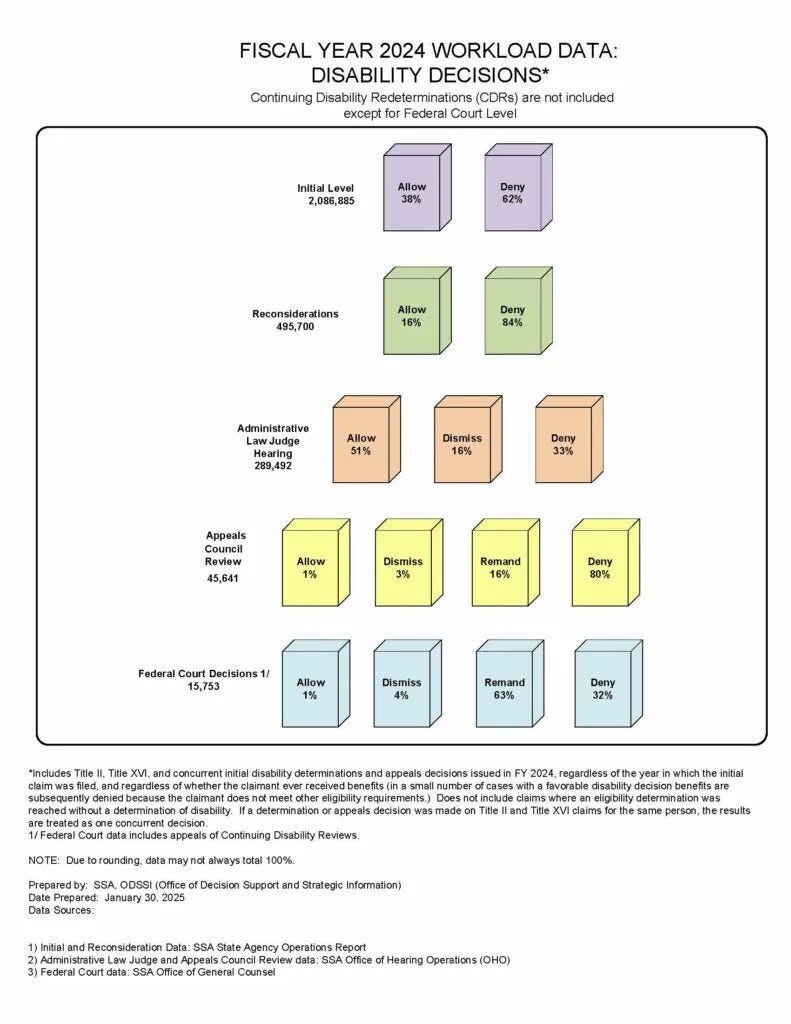
A process that by default denies two-thirds of applicants seems to me to be designed to reject people, exacerbating the impact of a disability on those of us with limitations we can’t help but navigate. Those limitations are often very taxing, and creating a stratified bureaucratic system to “weed out” undeserving applicants puts an undue burden on those of us who need the support of the society we’ve contributed to and participated in for our lives up to the point of needing help. Even those who were born with significant disabilities and cannot provide for themselves deserve to not be run through the wringer just because there’s a perception that people will by default abuse a system that pays a fairly meager amount once someone is approved, which takes up to six months from the date of the initial application to even hear the decision from Level One adjudication. As the table below [2] shows, approval rates have dropped at the third level (hearing) precipitously over the last 7 or so years.
Because it takes so long, many people experience staggering hardship trying to survive in a capitalist economy that devalues and abandons them as soon as they can’t produce at the rate the bosses or business owners they work for demand from them. Many disabled people can work, with reasonable accommodations, but an astronomical portion of jobs, especially low-skilled jobs, weed out people who need accommodations in the hiring process. The next time you apply for a job or cruise Indeed looking for an upgrade, read the fine print.
You’ll likely see a clause that reads ”…with or without reasonable accommodation…” worked into the bottom third of the application. This gives employers the cover they need to bypass the Americans with Disabilities Act and discriminate against the disabled systematically. This discrimination is not only illegal and immoral, but pushes more and more people into the disability process, rather than allowing them to be “productive members of society” like so many people opposed to expanding SSDI- or funding the Social Security Administration properly- like to frame those without disabilities.
Furthermore, the lack of access to healthcare in America has a double-whammy effect on the disabled population. Without meaningful employment, getting healthcare regularly enough to have a sufficient treatment history to even be within the necessary parameters for approval. I’ve been lucky enough to have Medicaid after I lost the last job I had that provided insurance, which means I do have an extensive record of treatments which have helped but not sufficiently improved my condition. Without having fairly detailed, extensive medical and prescription records from multiple providers- which an unemployed person who get’s kicked off of Medicaid by the Big Bullshit Bill, for example, can’t possibly afford- your claim is almost certain to be denied.
Even worse, those whose conditions go untreated for long periods- who may not have become disabled otherwise- may find themselves completely unable to work. Without any medical records, they’re put in a position where they either rely on family/friends for support, become homeless, or scratch and claw their way onto the disability rolls. This de facto systemic negligence leads to compounding issues, straining the SSDI system with claims that could have been prevented with access to healthcare via a socialized approach to medicine and healthcare.
How Do We Get What We Deserve From A System Designed For Deprivation?
So how do those of us who have disabilities, or have loved ones with disabilities, navigate this system successfully? Unfortunately, a large part of the decision-making process is far out of the hands of anyone who needs the support SSDI provides. The best defense against denial is to: [1]
be as honest as possible,
fill out forms in as much detail as you can recall or have available,
respond to requests for data in a timely fashion,
only apply if you actually need public support, and- if possible-
get a caseworker from a Community Services Board or your local equivalent
Once your first appeal is denied (should you be one of the unlucky masses filtered out by an unbelievably difficult system), many law firms will take on your case on contingency, meaning they work for a fixed portion of the back pay you will receive if they win your case and no money upfront. This is why the approval rates are so much higher at Level 3, because lawyers incentivized to make their own bag will fight on your behalf in ways you’re likely unable to or unaware of. While this is a flawed, exploitative system as well- virtually every dimension of capitalist economic systems relies on exploitation somewhere along the line- it is more effective at getting people the assistance they need than simply leaving them to the whims of the bureaucracy.
There are lots of twists and turns built into the SSDI application process, extra bullshit meant to keep people out of the system- depriving hundreds of thousands of people of the support they deserve each year. If we want a society that works for everyone, this system desperately needs an overhaul. Securing proper SSA funding, increasing the number of social workers, streamlining and revamping the process, and incentivizing pro bono legal representation at the lower levels are some fixes that could have a real, beneficial effect on the efficiency and fairness of the SSDI system.
Solidarity with all my disabled comrades,
-Dee
This is a special preview- released early only on Wrizzit- of an article about to drop tomorrow morning. If you like this piece please follow me here and subscribe on Substack, if you feel comfortable doing so.
Citations:
Ascend Disability Lawyers LLC. (2023, October 23). Why Social Security Disability claims are rejected. Ascend Disability Lawyers LLC. https://ascenddisability.com/disability-claims-denied-ssdi/
Bowman, E. (2025, March 24). Disability claims: Chances of Winning Social Security appeal. Bowman Disability. https://www.oneilandbowmandisability.com/blog/chances-of-winning-social-security-appeals/
Ida. (2017, July 30). Social Security disability denial rates. Invisible Disabilities® Association. https://invisibledisabilities.org/coping-with-invisible-disabilities/disability-benefits/social-security-disability-denial-rates/
Comments (1)

I was rejected and decided to give up, so I live with my mom and am self-employed and underemployed. l’m either overqualified or underqualified or unable to perform specific tasks for the jobs that exist on the market, and my disabilities make predicting when I can work impossible. I hope your application is approved. Thanks for writing about this.