Blood & Thorn
A tale of envy’s bloom and the price of staying beautiful in a world that worships youth.
Feb 26, 2026 · 19 min read
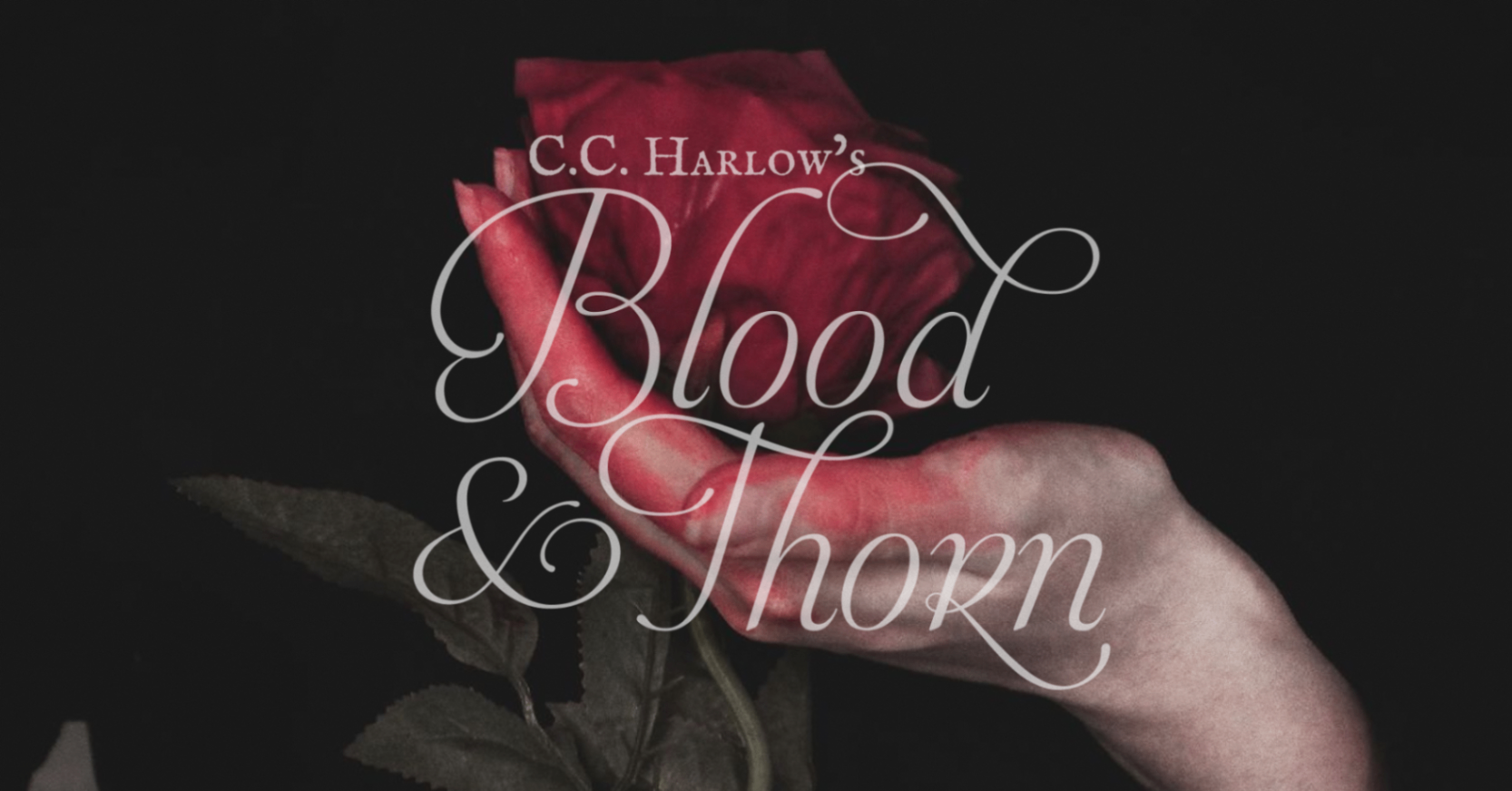
Kent, England, 1934.
Curiosity makes for a strong poison. But envy? Envy is the most potent of all. It washes down throats like wine silk, twists its thorns betwixt two ribs, and settles there like a malady—marrow-bound and contagious.
I’ve seen it. Socialites coveting downfall between gloved hands. Old women, yearworn and gnarled-fingered, shadowing the passing young vestals with vulture eyes.
But no one in Kent beckoned envy more than the widow Inglefield and her rose garden. I can still see them, these blood-red petals that never shied before the aperture of my camera, and that seemed, no matter the angle, to bleed their liveliness through the film.
How the scent of these mornings stained my sheets, as I lay in Inglefield Hall, reading the weather into the shadows against the ceiling in the guest bedroom.
I would hold them against me still, if I could. Not the roses, but the memories of the few days I spent in Rosalind Inglefield’s company.
But alas, roots make for poor fingers.
And thorns draw no ink from the stem, as dead flesh yields no blood.
Rosalind did not welcome me to Inglefield Hall proper. I came with the sightseeing group—my camera hidden in the pleats of my mackintosh—and wandered the maze of rooms alongside the revellers, thinking that I could snap a glimpse of the famed rose gardens without being seen by the guide.
It was, of course, a fool’s errand, for the widow Inglefield’s famed roses were kept in a private garden, surrounded by a high gate.
Undeterred, I ventured away from the group towards the iron-wrought fence, shimming my arms and camera between the bars to take a photograph. And there it was, this intoxicating breath of scarlet, heady and strong. The aperture failed in capturing the luridness of the blooms, the light sway against the bush, the sharpness of the thorns, curled to the heavens and twice as alluring.
One snapshot.
This is all I had time to capture before the guide caught me.
‘This place is off limits to guests, sir.’
I feigned contrition. ‘My apologies.’
The guide’s eyes fell to my camera, as if a single stare could burn the film. And then back to me. ‘I’m afraid I’ll have to escort you out of the property, sir. It is strictly forbidden to take pictures.’
I braced to retort, but a feminine voice cut right through the yew. ‘This won’t be necessary, Porter.’
It was the kind of voice that clung to your fingers like tar set ablaze. A warm, mature depth of the throat where words shaped like arrows and hit right through your composure.
Porter’s mouth wound tight, as if he ached to bestow divine justice. But the woman spoke again, her form hidden by the evergreen. ‘Would you join me for tea?’
A golden opportunity. For every journalist in Kent would write fashion columns for eternity if only they were offered access to Inglefield Hall’s private gardens.
I smiled at the guide, all teeth and boldness. My reply, however, was aimed at the woman beyond the fence. ‘I’d be delighted.’
The gate was unlocked. And I was ushered in by the guide, Porter. I would learn later that he was the butler, but as I navigated the bricked paths, I had only a mind for the splendours encroaching upon me.
First, there was the redolence of roses. A perfume that caught in the nose, so conquering that I feared my blood itself would catch the scent and ferry it to my heart.
And then, there was the beauty. Not exactly manicured, not exactly wild, but something in-between. Miles away from the pruned blossoms I just left behind. Roses. All deep crimson, a shade so vivid you would think it was planted by God Himself, and left behind as a gift to His creation. A shred of Eden.
The Creator’s last mercy.
How I itched to lift my camera, to immortalise this English Arcadia, but the idea left me when we came to a small roundabout, faced now with a twain of chairs and a round table dressed for tea.
And there she was, facing away from me.
Rosalind Inglefield. With wavy titian hair knotted at the nape and her slim figure trussed into a silk robe.
She made no move.
Her gracile hand kept stirring her tea with a small golden spoon.
Porter introduced her, then gestured to the chair across from her. And like a child before a pile of Christmas presents, I walked slowly yet expectantly to face her.
I pictured a woman well into her fifties. Lifeworn at the tail-end of her eyes, paper-skinned, and marred with age.
What I got instead was timelessness.
For Rosalind Inglefield looked as youthful as I did. Vigorous yet rich like new velvet.
Her gait had all the nonchalance of juvenile pleasures, as if she had not once contemplated the idea of her own death.
She lifted blue eyes to me—fathomless and infinite like Elysium—and smiled through blood-red lips. ‘Your name, pray tell?’
I dared to sit across from her.
The metal of the chair was cool against my poplin trousers.
I should have lied. Pretended I was a mere gawker.
But something in her compelled me to announce myself, for, I realised too late, I yearned to know what my name would sound rolling off her tongue.
‘Theodore Bates, madam.’
‘The reporter?’
Her spoon came to a halt, and she let the handle rest on china. But there was no trace of annoyance on her smooth cheeks, only curiosity.
‘Yes, Mrs Inglefield,’ I said.
Her lips curled again. Lips, I imagined, seldom parted around apologies or to ask for permission. ‘Please call me Rosalind.’
‘Then call me Theodore.’
Names exchanged like a pact. The same eloping lovers offer to the moon.
She did not recline. Her spine held straight, like a tutored flower. And for a while she bared my intentions in silence, as if she could read them in the pleats of my mackintosh.
‘Theodore,’ she said, and my name had never sounded this assured in someone else’s mouth. ‘I’ve read your columns. Your words are petulant, but honest. I assume you came here to write about my roses?’
There was no need for lying. Not after her butler caught me red-handed. ‘Yes. Your secret is the source of much speculation.’
I was served a cup of tea. Instead of indulging, I took my notepad out of my pocket, then laid it on the tablecloth along with my camera.
Her eyes went to the latter. ‘What if you experience it through your own eyes first?’
‘Experience what?’
Her irises glistened, then. ‘The splendours of Inglefield Hall.’
‘I’m not sure I understand.’
‘I’m offering you to stay at Inglefield Hall for a couple of days, Theodore.’ Her head tilted lightly, a curl of auburn hair sloping down her neck. I watched, rapt, as it moved with the breeze, brushing along the pit of her dainty throat. ‘And if you stay for a few days, I’ll let you in on my secret.’
Envy is the strongest poison. But it is a flaw in character I did not harbour.
Curiosity, on the other hand…
‘I accept your offer.’
Porter showed me to my room. Told me he would send a valet to fetch enough changes of clothes for the duration of my sojourn. And if the gardens were Inglefield Hall’s crown jewel, the inside of the mansion was just as august. I was told the chequered marble was imported from Morocco. That the Byzantine design mimicked the Medici Pitti Palace—an oasis of sunlight and gossamer amidst the English mournful weather.
I drank in everything he said before he left me before the door to my room.
‘The bell will ring when dinner is served, sir,’ Porter said. ‘You are welcome to explore the estate at your leisure in the meantime. You will, however, not go to the gardens without Mrs Inglefield’s presence.’
I nodded. I had no desire to linger in my bedroom, for I had only an hour or so before dinner, and I would make the most of my time.
Veering north the second the butler disappeared at the angle of the hallway, I enterprised to familiarise myself with the mansion.
And what grandeur at my fingertips! High-ceilinged rooms not shrouded in dust-sheets, but maintained by a full crew, as if grief had not touched Rosalind Inglefield, and as if she was still in her prime, entertaining crowds coming from all over Europe.
In truth, she was. This much was known to me. For the Inglefield Hall balls and soirees were renowned in Kent. Private, yes. Secretive, even more so, but grand, this much I could squeeze from the gossip column in the papers.
For nearly an hour, I wandered with purpose. I took note of the layout, but most of all, I read the widow Inglefield’s touch in the little things. The selection of flowers lying in golden bowls, the photographs hung in the main hallway, and the different curios trapped in glass cabinets, leered at me from a freshly lacquered shelf.
There was a strange aura about the place. As if death had never dared come to its front porch. In old manors like this, there was always the pervasive weight of history. Centuries of death collected between the walls. But here? Here, life had more sway.
And before I could name the feeling, I realised I was rapt. Enthralled by the prospect of spending a few days within these halls, of skinning the widow’s secrets from the sheathing, of drinking as much as I could of these sights, for they were one-in-a-lifetime visions, the kind seldom awarded to a man of my ilk.
I scarcely heard the dinner bell until its last echo spoilt away.
Then, the butler found me.
And led me to a sweet death.
‘How old are you, Theodore?’ Rosalind asked me as the footmen served the second course.
‘Twenty-eight.’
There was a sort of shame in admitting it. As if she could make my inexperience from the lack of lines in my face. I knew her age from the local newspapers. Fifty-three. But she looked not a smidge older than thirty. Still, she hoarded a world of experiences at her fingertips. I read it in the way she held her wineglass, in the way she ate slowly, as if the flavours tasted different on a mature tongue. I felt uneasy at the intrusive thought of imagining her mouth roaming against my pulse.
‘But I have seen many places,’ I added promptly. ‘Work has allowed me to travel abroad, and I believe this has forged my character.’
She smiled then. A motherly smile, and yet there was something erotic in it. A curve in her mouth like that of naiads luring mortals to their drowning.
‘I don’t doubt it, Theodore.’ She leaned slightly over. Her velvet-clad breasts brushed against the table in a secretive murmur. ‘What do you think about a party tomorrow night? Just us and my closest friends. I shall throw it in the private gardens, and I’ll even let you snap a picture.’
A mutinous shade on her dainty chin. One I could not resist.
‘It would be delightful.’
She rose then. Right in the middle of dinner. And I followed suit, buttoning my jacket as she made her way to me. Her hand closed around my cheek, decorum dissolving between us, and I was aware of the lilt in my chest when she pressed a kiss on it. ‘I shall retire early to ring my guests. Do make yourself at home. And save me some dessert, mh?’
Her perfume stayed on my skin long after she was gone.
I brought it to bed, in fact. And then, between my lips.
The only dessert I had a tooth for.
I was roused by a parched throat. Decided to make my way to the kitchens without disturbing the staff.
The moon was pasty when I traipsed along the corridor. A crude white sharpened the shadows as they gathered in the corners.
As soon as I reached my destination, I filled a glass. And then I heard it: the muffled sound of a door clicking open. Empty glass on the counter, I tailed the noise to the back door giving onto the private gardens.
I rounded the corner of the gate, and I saw her.
Rosalind.
In a long white nightgown, with her knees to the ground, her back facing me, her hands busy tearing through a rose bush.
For a moment, I thought she was sleepwalking.
But then a thorn bit through the skin, and she muttered under her breath before bringing her finger between her teeth.
I made not a move.
And she resumed her strange endeavour, pulling at what looked like dead branches, casting them aside, and then going at them again.
After a while, she rose, leaned over the bush, hands curling around the main branch, and she tugged firmly. The roots came loose, and she unceremoniously threw the corpse away before pulling a smaller pot closer.
A rose bush in its infancy—stilted and shy—that she entreprised to plant in lieu of the dead one.
For long minutes, I watched her lithe hands gather soil around the roots, then tutor the plant tightly before she wiped her palms onto her dress.
I knew then that my time as a voyeur had ended.
And before she could turn heels to regain the mansion, I retreated into the shadows, and padded back to my room with a dozen questions buzzing in my mind.
What was Rosalind doing in the garden at such an hour? Why not enjoin the gardeners to rid of the dead bush? Why was the bush dead at all given all the care that went into her garden?
I did not sleep that night.
I wouldn’t sleep much at Inglefield Hall.
The revellers arrived for luncheon. They brought with them pots of exotic flowers that Rosalind refused to plant (a jest of theirs). All of them bearing oddities in their accoutrements: clinking bangles in the orientalist fashion, red-gemmed earrings, a purple suit; some women, short-haired, sporting trousers, suspenders, and button-up shirts like men.
The crowd was the cheery kind, and they welcomed me with questions about my profession, the roads I had travelled, and the piece I intended on writing about Inglefield Hall. I indulged in their company, for the interactions between us were not steeped in decorum. They were authentic—stories so odd they could only be true.
After lunch, we walked through the gardens. The air felt cool on my skin, for September had not settled proper yet. The breeze laden with the scent of roses carried the wonders of Rosalind’s blooms to all her visitors. I knew that it wasn’t their first time in the private garden—they had told me so—but the awe on their faces was strange to me. For people who had experienced the vastness of this world, such childish wonderment was uncanny.
At last, we came to the spot where I saw Rosalind last night. My eyes went first to the soil. It had been smoothed over, tapped tight at the base. And then I saw it. The new rose bush, no longer in its infancy, blooming brighter than all the surrounding flowers.
The roses were a decadent red, the petals curled around the core. I could swear that if anyone thought of a rose, it was one from this bush. A perfect, sharp-thorned bloom, obscene in its beauty, mature and redolent with sap. And all I could think of is that one could squeeze essence right from its stem, and their fingers would be forever stained with its ripeness.
Then, there was an uneasy feeling. A small, trite thing at first, that pooled into my gist. The realisation that this bush was young last night, and yet by midday, it was well into its prime.
We didn’t linger, for tea was served.
And I carried with me newborn questions.
I drank more than I ought to. So much so that the gramophone’s ragtime stretched into dissonance and the laughter boomed like a cannon, periodically startling me out of my drunken reveries.
The party was more bacchanalia than soiree. Tales grew bawdy. Whisky tumblers, fathomless. Cigarettes, infinite. And in the staleness of smoke and debauchery, I found myself nauseated to my throat.
My complexion must have waxened, for Rosalind broke away from her conversation, then pressed her lithe hand between my shoulder blades. ‘Come, Theodore.’
To where? I didn’t care to ask. All I wanted was a lungful of fresh air, and this is where she led me, a few rooms away, to a balcony giving onto the private gardens.
My hands curled around the banister, and I breathed deeply.
The darkness was only partial, the moon eyeing the land below, its surface smooth to the eye. From here, the roses were deep purple, but they retained their beauty, and my eyes went to the new rose bush, only to find its branches gnarled and naked, twisted like broken fingers. The roses had all decayed.
I opened my mouth. ‘What is—’
And Rosalind kissed me.
Fiercely. With all the assurance of age, but the aimlessness of adolescence.
She tasted of wine and perfume.
Of the sunny days behind us.
She tasted like something I didn’t deserve, but that I was still awarded by some kind of divine mercy.
My hands roved to the curve of her waist.
And if she didn’t part, I swear, I would have asked to go to her room.
But the kiss was as ephemeral as her roses.
And likewise, it left me with more questions than answers.
The petulance of youth made me bold. The kiss made me daring. And the next day, as the last of Rosalind’s guests ambled back to their cars, she and I sat in the breakfast room, and I asked: ‘Is there something wrong with the roses? Are they suffering from some kind of disease?’
Rosalind looked at me. She brought her cup to her lips. Her nails, usually pristine, were caulked with dirt. But her face? It had grown tired. The plumpness in her lips had flattened slightly, and her eyes were dull, a sky-blue overcast and dim.
‘I’m not sure what you mean, Theodore,’ she said after a while.
‘The rose bush, it was lively during the day, but when I looked at it last night, it was dead.’
She smiled a motherly smile, as if I was a child who fell prey to his imagination. ‘You were quite drunk last night.’
Perhaps she was right.
And yet, I had learned to trust my eyes.
I said nothing more, however. Resolute in the thought that I should photograph the phenomenon as proof and show it to her.
We didn’t visit the gardens that day. The mizzle made it inconvenient to do so. Instead, Rosalind entertained me in the drawing room.
We didn’t speak about the kiss. We didn’t speak of the roses.
It was only after tea that she let me retire to my room to write. And there, I started my piece. But the angle eluded me so much that I could do nothing more than jot down stray notes.
After a while, I stood up, took my camera, and then walked to the gardens. I remembered Porter’s warning not to visit the private gardens without Rosalind, but my journalistic gall had me commit several small rebellions in the past.
What was one more?
I found the balcony where Rosalind kissed me, and as I surmised, the rose bush had grown exquisite. I lifted my camera to my eyes, then snapped a shot. I feared the aperture click would give me away. But Porter didn’t appear behind me.
How full the roses were. The petals curled out of the carpel as if a woman parting her thighs. My mouth dewed with the scent. Sickeningly sweet and resolutely disturbing. But before nausea could press against my teeth, I turned heels and went back to my room.
But a different kind of rose awaited me there.
Rosalind. Coddled in a scarlet silk gown, a sateen thigh peeking from the slit in her dress.
I saw it then.
My notepad on her lap.
And the mean twist of her lip.
The interrogation didn’t go as expected. My lurid imagination conjured scenarios of Porter throwing me out of Inglefield Hall, gutting my camera before committing the film to the flames.
In fact, there was no interrogation at all.
Rosalind only rose, silk tumbling to her ankles, and pressed a hand against my chest, there, right above my lilting heart.
A woman in her fifties, and yet the vim with which she nudged me against the wall took me by surprise. Her hand sloped down, along the ridges in my abdomen, until it eased between skin and belt.
My body responded instantly, my arousal growing flushed against her palm. I did nothing to pull away. The sight of her was as mesmerising as the roses in her garden.
Her eyes flicked to my mouth. This azurine gaze, all oil and need, and she spoored along the rigging of my throat, leaving kisses that burnt like matches.
I groaned, my neck craning for her assault.
Envy is the strongest poison, but desire?
Just as sweet a death.
I moved against her palm, my hips seeking her touch.
But just as she reeled me in, she killed her momentum.
‘I will tell you about them,’ she whispered against my lips, her breath hot and clingy. ‘The roses. Tonight, when we sup in the gardens.’
And she left me there.
Tight and aching.
In a room too small for the bruise.
There is a thing about secrets. They beg to fill the mouth, to spoil on the tongue. And Rosalind’s secret was no different after all—it, too, would wither her throat if she kept it in her ribs for too long. So, I endeavoured to do what all journalists do: follow the lead and seek the story. No matter its form, no matter its ending.
I dressed for dinner—cufflinks and all.
Packed my leather bag with my belongings—for surely Rosalind would ask me to leave after I got my story.
I took my camera, my notepad, and my pen.
And I left my room, answering the call of the dinner bell.
She was already in the garden. Dressed to bend resolve and twist the mind. A gown that barely concealed what I had only imagined.
My attention wandered. To the grooves on her chest, these long lines furrowed with time, then to the crow’s feet webbing her gaze, and, at last, to the veins forking beneath the paper skin of her hands.
She had the table set before the dead rose bush. Half a dozen chandeliers illuminating knotted branches. The blooms, browned and dry, had shed all their beauty. They stood, no longer proud, but subdued, against the corpse of leaves twice as pitiful.
Wordlessly, I took my camera, lifted it before my eyes, and then snapped a shot before putting it down on the table.
Porter made his entrance, bearing not wine, but a flower pot. A fledgling rose bush that he set on the table before Rosalind.
None of us spoke until the butler went back inside.
Rosalind stood by her chair. Her fingers went to the terracotta rim. Her eyes were dim, but set on the infant bloom.
‘I always wondered if one could bottle time. Trap it like amber, and hold it every time the weight of the years presses onto your bones.’
Her index finger sank into the soil. Her fingernail came out black with dirt. ‘I was in my thirties when my husband died. He was stolen too young, and his death made me contemplate my own. I saw it everywhere after his passing. Death, living in the corner of my eyes as I aged, its presence thick where my skin thinned.’ Her eyes flicked to me. ‘My friends, as you know, are well-travelled. One of them heard of a French gardener renowned for his undying garden. I rang him. We corresponded for a while. He even visited me a few years ago.’ She moved closer, hand brushing along the tablecloth. ‘We became close friends. He spent months here at Inglefield Hall, helping me with the garden. I grew envious of the roses, of course. Why should they outlive me? I brought the shears to a bush in a fit of rage. The gardener tried to wrestle the tool out of my grip. Our feet tangled. And we fell over the brambles. I felt the bone against the blade I was holding. The impact nearly broke my wrist. And then, a sticky warmth, and the smell of metal. Horrified, I stood up, and in a matter of seconds, the gardener was dead.’ Closer now. Until her veiny hand brushed against my arm. ‘I thought hiding my crime would be a messy affair, but much to my surprise, his blood leached through the soil. Not slowly, not sluggishly, but so swiftly I had barely any time to process it.’ I swallowed as her fingers traced up to my shoulder. ‘Porter got rid of the body. I pulled the thorns out of my arm. And when I woke the next morning, I had shed two decades. My hands were smooth, my cheeks plump, my beauty returned. And I knew then that blood and thorn could restore it.’
I didn’t think of reaching for my notepad.
The story would be burnt into my mind.
Her fingers moved to my sternum.
All around, the syrupy redolence of the roses, heady and pungent—sour even.
I dared a question through the mounting nausea. ‘Is that why the roses die every night?’
‘They thirst, just like us,’ Rosalind said. ‘Blood is like water to them. But they haven’t drunk in a while. Fortunately, the gardener taught me his technique. I have bred many replacements since then. I plant one every night. Not to keep my secret, but rather because beauty cannot thrive surrounded by death. And I so hate to watch their petals wrinkle and fall. They only remind me of the ugliness of aging. And I simply refuse to live in the margins of a society that rewards youth and fears the passage of time.’
I pitied her then.
I pitied the years spent in fear, the horror of watching your own body decay, of inching slowly, but surely, to the grave.
‘Why tell me your story, Rosalind?’
She smiled—motherly, pitifully. ‘I owe you the truth, Theodore. It’s the least I can do.’
I saw them then. The shears she had pulled from the pleats of her dress and aimed at my stomach. Instinctively, my hand closed around her throat to keep her out of reach. And I squeezed. Firmly.
She whimpered. A constricted thing, coming from her gist.
Rosalind swung the blade, but the arc was too short.
I reared to evade it—
And pain shot through my spine.
Heat blossomed.
My limbs went numb, loosening my grip.
And I felt a presence behind me.
Porter, the butler.
He twisted the knife.
And I groaned, breath short.
I was aware of the blade notched there in the small of my back. For it was hot. Unbelievably hot.
I didn’t, however, realise I was soft-limbed until the butler and Rosalind eased me over the rose bush.
The knife bit deeper as the dead branches cradled me.
The sky was starless.
The glow of the candles haloed.
I don’t know whether I begged or if I cried.
If the sight of me agonizing was heartbreaking.
All I know is that Rosalind crouched next to me, holding my hand through the blood tiding in my lungs. ‘Curiosity makes for a strong poison,’ she said, her motherly voice remote, gauzy. Twisted. ‘But envy? Envy, sweet Theodore, is the most potent of all.’
Another man will see her. Rosalind, yearworn and gnarled-fingered, shadowing her roses with vulture eyes.
He too will gawk at the splendours of Inglefield Hall.
He will walk the halls alongside Rosalind’s friends. Will get drunk, mayhap, and taste the sap on the widow’s lips. Leaning over the bannister on the balcony, he might even see the rose bush, tortured and agonizing under the moon, without seeing my bones folded into the soil beneath it.
Perhaps he will catch Rosalind at night, tugging at roots and discarding what time embraced so eagerly, and his curiosity will inch him toward his own death.
I would warn him, of course. Take his hand and lead him away from the mansion. Away from the secret that cost me my life.
But alas, roots make for poor fingers.
And thorns draw no ink from the stem, as dead flesh yields no blood.
Author Notes
This November’s prompt was a retelling. I thought of The Picture of Dorian Gray almost instantly. This story always fascinated me for its themes still resonate deeply in a world that worships beauty and youth, and fears the passage of time—and especially its visible scars.
I truly hope you will enjoy this story for what it is: a critique of ageism wrapped in decadence.
Conversation
How did you think the story would end?
What do you think beauty costs us—emotionally or morally?
How much of Rosalind’s terror of aging do you think comes from her, and how much from society’s expectations of women?
© 2026 C.C. Harlow. All rights reserved. No part of this work may be reproduced or transmitted in any form without permission of the author.
Comments (13)

Very nice. Sustained tension, lush (almost baroque) imagery. Dorian Gray inspiration is there but not distracting.
This is a captivating mystery. I really enjoyed the dark twist at the end. 🌹

A range that is not afraid to bleed in the pages, yet the stain feels so magnificent that you cannot look away. The descriptions are enough: Not too much until it makes you dizzy, not too less until it starves your imagination. And it is something so intoxicating in the way you write, like embracing something you are not supposed to, for fear it is unfamiliar, yet once you keep going, you cannot stop.
There is something interesting I want to discuss though: Theodore and his lust. Trully in many descriptions, you leaned in so good to the pov of a man. For instance: “the petals curled as a woman parting her thighs”. Or him wanting to sent Rosalind to the room. There were others too like this, but indicating that a man was actually the narrator. Unfortunately, I hate it that man have to use these descriptions though, but rarely have I found a male writer not including a description without comparing it to a woman’s body and his lust for it. So, you leaned in exactly to their pov. But after all, if Theodore wasn’t lusting over Rosalind, it wouldn’t make it so intoxicating. And besides, it is what drives Rosalind to invite young men into her house. So they could love her beauty and lust over it. And it makes Rosalind feel that it is all worth it, that she is worthy…for beauty… is not just death that scares her, but also her approach to it. She as a woman fears aging more than a man could. Society is truly sick for wanting us women to look as young as we were as little girls. I think the choice of making Theodore a journalist is so smart, because by nature and profession he is curious. And Rosalind thought of him as a really easy prey.

This is quite spectacular! The fresh, twisted mix on Dorian Grey and Rappaccini's Daughter is intoxicating and delicious! Bravo!
To read this means so much to me. I aim to provoke reflection in people and if you wondered what you would've done yourself, then my job here is done. I'm glad the horror element was quietly inevitable in its delivery. It was my intention. Thank you so much for reading and commenting, it made my day!