About the cool cousin of Violin
The Viola!
Apr 12, 2026
Hi there! I am the violin. I’m pretty popular at music school. The piano is my best friend; we hang out in the cafeteria when we’re not practicing. Although I love my everyday life, summer vacations never stop to amaze me. Each summer, my parents and I visit my cousin’s house.
You know there’s this one cool cousin in everyone’s family? Well, in my family, it’s the Viola.
![Me and Viola [Made by C.G.]](https://substackcdn.com/image/fetch/$s_!Ez_n!,w_1456,c_limit,f_auto,q_auto:good,fl_progressive:steep/https%3A%2F%2Fsubstack-post-media.s3.amazonaws.com%2Fpublic%2Fimages%2F130d775f-a13c-4b3a-ba80-25cd0d4d9e7d_237x346.png)
The Origins
The viola is the lesser-known member of the Violin family which is usually mistaken as the violin. Interestingly, the viola predates the violin, cello and string bass. There’s no actual record on the creator of viola or the place of origin of viola. However, it is known that the viola was a part of arising “experimental instruments” in northern Italy, which combined the virtues of previous instruments that were played with a bow (these instruments are classified under a common family— the viol).
Up until the 18th century, the term ‘viola’ had broader implications, referring to a variety of bow and string instruments, like the viola da gamba (viola for leg) and viola da braccio (viola for hand). Both of these instruments were also the part of the viol family.
[The Viol is a distinct family of instruments. Modern day instruments like the bass, viola da gamba, tenor bass viol, and lyra viol are good examples of existing (or historically revived) viol instruments that are not included in the modern violin family.]
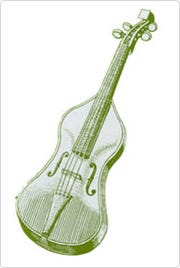
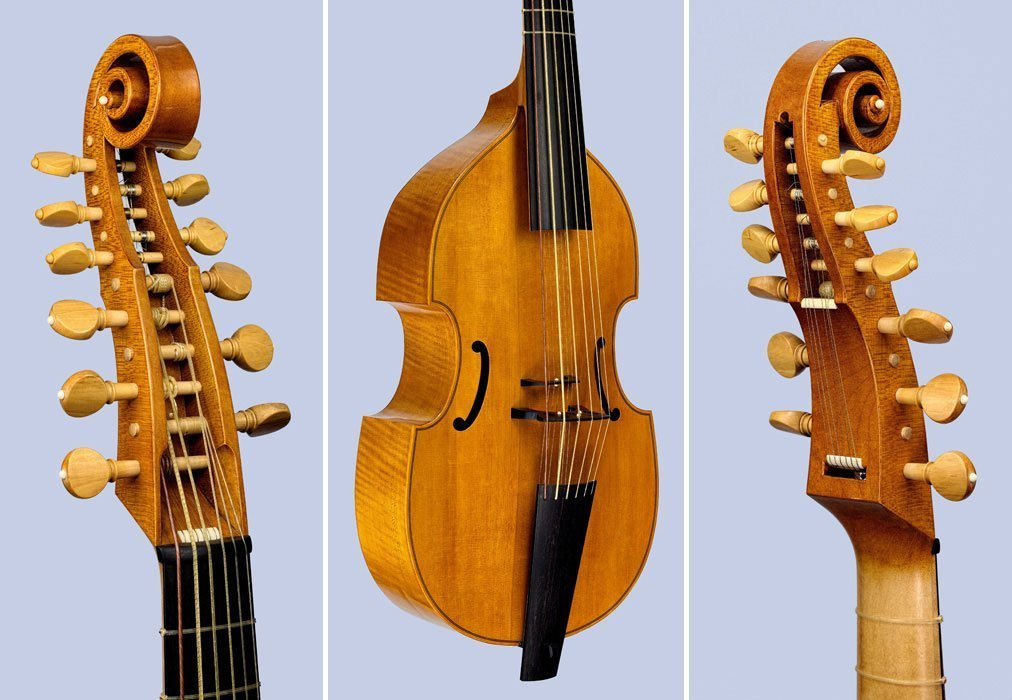
For understanding the history of viola, it’s better to understand the development in broad timelines — Renaissance, Baroque, Romantic and the Modern period.
1.1 The First Visual Record of the Viola
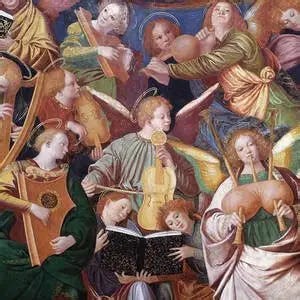
The first actual visual evidence that we have of the viola is one that is painted into a famous fresco in the Santuario di Saronno dome near Milan.
The dome has been painted with Angels in colorful robes, in three concentric circles welcoming Gaudenzio Ferrari's Assumption of the Virgin into Heaven. One can find various bowed instruments shaped roughly like modern violin family instruments.
Gaudenzio Ferrari is credited as the sculptor of the Renaissance (specifically Italian movement). He worked on the Santuario di Saronno dome in the later part of his career, succeeding Bernardino Luini.
1.2 Evolution
Viola da braccio had low ribs, a rounded back, F-shaped sound holes, a fretless fingerboard, a neck raised from the body with a scroll and four strings across a curved bridge which could be bowed individually.
Whereas viola da gamba had high ribs, a vaulted belly, a flat back, and C or F shaped sound holes. The body extended upwards towards the neck, the fingerboard had seven frets, and five to seven strings lay across a rather flat bridge which allowed two adjacent strings to be played at once.
In the 16th century, alto and tenor instruments were made in different sizes, but they had the exact same tuning: C3, G3, D4, A4. The modern viola is tuned the same way.
(C3, G3, D4, A4), tuning is a fifth lower than the soprano tuning (G3. D4, A4, E5) and two fifths higer than the bass tuning (Bb1, F2, C3, G3). This meant that the alto and tenor tuning were still quite far from the bass tuning and therefore, a middle tuning, the true tenor (F2, C3, G3, D4) was made.
The foundation for five-part string orchestra was laid in the 16th-17th century France called the 24 “violins du roi” (literally meaning: violins of king). The middle register in the court ensemble was played by three violas in the same tuning but different sizes, such as cinquième, haute-contre, taille.
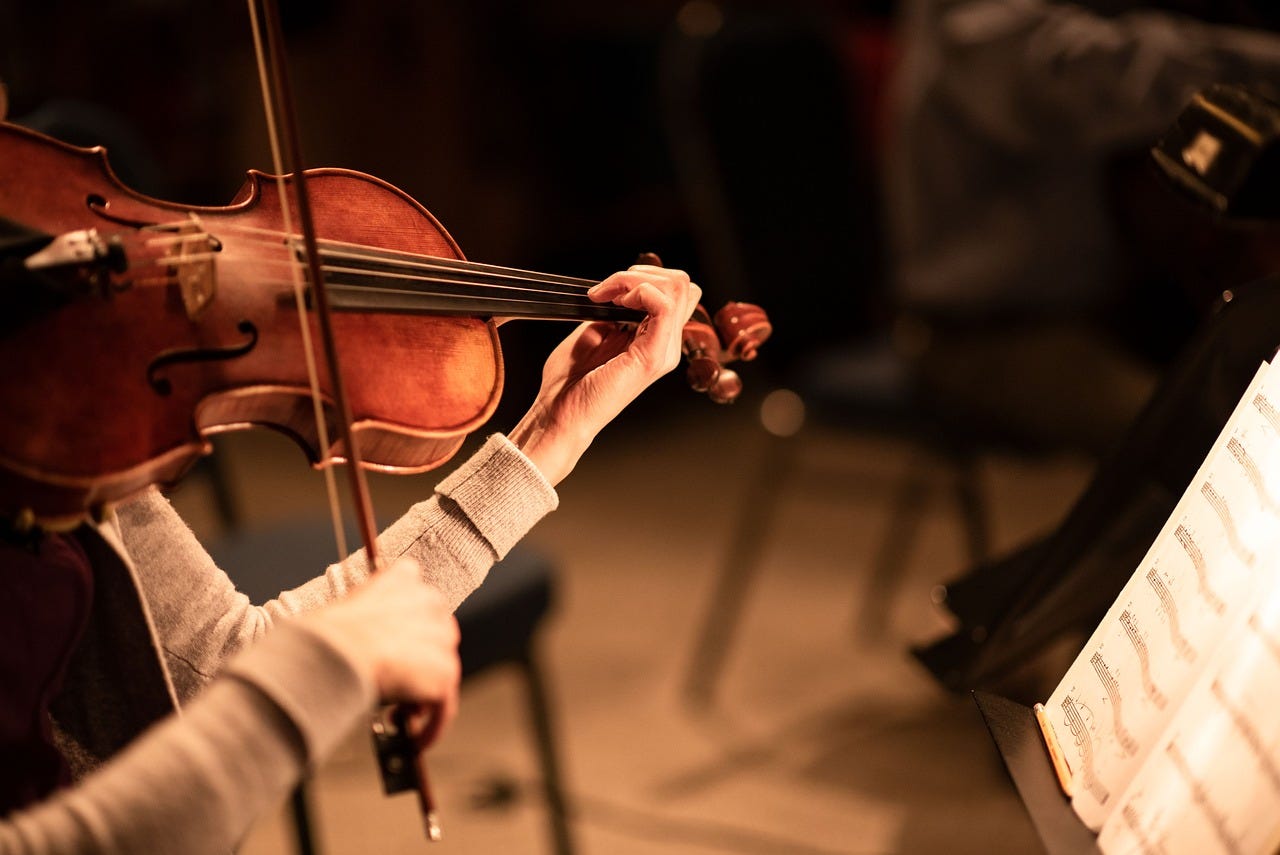
Therefore, one could find the alto violas in the alto tuning, tenor violas (had the same alto tuning but larger size) and true tenor instruments.
Around 1750, the five-part ensemble was abandoned for the four parts with two violins: an alto viola and violoncello as bass which signaled towards the end of the tenor violas. The problem with tenor violas was lack of agility, although it was full sounding.
By 1800, every concert hall was full of music keen audience. Francois Tourte strengthened the bow, and the violin family instruments went under considerate changes. The strings were made heavier and projection was improved by increasing tension. The body was made longer, and the neck was tilted backward by an angle to the body. This made it easier to slide the left hand up and down to different positions.
With Great Power, Comes Great Responsibility
The Rise of Viola in Music
1.1 Don Quixote by Richard Strauss
It’s a tone poem subtitled “Fantastische Variationen über ein Thema ritterlichen Charakters” (Fantastic Variations on a Theme of Knightly Character) based on Miguel de Cervantes’s novel Don Quixote de la Mancha. 40-45 minutes long, it is scored for cello and viola with a narrated plot.
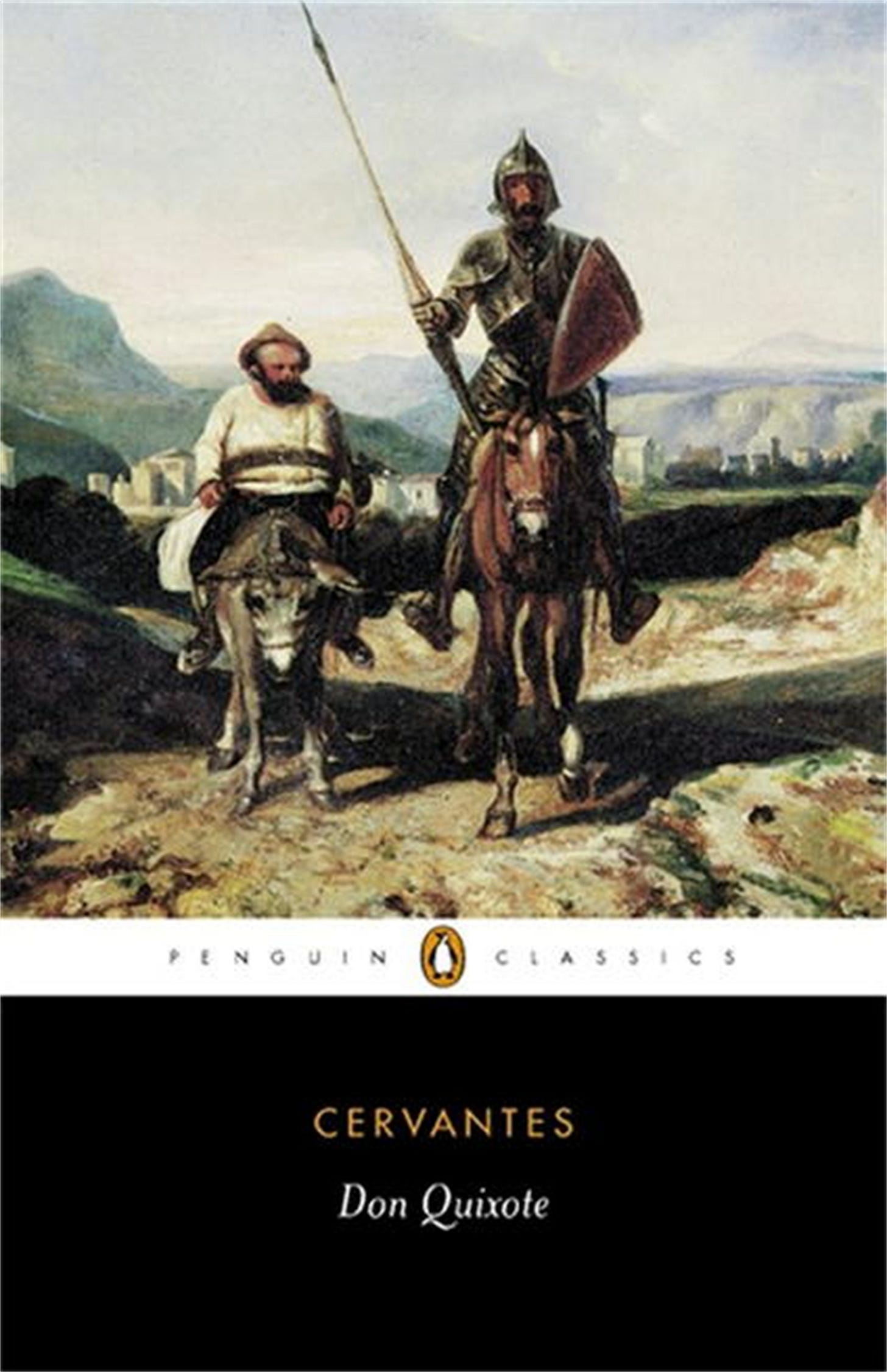
[For curious readers, here’s where you can listen to this song.]
This splendid piece was composed in Munich in 1897, with the premiere in Cologne on 8 March 1898. Each episode of the Knight’s adventures is segmented into variations, with a total of 10 variations in the original piece. What I find the most interesting is the representation of cello and viola as characters. The cello represents Don Quixote himself, and the viola represents Sancho Panza, the squire.
In Variation III, the solo viola converses with the solo violin before the cello-Quixote reasserts his chivalric vision. Don Quixote is one of the first major orchestral works to give viola a central identity rather than a harmonic filler.
1.2 Béla Bartók’s Viola Concerto, Sz. 120 (BB 128)
Even though left unfinished at Bela Bartok’s death, Willaim Primrose, a Scottish violist, commissioned the piece (it had to be restored from sketches). Tibor Serly’s edition is the one you usually hear in concerts and on many recordings.
It was written to showcase viola’s wide range, expressive middle register and ability to sound both folk and modern. Viola Concerto became one of the major 20th-century concertos to give viola an equal footing with the violin and cello.
1.3 Rebecca Clarke’s Morpheus
Morpheus is a short, lush, impressionistic piece for viola and piano, written in 1917 during her early years as a professional performer in the United States. It is one of her best‑known smaller works and a staple in the modern viola recital repertoire. (Wiki)
Morpheus refers to the Greek god of dreams, which is clearly represented in the dream-like style of the piece.
The piece is lyrical, with the viola singing long lines over the flowing piano. It’s often performed between heavier works serving as a miniature tone poem for the viola.
1.4 Mozart
Wolfgang Amadeus Mozart was an accomplished viola player. He preferred the viola when he joined amateur ensembles rather than asserting himself as a violin soloist.
In Mozart’s ‘Haydn’ (dedicated to Joseph Haydn), the viola is frequently given independent countermelodies and dialogues with the violin.
His Sinfonia Concertante in E♭ major, K. 364 (1779) is one the earliest works to treat viola and violin alike, as solo partners with the orchestra.
Well, now you know why my cousin’s cool. He’s the quiet one, but the most expressive, warm and earthy. This summer, I’m going undercover. Maybe I’ll spend time listening to the viola :D
— Curiosity Genes