A Room of My Own
Shaping One's Writing Space

Mar 1, 2026 · 5 min read
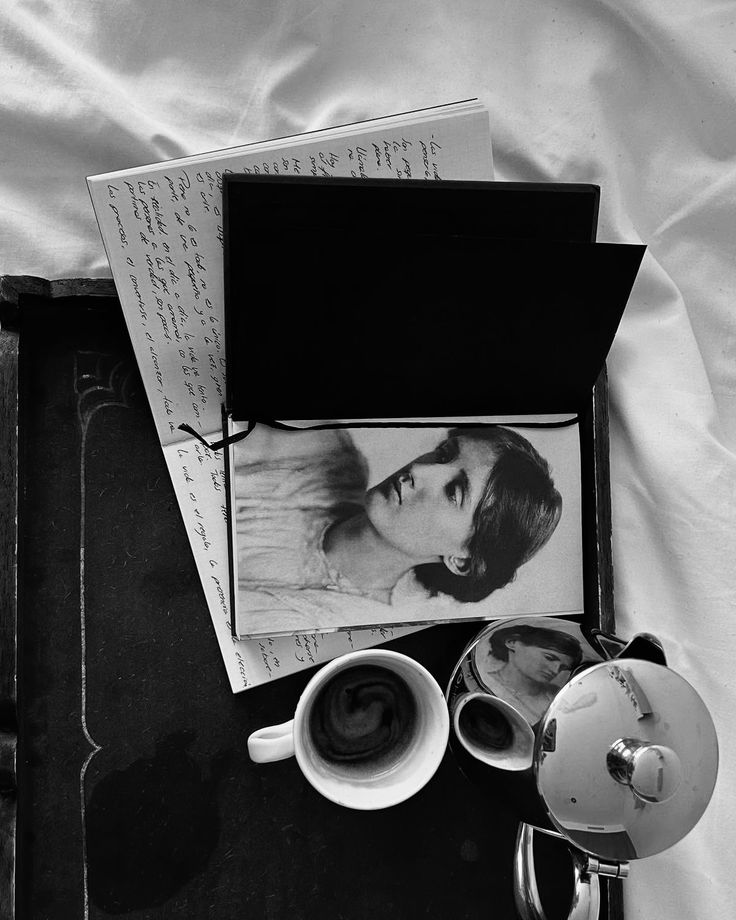
The concept of a room of one’s own has always defied physical limitations and has been as much about mental space for writing as physical one. We carve out a patch of the surrounding so that we could unleash our thoughts there, let them roam free and follow them, hoping that they will lead us somewhere meaningful, to a place where our feelings and experiences make sense like nowhere else.
To be able to do that, one needs a physical space where this exercise could be performed undisturbed, where we could be left alone, sitting with our thoughts long enough and quietly enough for something new to emerge out of such contemplation. And that’s when a room of one’s own is irreplaceable.
One needs to realise that such a room is a tool, as much as a space. The way it is equipped for the needs of an artist, a writer in this case, can be beneficial or detrimental to creative process. Everything — from the setup to the view from the window has its input and is capable of leading work a certain way.
In her latest memoir Bread of Angels Patti Smith recounts a room she set up for herself in their first home with her husband.
‘Before our children were born, I created a room of my own. It was adjacent to our bedroom, small, square-shaped with one window. […] I worked on my own, unrolling the felt, covering and framing the entire floor. The wall was white plaster, with one window overlooking our wild yard overgrown with lilac bushes.’
Having set up two rooms for myself in different apartments, I know the weight of such a task, when you feel that a bookcase put in the wrong place can cause everything to collapse. Planning took time. Everything had to be careful thought through so that the final setup would turn out efficient, navigable.
Even though I have a collection of miscellaneous objects in this room, because of my work and a number of leisure activities, I know exactly where the smallest object is and can retrieve it without fuss even when the room is a mess.
It certainly requires regular clean-ups that are usually way overdue. It also is a weird sight for those who boast a firm belief that things should be deposited only in the places meant for them. They would recoil from seeing my sketchbooks and drawing tools lying for days on the sofa, a Chinese tea set reposing in its case atop one of the bookcases, a wooden wine tray sitting on a settee on a pile of loose papers.
The room of my own is as far from aesthetic Pinterest set-ups as one can go, with makeup sitting side to side with my writing stationery and candles propping books, but I wouldn’t change a thing about it. It is a forest of a mess my imagination knows its way around. When I write and pause to think, and my glance slides off the edges of random objects in my room, my mind isn’t confused but anchored by them as if by landmarks.
I keep rereading Patti Smith’s reminiscence about the room of her own. Sisters of Woolf we can appreciate the importance of every single detail of that given room, knowing how much is at stake.
‘At a secondhand store I found a low table,’ Smith writes, ‘and I covered a wide throw pillow with heavy Moroccan striped silk. I prepared fresh mint tea, drank from my Persian cup, sat with my inkwell and fountain pen to write. […] In this room I felt entirely myself. There I could sit and write in the morning light, or at night by candlelight. Sometimes I would not lift my pen, but my mind would conjure long stories that seemed to come from another source, fluid and continuous when I’d leave to prepare a meal or fold our clothes. The room was my vagabondia. Fred would sometimes stop and look inside but never entered it. Not once did he disturb the atmosphere, or tread upon the black felt with his dusty cowboy boots.’
The atmosphere for thinking as well as for writing is easily disturbed if intruded upon by an outsider whose step isn’t light. It’s easier not to attempt an entrance than try to navigate the intricate space whose owner even can’t properly explain the laws of because they are utterly intuitive.
Thinking is often underestimated, especially in the current atmosphere of chasing productivity. We are constantly encouraged to write, to create and not to pause, think, reboot, experience. Although it should be obvious that without pondering, no ideas are going to grace a creator, they don’t burst into out head from idea Neverland, they are conjured in place of relived experiences, evoked by memories. We have to live first in order to have something to say.
Tools at one’s fingertips is another benefit of having a room of one’s own — you don’t have to build your creative setup every time you want to write something. I am also a fountain pen devotee. Using one prompts some mysterious creativity in me, unleashed only with the flow of ink or dipping a nib into an inkwell. When I use liners for writing, a totally different art happens. Something swifter and more tangible.
We all need out vagabondia, a space to retreat to when the surroundings overwhelm us, but if we look at the concept of the room of one’s own closely, there’s a different facet to it — its mental dimension. Such a room grows portable after a certain amount of training. Once a specific mindset is entered, it could be carried around like a field easel.
Patti Smith also wrote: ‘My favourite room was the kitchen. It was small but big enough for a card table by the screen door becoming my own cafe. I made my coffee and sat and wrote anytime beguiled by the ivy, the willows, the turret, the screen door at the side of the house.’
I love writing in the kitchen. I also tend to vary the beverages with my writing, depending on the space I’m in, because my mood shifts. It is also useful to change the work environment — different physical spaces enable fresh ideas.
Changing the writing space also helps with switching to a different medium: write a novel in your study, an essay — in the kitchen, a poem — in the bedroom. Create the minimum of the atmosphere you need, grab a handful of tools with you and let your thoughts roam around within different walls.
Then venture outside to try out a park bench, a coffee shop table, a patch of grass by the lake. Turn as many corners of the world as you can into the room of your own, and then if your world isn’t quite your oyster, it will certainly turn into your workshop.
Comments (1)